

Seaweed Could Be The Key To Making Fresh Produce Last Longer Without Plastic
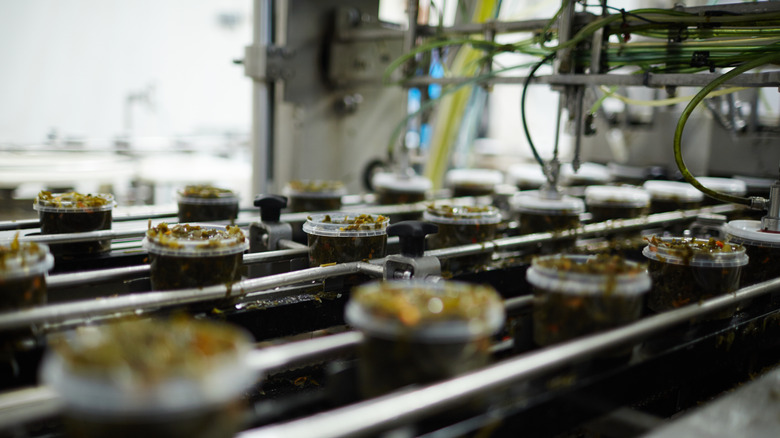
We all struggle with keeping precious produce fresh after arriving in our kitchens. Unless buying from local growers, those fruits and veggies have likely traveled long distances already, with each post-plucked minute ticking away, reducing freshness and nutrient values. Sure, plastic bags can slow down degradation from air and moisture, but isn't there a better way? Actually, there is — or soon will be, if scientists at the University of Connecticut have their way. This clan of innovative UConn wizards are turning one of the most natural sources imaginable, seaweed, into a clear, edible coating for produce, thereby keeping it fresh for longer periods of time, without plastic.
If all goes well, that's good news for food, wallets, the environment, and for local Connecticut sugar kelp farmers. It's far from being a pipe dream, and progress appears to be moving along. The project springs from a UConn-centered startup called Atlantic Sea Solutions Inc., operating under the business name Atlas. They've received a grant from the federal Small Business Innovation Research (SBIR) to build a working prototype, inching closer towards grocery shelves and kitchens.
It's noteworthy that the edible seaweed coating doesn't taste like seaweed — or anything else. It's designed to be neutral in flavor, with no waxy residue or coating to peel off or wash away. Just chomp right into those berries, carrots, nectarines, and mushrooms, or toss into a pan for cooking as usual. Standard refrigeration and handling practices will still be necessary, but the new coating will potentially double shelf life while preserving taste and texture.
Replacing plastic in food coatings and packaging
Who knew the humble (and often irritating) seaweed tangling up your ocean swim could hold such potential for changing an entire industry? The pairing of plastic and food has long been controversial, but this gift from Mother Nature's waterways could provide an eco-friendly reset. Of course, human intervention plays a big part, including broad experimentation with "edible coatings" for fruits and vegetables.
Here's a quick overview of the food science involved: The edible coating aiming to protect produce is made from polysaccharides, which include seaweed-derived materials. These extracts hold antioxidant and antimicrobial effects, which have potential for keeping food firm, preserving color, and slowing down the growth of microbes. When all is said and done, the goal is for humans to hold the results of that process in their hands, on their plates, and in their bellies.
A researcher from the UConn team is also working to create a seaweed-derived food-packaging material. It's intended to be applied to paper food wrappers, such as those used for sandwiches and pizza to replace what's commonly a plastic lining. This holds promise for being compostable and biodegradable. It may also help with another problem: how packaging affects the flavor of the food it covers. Volatile compounds in food naturally enhance flavor and aroma, but plastic packaging can absorb those compounds, weakening and altering taste. The developing work on seaweed-based food wrappers plans to remedy this, while booting plastic from the party. For other natural alternatives, check out our delve into beeswax wraps.