

Coca-Cola Wasn't Initially Made For Leisurely Sipping — It Actually Has Medicinal Origins

With slogans that have included "Taste the Feeling" and "Things Go Better with Coke," it's hard to imagine that Coca-Cola was ever intended for anything other than a refreshing treat. But over its 100-year plus history, both the marketing and ingredients have evolved significantly.
Coca-Cola was the invention of Dr. John S. Pemberton of Atlanta, who had a particular interest creating his own medicines, often combining them with flavorful drinks. Faced with the introduction of prohibition in the state, and battling his own morphine addiction, he created a tonic containing coca leaf and kola nuts that would revitalize and stimulate without the need for alcohol. Pemberton released the first iteration of Coca-Cola in 1886 as a syrup to be mixed manually at soda fountains.
While he did proclaim that it was both refreshing and delicious, it was marketed as something of a cure-all. Advertisements spoke of its ability to treat everything from neuralgia to headaches and melancholy, and going so far as to call it a brain tonic and intellectual beverage.
At the time, the health benefits of both carbonated water and coca leaf were widely promoted by doctors, so Pemberton's claims didn't seem as farfetched as they might have today. Despite this, the shift away from medicinal tonic to soft drink came quite soon after Pemberton sold his patent to Asa Griggs Candler in 1889. The final push towards its positioning as pure refreshment followed a lawsuit in 1911, in which Coca-Cola was ordered to reduce the levels of caffeine in the drink.
Coca-Cola's medicinal ingredients
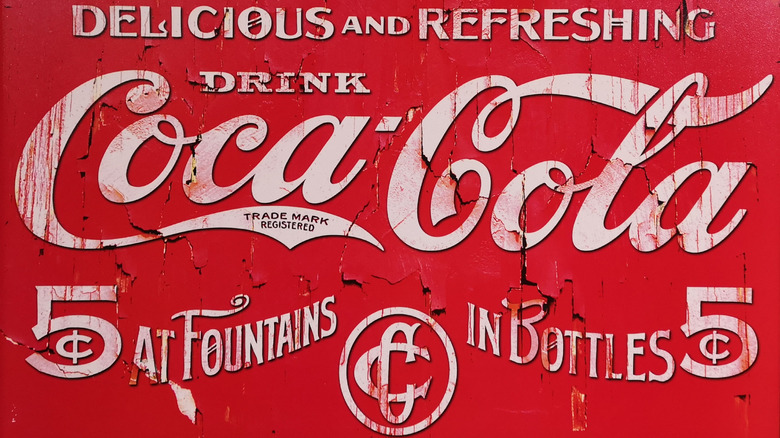
The precise recipe for Coca-Cola is so well guarded that this secret formula has become a marketing tool in itself, though we know that the key ingredients have changed somewhat since the original medicinal offering. You've probably heard the fun fact about Coke that it used to contain cocaine, which certainly would have helped to revitalize any of its customers. The company maintains that the recipe never included cocaine, but the truth is that it did contain extract of coca leaf, which does contain small amounts of cocaine. The Cola part of the name comes another of the original ingredients, the kola nut. Kola nuts are native to West Africa and contain both caffeine and theobromine, further contributing to the stimulating effects of the drinks.
Stigma against cocaine use led the brand to substitute the original coca extract with processed coca leaves in 1903, which retained the flavor without the trace amounts of cocaine. Eventually this was replaced by what's now listed as simply natural flavors. Coca-Cola never promoted the replacement of the kola nut, but independent testing in 2011 showed no trace of the plant, with the caffeine content most likely coming from synthetic caffeine.