

7 Chinese Foods Few Know Have Symbolic Meanings

In most cultures, food is more than just sustenance — it's a celebration of community, identity, and history. Food is deeply woven into traditions that are more important than filling an empty stomach. This is particularly true in China during Lunar New Year festivities. Even those who have never been to China or celebrated the holiday may have enjoyed some of the foods associated with it.
However, food symbolism in Chinese culture goes beyond nationwide festivals and is also an integral part of smaller celebrations, such as weddings and birthdays. While some of that symbolism is linked to the events themselves, much of it is derived from the names of the food, and word play is especially prevalent. The word for dumpling, for example, sounds like the word that describes the start of a new year, which is why dumplings are eaten during New Year festivities — they represent transition.
Some of the symbolism comes from the shape of the foods as well. Lion's head meatballs – named for their resemblance to the heads of Chinese guardian lions – symbolize a well-rounded year to come. To gain a deeper appreciation for how closely food and Chinese culture are intertwined, we spoke with several experts who are bringing these traditions to a wider audience.
Dumplings
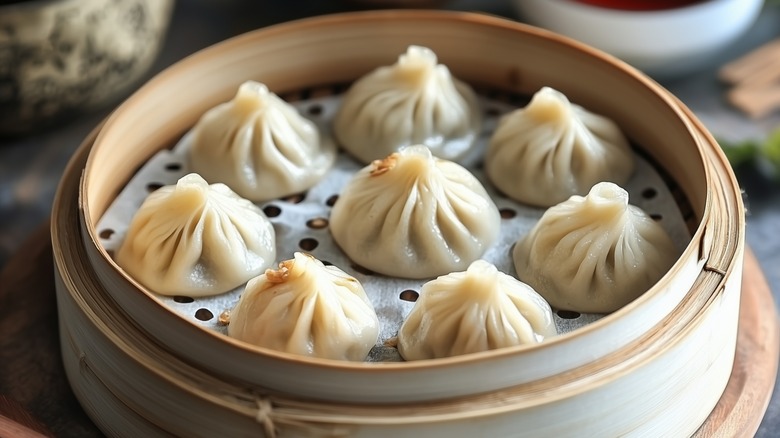
There are many different types of dumplings, even within Chinese cuisine. There are the iconic pork-filled jiaozi dumplings, xiao long bao — which are filled witha delicious, savory broth — and the delicate, translucent, shrimp-filled har gow. When it comes to the Chinese New Year, however, it's jiaozi that hold particular meaning. In fact, their symbolism goes three layers deep.
First, their Chinese name, 饺子 (Jiǎozi), sounds like 交子(Jiāozi), which describes the moment the old year turns into the new one. In this respect, they symbolize renewal and transition. Second, their shape mimics the shape of ancient gold ingots, so they also symbolize wealth. Last, the act of making the dumplings with family represents unity.
Wei Guo, founder of the Chinese recipe website Red House Spice, tells us that dumplings are particularly important in the north, where wheat dominates. Guo was born and raised in northwest China, and she's more than happy to eat dumplings at any time of the year. "Having lived abroad for nearly two decades," she explains, "I still make them from scratch regularly, and with every bite, I feel instantly transported home." If you plan to follow her example (and why wouldn't you?), be sure to follow these tips for making the perfect homemade dumplings.
Whole chicken
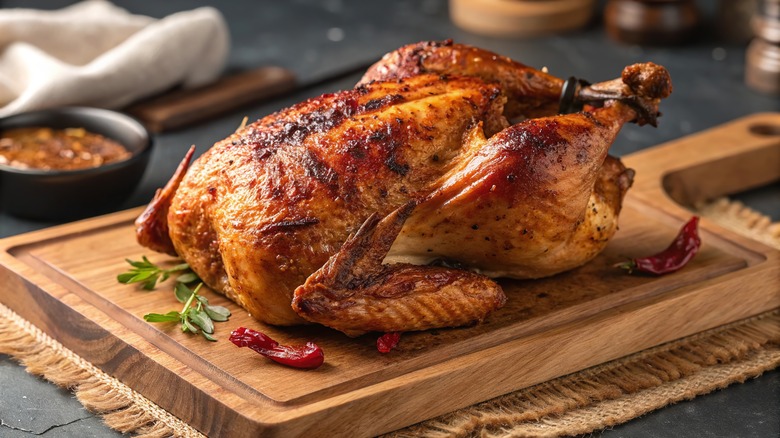
Many home cooks appreciate the advantages of roasting a whole chicken. Not only can you make an entire dinner in one pan with minimal prep, but that chicken often stretches into multiple days of leftovers. You can also use the remains to produce a rich, versatile chicken stock that works as a base ingredient for countless spinoff recipes, including hearty soups or delicious casseroles. In China, there is another reason to make this simple and practical dish, and it might just bring you a deeper sense of wellbeing.
According to Sarah and Kaitlin Leung, who created the Woks of Life recipe website with their parents, a whole chicken represents family and completeness, which is why it is regularly served on holidays and festivals that feature family gatherings. The word for chicken is also a homophone for "ji," which means luck and prosperity. It's often included in celebratory New Year feasts to spread good fortune for the year ahead.
Fish
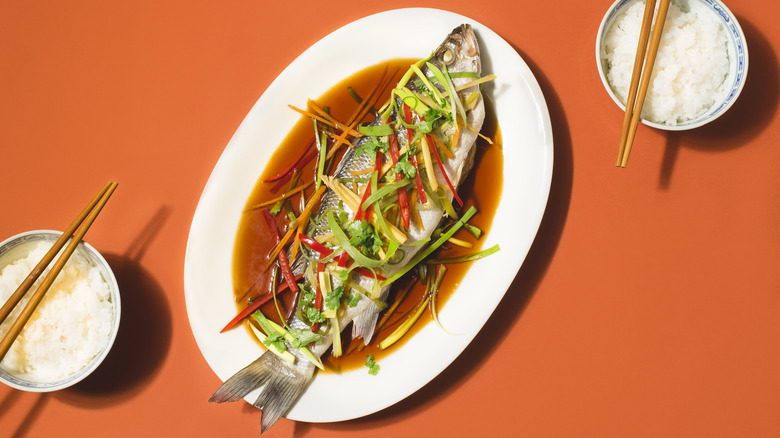
Like chicken, fish has a symbolic meaning in Chinese cuisine due to similarities with another word. In China, the word for fish, 鱼 (yú), sounds like the word for abundance, 余 (yú), making it an essential menu item during the Chinese New Year feast, which contains multiple foods that symbolize wealth and prosperity. According to Wei Guo, there is even a saying in Chinese culture — 无鱼不成席 (Wú Yú Bù Chéng Xí) — which means that no feast is complete without fish.
There are many ways to cook a fish, of course. You can grill it, bake it, sauté it, and even deep-fry it. But one of the most popular options in China is the Cantonese style of preparation: steaming. There are many perks to steaming a fish Chinese-style, such as the quick cooking speed and the tenderness of the finished product. When topped with a light soy sauce and aromatics like fresh ginger and herbs, it makes a mouthwatering centerpiece. That said, some types of fish are considered luckier than others during the Lunar New Year, so be sure to choose the right one.
Mooncakes
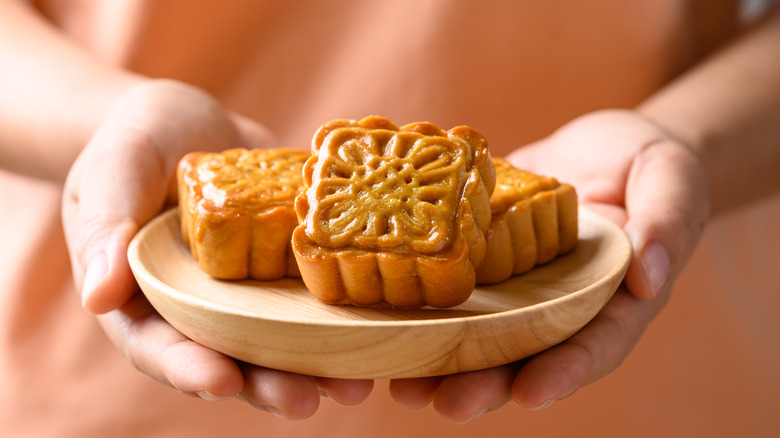
Mooncakes are small pastries, usually shaped into circles, like the full moon, and feature flavorful fillings such as lotus seed paste and red bean paste. They are the cornerstone of Mid-Autumn Festival eating, which falls on the 15th day of the eighth month of the lunar calendar. Mooncakes are so integral to this holiday that it's sometimes called the Mooncake Festival. The event has supposedly been celebrated for over 2,000 years, and although it was originally held to commemorate the autumn harvest, it is now a time for friends and family to gather, watch the full moon, and eat as many mooncakes as their stomachs will allow.
But what makes this beloved treat so special? Kaitlin and Sarah Leung note that mooncakes vary greatly around the country, and that some are savory rather than sweet. However, when it comes to symbolism, they are consistent in representing family unity. While you can make these delicious pastries at home, you can also have mooncakes shipped right to your door.
Cooked lettuce
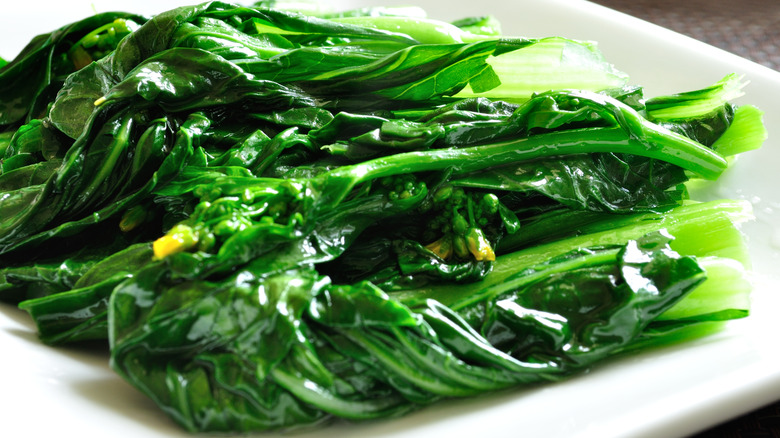
In American cooking, you might heat up spinach and kale, but lettuce is usually served as is. However, there's no reason why this leafy green can't be cooked – in Chinese cuisine, that's exactly what happens. In fact, in China, you are more likely to find stir-fried lettuce than fresh. Despite being known as a light, almost calorie-free vegetable, when it comes to symbolism, lettuce is all about richness.
"Lettuce 生菜 (Shēng Cài) sounds similar to 生财 (Shēng Cái), which means 'to bring in wealth,'" explains Wei Guo. "Because of this, lettuce dishes are considered lucky symbols of prosperity." Kaitlin and Sarah Leung also tell us that cooked lettuce is often served during Lunar New Year festivities because of its association with good fortune. Like most greens, lettuce does not have an abundance of flavor on its own, so it is usually paired with bold ingredients to compensate. Garlic and chili peppers are common additions, as is soy sauce.
Longevity noodles
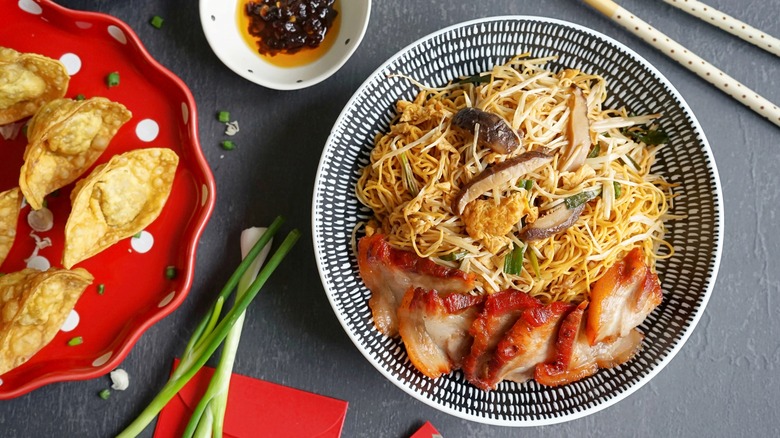
There is no mystery about the symbolism behind longevity noodles — the clue is in the name. These noodles represent a long life and are therefore served during birthday celebrations in some regions of China. Wedding banquets sometimes include them to represent a lasting marriage, and they're also popular during Chinese New Year celebrations. Although longevity noodles are often made up of multiple strands, in some areas, the dish consists of a single, extra-long noodle that fills the entire bowl.
You might argue that any type of noodle could symbolize longevity, but yi mein is associated with it specifically. Yi mein has several distinctions from other types of noodles. The wheat-based egg noodles have a unique, chewy texture, due to the sodium bicarbonate or soda water used to make the dough. They are also pre-fried, which gives them their characteristic golden-brown color. You can find yi mein at most Asian markets, though you may struggle to find them at mainstream grocery store chains. When it comes to recipes, there are many options. You can smother them in a sweet-and-salty soy sauce or add additional ingredients, such as mushrooms and vegetables.
Rice cakes
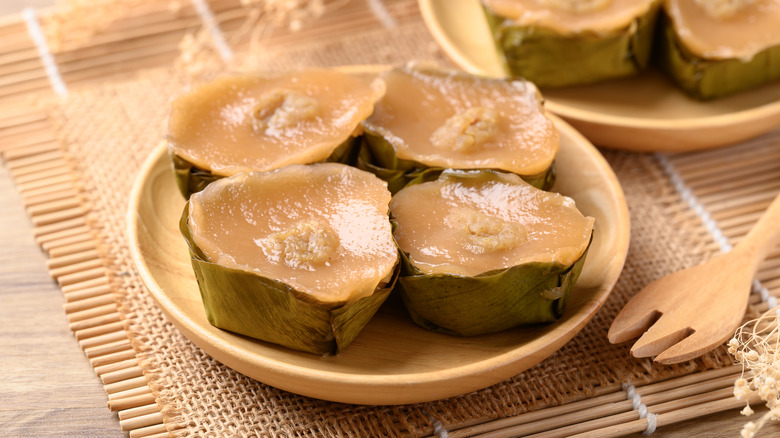
Not to be confused with puffy rice cakes, which you might eat as a snack covered in peanut butter, Chinese rice cakes are a sticky, sweet treat served on special occasions. Called nián gāo, these cakes are made with glutinous rice flour, and typically include a type of sugar called slab sugar or rock sugar, which is compressed and unrefined, providing a deep, caramelized flavor. You probably don't need an excuse to enjoy these delicious cakes, but if you do, you'll be glad to know that they symbolize growth and prosperity, making them always worth eating. That said, they are usually reserved for the New Year.
Like many other symbolic foods in China, rice cakes and their association with growth and wealth are a play on words. "Gāo" (糕) sounds like "gāo" (高), which means "tall" and "expensive." As a result, rice cakes, nián gāo, symbolize both. According to Wei Guo, this tradition is especially strong in the south, where rice is a staple.