

Skip This One Step When Making Beef Stew And You'll Have Deep Regret

We may receive a commission on purchases made from links.
Whether you're gearing up for winter or just love red meat, beef stew should be a staple recipe in everyone's household. An old-fashioned beef stew recipe starts with browning bacon and beef, which leaves a layer of meaty remnants at the bottom of the stew pan. We spoke with Matthew Ryle, chef and author of "French Classics: Easy and Elevated Dishes to Cook at Home," about his best tips for this cold weather dish. Ryle advises us to use that layer of caramelized meat stuck to the bottom of your pan to your advantage — and that means always deglazing the pan!
"Deglazing is one of those small steps that makes a world of difference," Ryle explains, noting that the dark, sticky pieces on the bottom create added flavor. "Deglazing washes that flavor back into the sauce, deepening the stew in a way nothing else can." If you skipped the deglazing and simply built the stew over that precious layer of beefy, aromatic fond, you'd be doing your beef stew a great disservice.
It takes less than a minute to pour some wine over your cooking pot and scrape up all those bits of goodness. The type of classic wine used to deglaze the pan is another source of flavor that brings out the umami richness of the beef fond. So, choosing the best wine for deglazing is another important factor. For a heavy dish like beef stew, red wine or port is ideal.
More tips for deglazing an expert beef stew
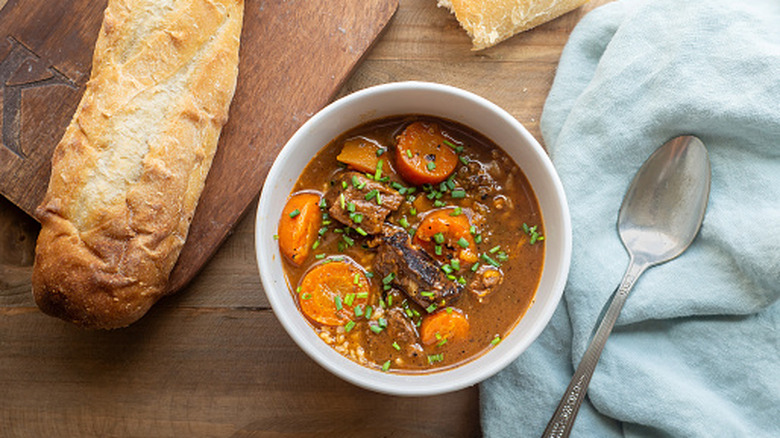
Deglazing is a crucial tip for the best beef stew that you should never skip. But Ryle has more tips for deglazing and other important steps in a beef stew recipe. Deglazing requires you to add a splash of wine to the stuck fond, but the pan also needs to be hot to assist the wine in loosening up those beefy bits and evaporating the harsh alcoholic taste of wine. However, if you add wine to a searing hot pan, the alcohol may burn, sabotaging the wine's fruity, earthy richness and interfering with the flavors of the beef. "A helpful tip," adds Ryle. "If your pan is fiercely hot, add a splash of water before the wine. It prevents the alcohol from burning and keeps the flavor clean." For that matter, a splash of water can keep that layer of beefy fond from burning, too.
As for the best cut of beef for beef stew, Ryle opts for "meat with character, fat, sinew, and collagen that melt slowly into tenderness," namely ox cheeks and short ribs. To that effect, Ryle adds a warning. "If there is one rookie mistake to avoid, it is impatience," he adds. "Low and slow is the difference between tough meat and something that falls apart at the touch of a fork." Chef Ryle's cookbook features the French beef stew, beef bourguignon, but his tips on patience apply to beef stews around the world.