

The Only Way You Should Be Storing Le Creuset Cookware
We may receive a commission on purchases made from links.
Le Creuset cookware is a hefty investment, but when it is properly cleaned and cared for, it can last for generations. In addition to following the manufacturer's instructions on how to use and clean your Le Creuset cookware, you should also know how to store it. While some people make the mistake of always keeping their cookware out on the stovetop, where it is exposed to steam, moisture, and temperature fluctuations, it should actually be kept in a cool, dry place.
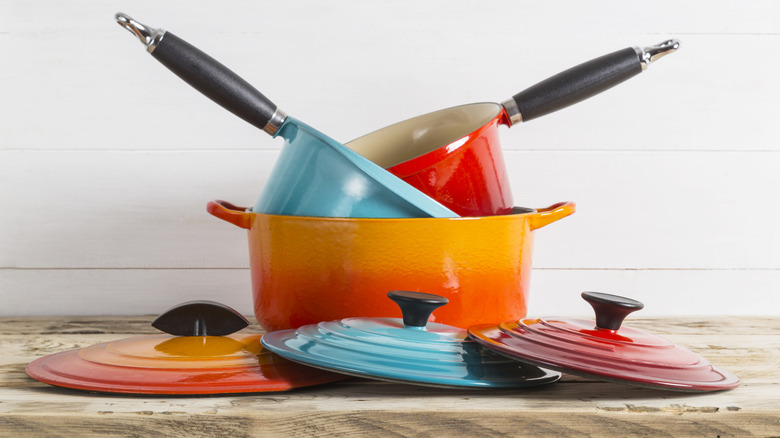
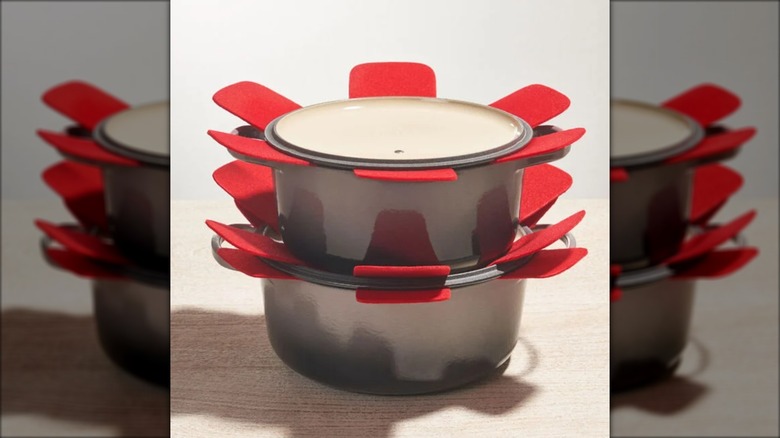
Le Creuset also recommends cleaning your cookware before storage and making sure it is completely dry before putting it away. Lids should be stored on top of the pots, knob-up, or stored separately to prevent scratching. If you are going to stack pieces inside of each other, you should use felt pot protectors, a microfiber cloth, or a kitchen towel to prevent scratches.
Le Creuset sells its own brand of felt Cookware Protectors for $20 for a set of three, and they come in red, black, and orange. You can also buy a set on Amazon, like these cute, colorful felt pot and pan protectors by GEWOSI that are just $18.99 for a pack of 20. Further minimize wear and tear by using these protectors under pots that are stored on shelves or in cabinets. Sliding cookware across the wood on shelves or cabinets can cause the bottom of pots and pans to become scratched. If pots and pans are damaged on the bottom, they could damage your induction stovetop or cause food to cook unevenly.
Improper storage could lead to cracks and chips
One of the easiest ways to ruin an enameled cast-iron pan is by storing it improperly. Le Creuset products are designed to be incredibly durable. They are made from quality forged cast iron or stainless steel and protected by a durable enamel coating. Yet if they are not used or stored properly, they could be at risk of scratches or chips. When this happens, the underlying cast iron or stainless steel is exposed. This means the product is no longer nonstick, and that you're much more likely to get food stuck on your Le Creuset skillet or Dutch oven.
Cracks and chips also allow food, oil, and moisture to penetrate the underlying material. This can cause rust or corrosion, or damage the material so that it is unsafe to use. It may also harbor bacteria, which can then enter the food you're cooking and cause illness. Le Creuset says that you should discontinue use of a product if the interior enamel has chipped, as chips can be dangerous if ingested. If you want your pots and pans to last as long as possible and maintain your product warranty, you should follow Le Creuset's guidelines for proper care and use.