

The Fresh Lemon Cleaning Trick That Revives A Smelly Dishwasher

Dishwashers are some of the most underrated appliances in the kitchen — they're always there to clean up the mess. But you do need to take care of your dishwasher so it can keep working as intended. Hard water mineral buildup and old food residue stuck in filters and corners can make your dishwasher run poorly and smell bad. There are things you can buy at the store to freshen it up and keep it running well, but why spend the money when you have lemons on hand?
We already know there are plenty of ways to clean your kitchen with fresh lemon. Instead of tossing out your old lemons, place half a lemon on each rack of your dishwasher before running it. It will release some juice and oils during the wash cycle, helping to deodorize the entire dishwasher and remove some lime and mineral deposits. You get clean dishes with a faint lemon scent, while the oils in the lemon work to prevent water spots and cloudy glasses.
Lemons are loaded with citric acid, which is what makes them so effective at cleaning. If you have a smelly dishwasher that's making your dishes smell weird, that acid can cut through grease and grime easily — and the scent is a nice bonus. Combined with your normal dishwashing detergent and hot water, fresh lemons add another layer of cleaning power to your wash cycle.
Using the power of lemon
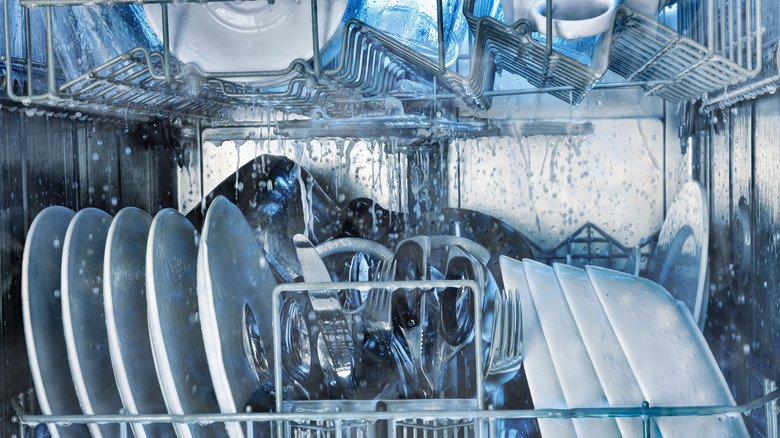
If you are using a fresh lemon and cutting it in half, make sure you take the seeds out — you don't want those getting stuck in your dishwasher and causing problems. You don't need to remove all the pulp, either. Just put the lemon cut side down on a rack amongst your dirty dishes. If you don't want to pluck old lemons out of the dishwasher, another option is to use a bowl of fresh lemon juice on the top rack. Simply squeeze the lemon, remove the seeds, and run the dishwasher as normal. This will provide the same benefits of deodorizing and removing mineral and hard water buildup. Another dishwashing hack is to run a cycle with a cup of baking soda along with the lemons. Use the lemons as described, but sprinkle a cup of baking soda in the bottom of your dishwasher, as well. Run a hot cycle and you'll have a fully refreshed, deodorized, and clean dishwasher when the cycle is done.
If you have a stainless steel dishwasher, make sure you are not using fresh lemon to clean it too often and that it is draining properly after the rinse cycle. Lemon juice can cause stainless steel to corrode over time, but as long as contact is minimal and diluted with water in a normal wash cycle, it should not pose a problem in the dishwasher. Since heat accelerates corrosion caused by acids, make sure you turn off the heated dry cycle any time you use lemon inside.