

Tiramisu's Lesser-Known, Boozier Cousin Deserves A Spot On Your Dessert Table
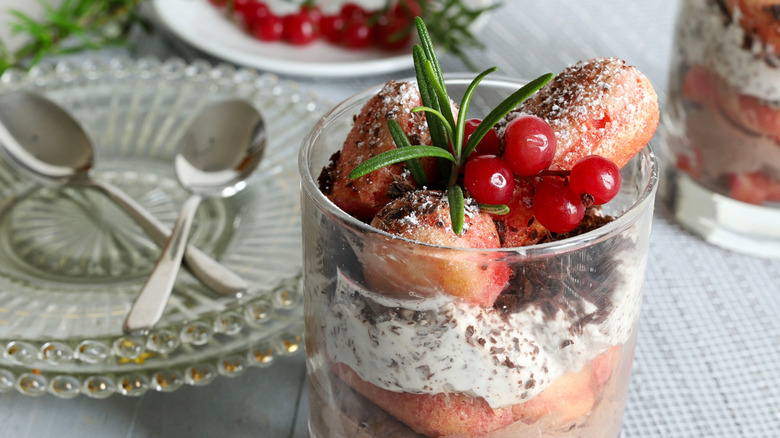
Like boozy delights? If you have mastered our classic tiramisu recipe, it might be time to set your culinary sights on other kinds of Italian desserts. Just as making a classic Italian tiramisu requires you to lay down layers of delicious ingredients, Zuppa Inglese will have you piling pieces on top of each other — some of which have been soaked in liqueur.
To make this Italian dessert, ladyfingers are traditionally soaked in alchermes liqueur and placed into the bottom of a dish or bowl before custard cream is spread on top of the boozy pieces. After several alternate layers have been stacked, this sweet structure is finished with one last slather of custard cream and a crowning of whipped cream. Once this treat is assembled, the stack is left to chill for several hours and can be garnished with fruit or chocolate shavings just prior to serving. The presentation resembles an English trifle, and though we can't be exactly sure where this dessert initially came from, Italians lay strong claim.
A dessert with many expressions
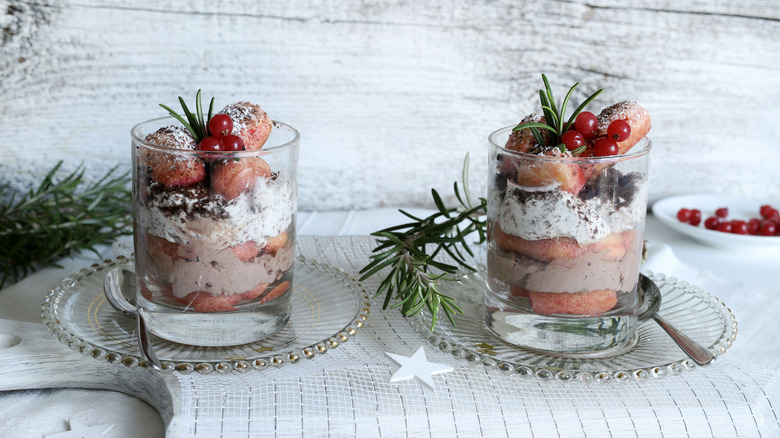
Sixteenth-century Italian chefs working in court kitchens are said to have experimented with using bread dough, bracciatella, and sponge cake to make the layered treat, while housekeepers working in Florence made concoctions of sweet wine and old biscuits before bringing custard and pudding into the equation. The presence of alchermes in the recipe supports a Tuscan origin; however, a range of recipes to make this treat can be found.
Some recipes to make Zuppa Inglese use rum instead of liqueur-soaked pieces to stack the dessert, while others bring homemade ricotta cheese into the creamy fold. Dustings of cocoa powder can bring classic refinement to the pretty presentation, while a careful placement of seasonal berries can offer freshness to seekers of sweetness.
Whether you use long ladyfingers to create a larger dish or spoon sponge cake into individual portions, this is the kind of dessert that is sure to delight dinner party guests — and one you won't easily grow tired of either making, serving, or eating. When a recipe is this aesthetic and delicious, it deserves a spot on your go-to menu rotation.