

15 Retro Alcoholic Drinks That Bring Us Back To The '80s
We may receive a commission on purchases made from links.
If you were a kid in the 1980s, the chances are you remember feasting on foods like Jell-O pudding pops and fish sticks. But if you were a college kid or young adult during this time, you probably recall the unique offering of fun alcoholic drinks more than anything. The '80s helped create and popularize many different beverages, plenty of which are still enjoyed today. Long Island iced teas, White Russians, and Espresso Martinis were all in their heyday during this decade, for example.
However, not everything from the 1980s stood the test of time, though. Had a wine cooler recently? We'll hazard a guess that you probably haven't, because that 1980s classic lived and died within the decade. Want to take a boozy trip down memory lane? Below, we've listed all of the retro alcoholic drinks that make us feel like it's the '80s again after just one sip. Slippery Nipple, anyone?
Kamikazes
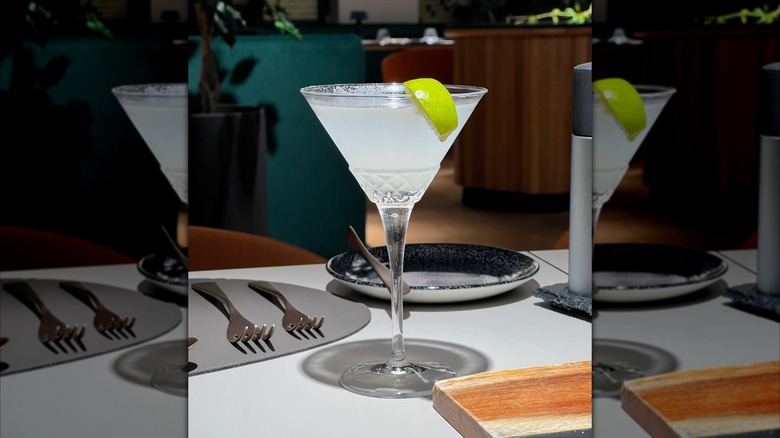
If you like margaritas, there is a good chance you would have enjoyed Kamikazes back in the 1980s. Made with vodka, triple sec, and lime juice, the simple cocktail is a little sweet, a little sour, and has just the right amount of citrus. There are a few theories about where the Kamikaze actually came from. But one of the most common is that it was derived from a shot created on an American naval base in Japan after the Second World War. This would make sense, given the name. Kamikazes were young Japanese pilots who would often deliberately and suicidally crash into Allied ships during the war.
Other proposed origin stories, though, are less bleak. Some say the cocktail was actually invented during the 1970s disco scene — the name chosen purely because of the drink's potency. Regardless of how it came about, the cocktail was certainly big back in the 1980s. It even gets a shout-out in "Cocktail," a 1988 romance movie starring Tom Cruise.
Long Island Iced Tea
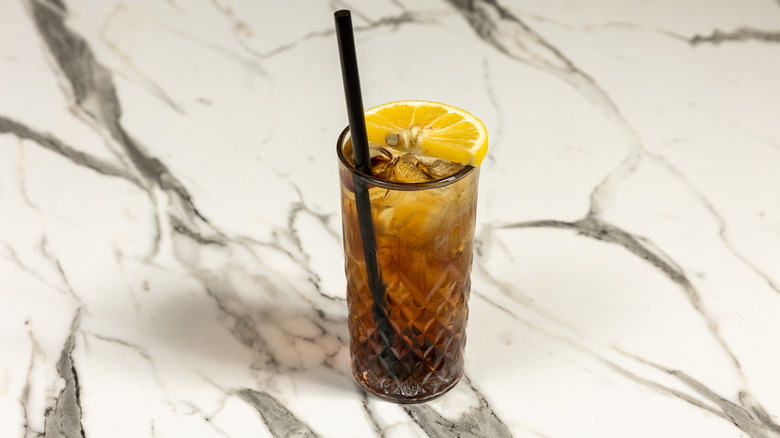
Long Island iced teas are not for the weak or those who have to work in the morning. As you'll already know if you're a fan of the cocktail, this drink is a potent blend of different strong spirits, including gin, tequila, rum, and vodka. Some choose to add triple sec to the mix, too, while others opt for whiskey. All of this alcohol is then blended with cola and some lemon and lime juice for flavor.
There are a few different origin stories for the Long Island iced tea. Some say it was invented on Long Island, Tennessee, during Prohibition in the 1920s, while others claim it was created much later, in Long Island, New York, in the 1970s. Wherever it came from, there's no denying that everyone (and by everyone, we mean college frat boys) was drinking Long Island iced teas in the 1980s.
The cocktail is still offered on many bar menus, but many avoid it due to the fear of the impending hangover. "I think the majority of people who used to drink these no longer do because the amount of alcohol interferes with their prescription medication," one Redditor speculated in r/80s.
Wine Coolers
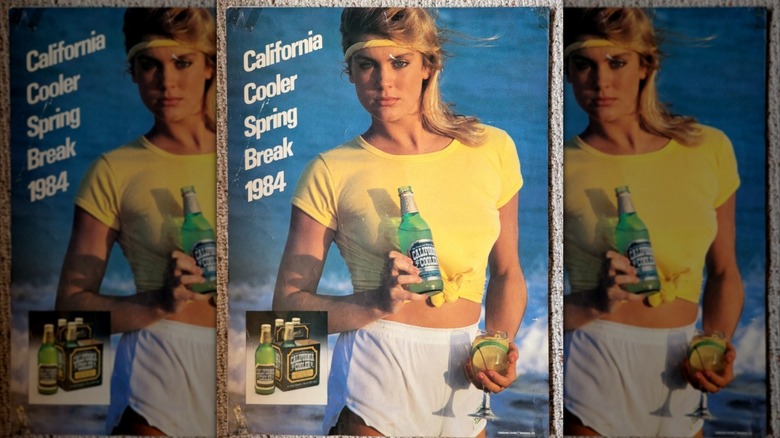
No, we're not referring to the special fridge that keeps your wine chilled. We're discussing the drink, which was hugely popular in the 1980s but isn't really drunk that much anymore. The first wine cooler to hit the market was the California Cooler. It was 1981, and a man named Michael Crete had taken the flavors of all the beverages he used to enjoy on his beloved Santa Cruz beach, options like pineapple, grapefruit, white wine, club soda, and lemon-lime, bottled them up, and sold them.
It was a big hit. In fact, by 1984, Crete and his business partner and friend, Stuart Bewley, were selling millions of wine coolers. The biggest appeal was its low alcohol content, making it an easy drinker that was more comparable to beer than wine. With California Cooler, Crete started a wine cooler boom, and many brands rushed to produce their own. But the popularity didn't last, and by the 1990s, wine coolers had fallen out of favor.
Slippery Nipples
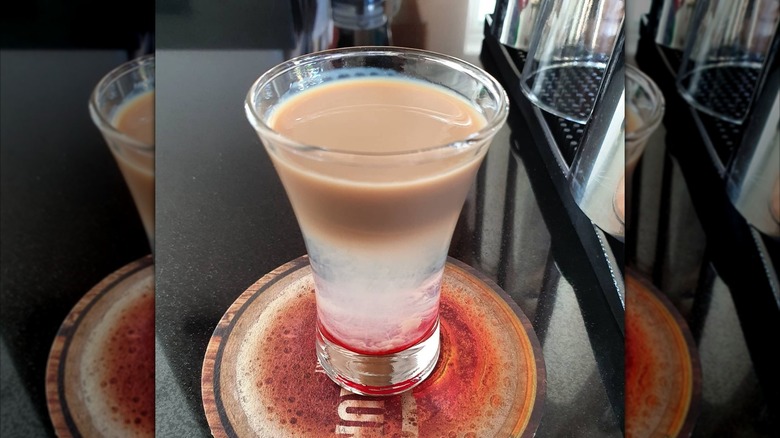
As you're about to find out with the next few entries on our list, the 1980s did not shy away from a cocktail with a fun, crude name. We'll start with the Slippery Nipple, which is a creamy, sweet shot made with sambuca, Irish cream liqueur, and sometimes grenadine. The name was apparently inspired by the way the drink looks and tastes. The Irish cream gives it a smooth "slippery" texture, while the grenadine separates and sits like a nipple at the bottom of the shot glass. The Slippery Nipple also has a sibling: The Buttery Nipple, which swaps out the sambuca for butterscotch schnapps.
Many prefer the Buttery Nipple to its slippery sibling, probably because of its rich, buttery taste, which is a little kinder on the palate than grenadine. The latter is known for its distinct, sharp, tart, overly sweet flavor. Want to know what a Slippery Nipple actually tastes like without drinking one? One Redditor in the r/cocktails subreddit offers this description: "... a tacky sugar bomb from the dark 1980s." We'll leave you with that.
Sex on the Beach
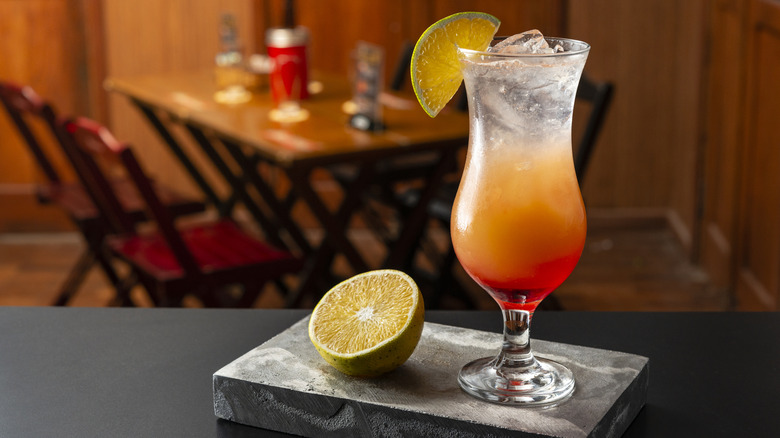
We told you the 1980s loved a crudely named cocktail. Sex on the Beach is still a regular feature on cocktail menus now, but its heyday was arguably the 1980s. The ultra-fruity drink, made with a mix of vodka, peach schnapps, cranberry, and orange juice, was synonymous with summer. As the name suggests, this cocktail was designed for enjoying on vacation.
Like many cocktails, the exact origins of Sex on the Beach are debated. But most believe it came from the Sunshine State, Florida. One theory maintains that it was invented by a bartender to sell more peach schnapps to people on spring break. However, that probably wasn't the case, as that story was set in 1987, and we know the drink was featured in cocktail recipe books in the early 1980s. Wherever it came from, the truth remains that Sex on the Beach very quickly became an icon in this decade. Like Kamikazes, it also gets a mention in the movie "Cocktail."
The Orgasm
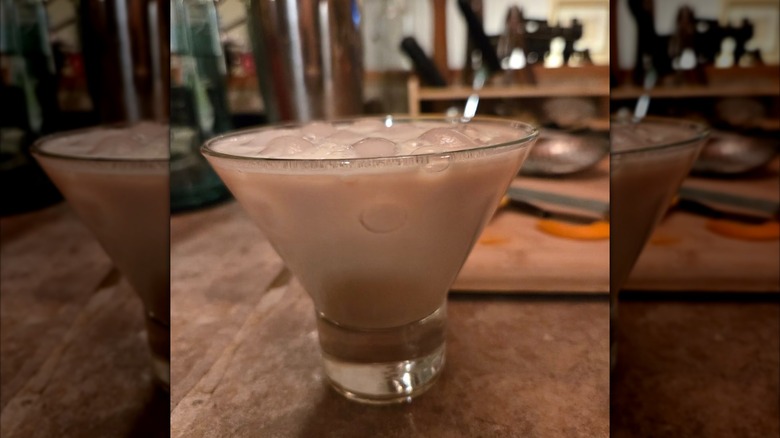
We're not done with the suggestive cocktails yet. Enter: The Orgasm. This drink has a similar texture to a slippery nipple shot, thanks to the Irish cream. The liqueur is then blended with Amaretto and vodka, and topped with a maraschino cherry. Honestly, it looks and tastes more like a dessert than a drink.
Back in the 1980s, people were ordering The Orgasm cocktails frequently. It was even listed as an official cocktail for the International Bartenders Association (IBA). This basically means it was super popular, since the IBA limits its official cocktails to the most requested around the world. It's no longer deemed popular enough today, though. The Orgasm stopped being an official IBA cocktail in 2011. Again, like the Slippery Nipple, The Orgasm had a sibling. The Screaming Orgasm was also popular in the 1980s. It was very similar to the original but served with additional milk and vodka.
White Russian
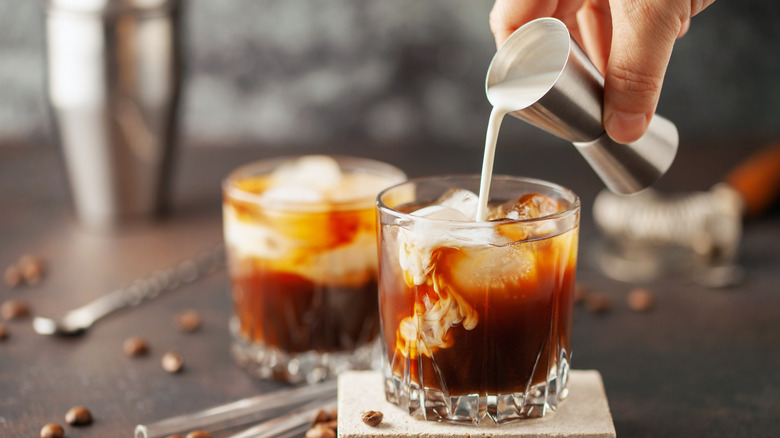
You might assume that the White Russian cocktail is, well, Russian. But that's not actually the case. The creamy, rich drink, made with coffee liqueur, vodka, and cream, probably stemmed from a cocktail created in Brussels, Belgium, in the 1940s. The Russian part probably came from the addition of vodka, which is strongly associated with Russia. The "white" part probably came in the 1950s, when cream was added to the mix.
White Russians are often thought of as a 1990s drink, due to their starring role as The Dude's go-to drink in the 1998 hit "The Big Lebowski." But they were actually widely popular before this — in the 1960s, 1970s, and, you guessed it, the 1980s. One Redditor in the r/lebowski subreddit, who was a bartender in the 1980s, confirmed that they made plenty of White Russians for their customers in this decade. They noted that these drinks were called "Caucasians," then, too, suggesting that the slang term for the drink may have predated The Dude (who used this nickname a lot).
Espresso Martini
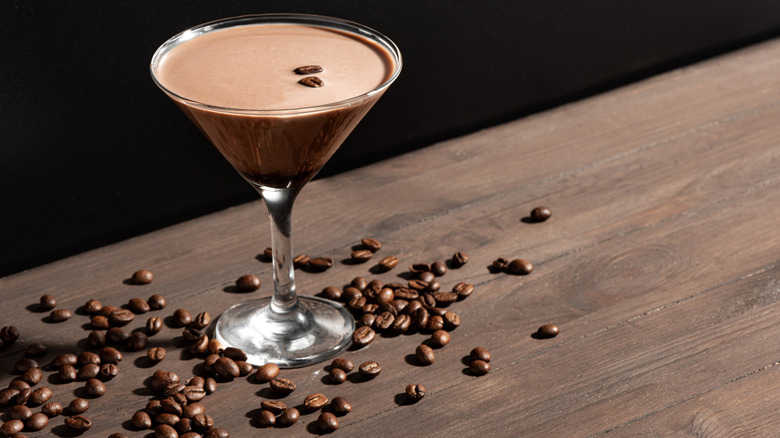
The espresso martini has quickly become a modern classic. Today, you'll find the creamy coffee-based cocktail served in many bars and restaurants. It's so popular, it even has its own National Day (Espresso Martini Day falls on March 15 every year, in case you wanted to mark your calendar). The espresso martini story begins in an iconic London nightclub, called Fred's Club, in the mid-1980s. A bartender named Dick Bradsell was apparently asked by a model to make her something that would "wake her up and f**k her up," (via Class Bar Mag). And so the espresso martini was born; needless to say, it was a hit.
While Bradsell's original version was made with coffee, coffee liqueur, and vodka, today, many different twists on the cocktail exist. It's endlessly versatile — you can make it with everything from caramel apple (see recipe) to peanut butter to citrus (elevate the drink). Some even swear by adding a sprinkle of Parmesan cheese to the cocktail.
The Bramble

Bradsell was really on a roll in the 1980s. He didn't only create one of the most popular cocktails of all time (the espresso martini), but he was also the mastermind behind another classic 1980s cocktail: The Bramble (one of the simplest cocktails of the '80s). Again, he invented the drink while he was busy selling drinks to models and famous musicians at Fred's Club.
According to Bradsell, he wanted to offer a drink that was distinctly British. That's why he chose crème de mûre, a type of blackberry liqueur, in honor of his childhood spent picking blackberries from the prickly brambles (get it?) of the English countryside. The other ingredients are incredibly simple: gin, fresh lemon juice, crushed ice, and sugar syrup. If you like a Cosmopolitan cocktail, there's a good chance you would enjoy the Bramble. It's fruity, brightly colored, and easy and pleasant to drink. Truly, what's not to love?
Midori Sour
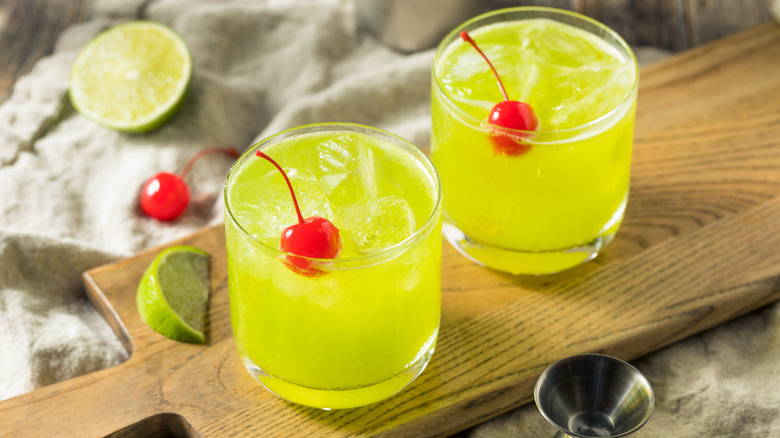
A Midori Sour is not a subtle drink. Firstly, it's bright, green ectoplasm; secondly, it has a pretty punchy flavor, thanks to its signature ingredient. That signature ingredient is Midori. The Japanese melon liqueur is incredibly sweet and sugary, and in a Midori Sour, it's combined with ingredients like vodka, lemon juice, lime juice, and club soda.
Midori hit the U.S. in the late 1970s, and the Midori Sour soon followed. The cocktail was incredibly popular throughout the 1980s, and many remember ordering it as their very first drink. It tended to appeal to a younger audience, thanks to its bright color and fruity taste.
Midori Sours eventually fell out of favor, as people eventually grew tired of sickly sweet drinks. But lately, they seem to be having a little bit of a resurgence. If you want to try it, cocktail consultant and educator Tiffanie Barriere told Tasting Table that swapping out the vodka for light rum complements the melon and makes the cocktail taste even more tropical.
Piña Colada
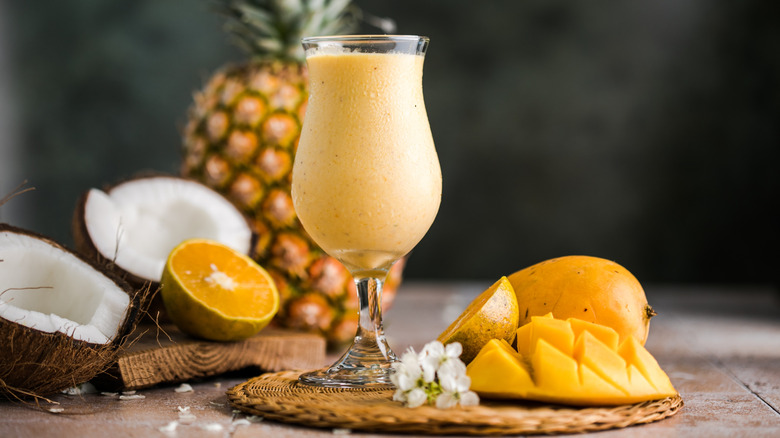
We'll be honest, when we think of a piña colada, one particular song pops into our head. You know it already, but it goes something like this: "If you like piña coladas, and getting caught in the rain." You're welcome, that'll be stuck in your head all day now. The song "Escape" was released by Rupert Holmes in 1979, and it became a vacation anthem.
Holmes, who has become somewhat synonymous with the cocktail, was British-American. However, the piña colada itself, made with tropical ingredients like rum, coconut cream, and pineapple juice, was thoroughly Puerto Rican. In 1978, it was named the island's national drink. By the 1980s, though, helped along by Holmes, it was a favorite across the U.S. It was usually found served at a poolside bar, blended with ice with a slice of pineapple stuck to the rim. Unlike other 1980s cocktails that are no longer as popular as they used to be, the piña colada is still widely in demand. In 2024, it placed 56th on Difford's Top 100 Cocktails list.
Lemon Drop
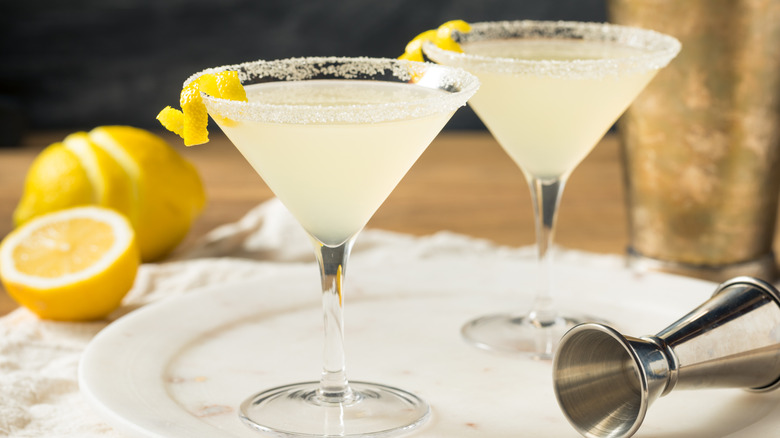
Like most alcoholic drinks that were popular in the 1980s, the Lemon Drop is all about keeping things light, fun, and fruity. Inspired by the hard candy, it's made with a mix of vodka, triple sec, lemon juice, and syrup, and then served in a classic martini glass with a sugared rim. While it was certainly ordered a heck of a lot from the bars of the 1980s, it was actually first created in the 1970s.
One commonly accepted origin theory states that it was invented at a bar called Henry Africa in San Francisco. The bar was a fern bar, which basically means there were a lot of plants everywhere. The atmosphere was upbeat and friendly, designed to pull in male and female customers. The Lemon Drop fit the vibe perfectly. Today, the Lemon Drop tends to be more popular in shot form than in cocktail form. The recipe for the shooter is very similar to the cocktail, as it's made with a simple mix of vodka, lemon juice, syrup, and sugar.
Woo Woo

We can't talk about fruity, fun, vibrant cocktails without mentioning the Woo Woo. A mix of vodka, peach schnapps, and cranberry, this drink, served in a highball glass, was another popular choice at the bars of the 1980s. It was probably actually invented in the 1970s (fun fact: Its full name was Teeny Weeny Woo Woo), but the 1980s were undeniably its era.
Peach schnapps-based cocktails, in general, were big during this decade, largely thanks to the launch of DeKuyper's popular version of the peach-flavored liqueur, called Peachtree. The liqueur wasn't just used in the Woo Woo and its close cousin, Sex on the Beach, but also in other oddly-named fun and fruity drinks of the era like the Iguana Wana and the Fuzzy Navel. There isn't a huge amount of difference between a Fuzzy Navel and a Woo Woo. While the latter is made with cranberry juice, the former favors orange juice.
Blue Curaçao
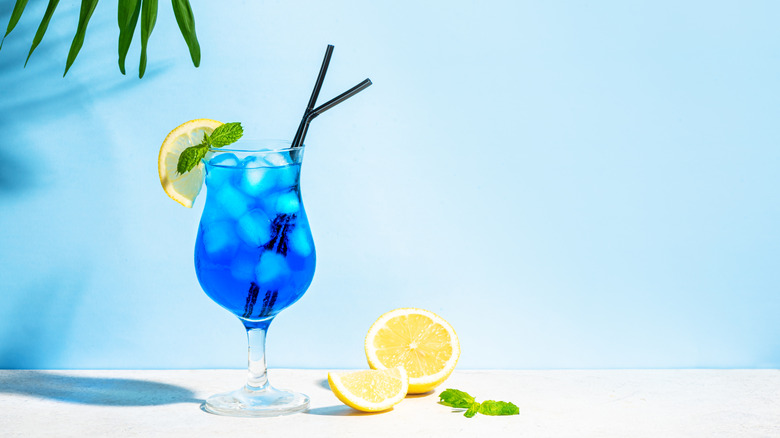
Peach schnapps was certainly having a moment in the 1980s, but it wasn't alone. Another liqueur that was unavoidable during this decade was Blue Curaçao. Despite what the color may lead you to believe, this liqueur was actually orange-flavored (the bright blue shade came from a dye).
In the 1980s, blue curaçao showed up in many bright, fruity cocktails. There was the Blue Lagoon, for example, which was a mix of blue curaçao, vodka, lime juice, and lemonade, often served with a wedge of lime or a maraschino cherry. The Blue Hawaii was also a popular choice, loaded with vodka, rum, blue curaçao, sour mix, and pineapple juice. And then there was the Swimming Pool, which was a combination of ingredients like blue curaçao, white rum, cream of coconut, pineapple juice, and vodka. Again, we're staying on theme for the drinks of the 1980s. Blue Curaçao cocktails were all about keeping things upbeat, fun, vibrant, and making the drinker feel like they were on vacation.
Tequila Sunrise
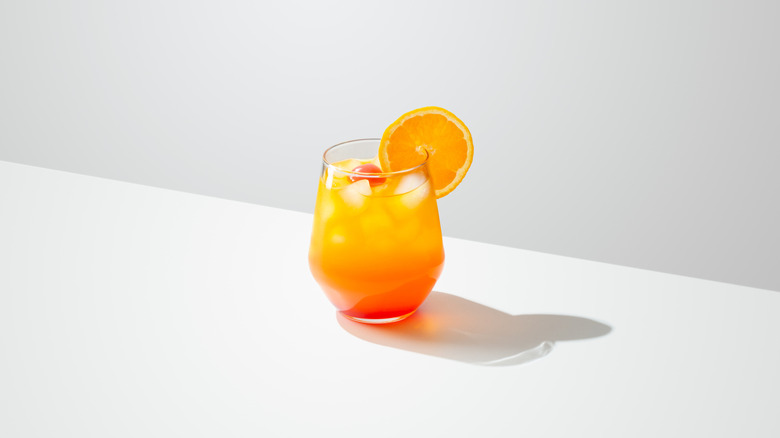
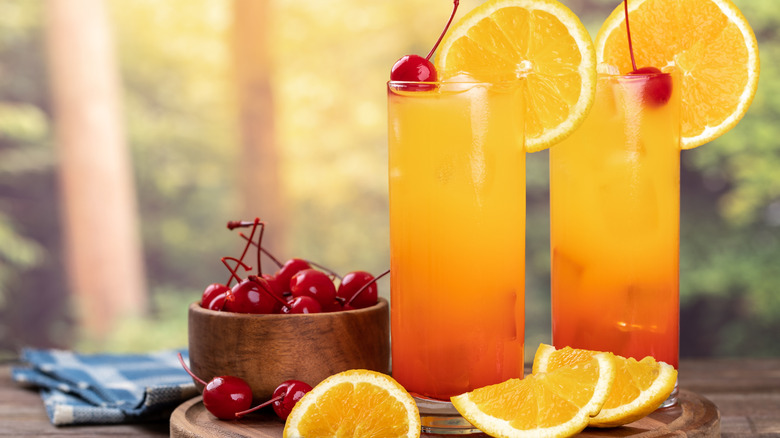
The Tequila Sunrise is another classic cocktail that aims to make you feel like you're on vacation. It makes sense, given that it's commonly believed to have originated from a resort in Tijuana in the 1920s. It also looks just like the sun, with its hues of red and orange that come from the combination of orange juice and grenadine. The final ingredient is tequila, but you already guessed that from the name.
This cocktail may have originated in the 1920s, but it was really in the 1970s and 1980s that it was all the rage. This was largely thanks to Mick Jagger of the Rolling Stones, who was a big fan of the cocktail; the American band, Eagles, who released a song named after the drink, and the 1988 movie "Tequila Sunrise." The latter doesn't actually feature the cocktail, but rather a heck of a lot of tequila. However, the name alone makes you think of the fruity drink.