

The Common European Dining Experience Travelers Wish Would Come To America
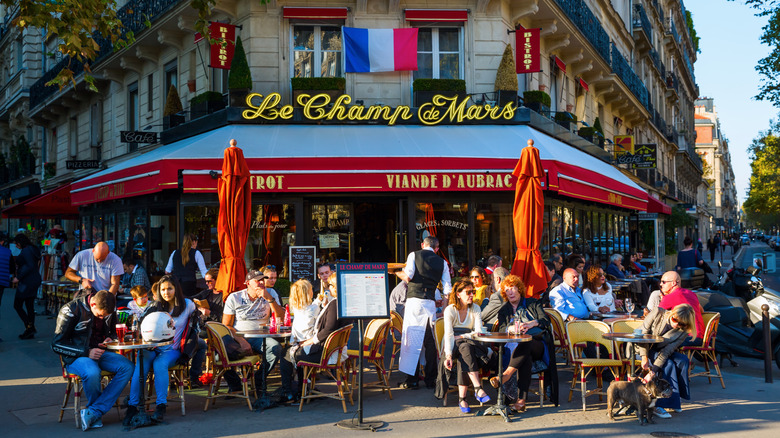
If you live in the States, you're familiar with the fast-paced nature of American coffee culture. But even though the quick grab-and-go experience is convenient, those who have traveled around Europe have seen a different type of coffee culture, one they wish would become more popular in America.
European cafés are slow and relaxing. Forget grabbing a jug of iced caramel macchiato with three pumps of syrup in a drive-thru. In Europe, ordering coffee is also very uncomplicated, as many people usually stick to the trusty espresso, sometimes with the addition of milk and sugar. More importantly, though, coffee is a sit-down experience in much of Europe.
Cafés are a social place where people meet up with friends, family, or colleagues to catch up and relax. A single cup of coffee can be enjoyed for a long time, and the waiter won't be rushing you out. Groups can sit at a café for several hours, just chit-chatting. In various European countries, that's a big part of everyday life, which is why you'll see so many cafés. In a Reddit discussion about different countries' coffee cultures, a user remarked, "In the Balkans every city has so many cafes and they're always full." Elsewhere on the forum a poster said, "One of my most favorite things to do in life is to sit outside at a cafe in Paris daydream and people watch."
Why hasn't café culture taken off in America yet?
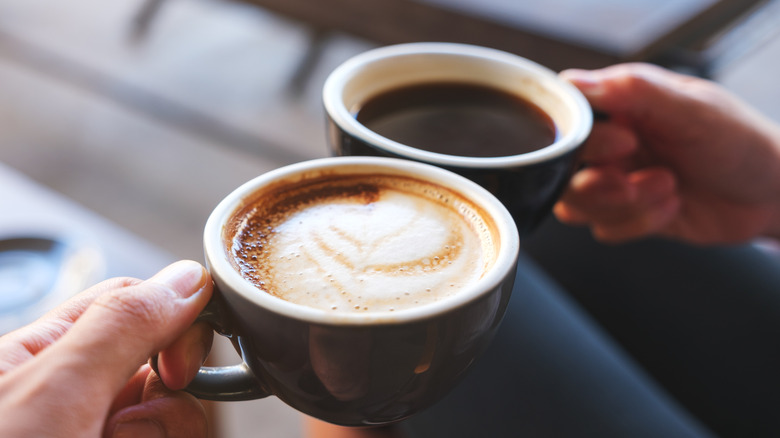
The American lifestyle is generally considered more fast-paced than European, so the difference in their coffee cultures could simply be an extension of that. As one commenter pointed out online, in the U.S., "there is absolutely no culture of slowing down to relax and drink coffee. Coffee is more like fuel for work." In parts of Europe, coffee is enjoyed much like a ritual, and it's actually associated with taking a break — for example, the Swedish daily fika.
Another reason could be that the U.S. is significantly more car-based, and being able to walk everywhere is not the norm. It's therefore much simpler to just grab a drive-thru coffee and continue with your day. In contrast, European cafés are ever a walking distance away, located near pedestrian areas where any passersby can pop in, so it makes less sense to drive out for coffee.
Despite their differences, the two coffee cultures might be influencing each other. Coffee to-go has gained traction in some areas of Europe, such as Scandinavia And in the U.S., the desire to have more cafés where people could slowly sip their coffee is certainly present. In fact, creating a slower-paced café culture is one of the big changes the new Starbucks CEO has made in 2025, and the trend could eventually extend to other big coffee chains too.