

Don't Say Goodbye To Your Rosemary Just Yet – Here's How To Help It Through Winter
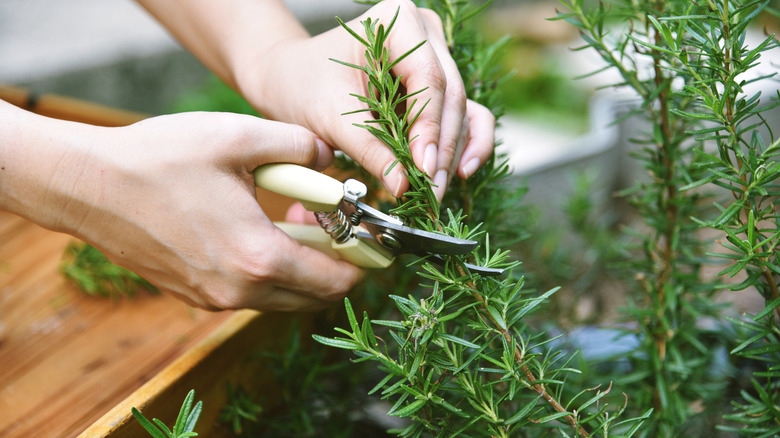
When rosemary bushes flourish, there's a good chance the owner is a devotee of the wonderfully fragrant, flavorful herb — for both culinary and household or medicinal use. It's sturdy, largely self-sufficient, and even keep insects at bay. But alas, it can be a bit sensitive when winter rolls around and temperatures drop. Most of the common rosemary varieties in America are hardy only in temperatures above roughly 20 degrees Fahrenheit, which may be okay in states like Florida and parts of California, but not such a good gamble for winter-weary regions where temps dip lower and precipitation turns to snow and ice.
Unfortunately, sub-freezing temps can damage or kill beloved rosemary plants if they're left unprotected. For those of us bracing for chilly winter days, it's not a lost cause. There are some fairly easy, practical ways to help your rosemary buddies stay healthy in the challenging months. When rosemary grows in a container, you're already ahead of the game. It's easy to bring the plant indoors before first-frost arrives.
It's important not to shock the plant with a sudden change, so try incremental transitioning. For the first week, move it indoors on chilly nights and back out during warmer days. This helps the branches, roots, and leaves adjust to indoor lighting, temperatures, and humidity levels. Make sure it gets plenty of sunshine, and if possible, let its winter home be a room with cooler temps ranging from about 45 to 55 degrees F. This helps with moisture loss as well as indoor stress factors.
Protect outdoor rosemary with simple steps
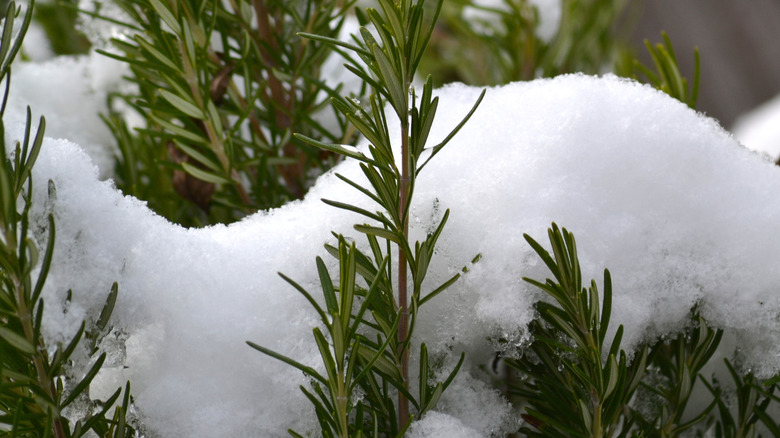
Things are a bit dicier for rosemary plants and bushes already growing directly in a garden, as they're the stress of repotting will likely kill them. In this case, focus attention on protecting them in spite of less-than-ideal conditions. Giving them a fighting chance starts with mulching around the base, using up to 6 inches of resilient materials such as straw, pine needles, or leaves gathered from blustery autumn winds. This helps insulate the roots and base from varying cycles of freezing and thawing.
If you're just starting out with rosemary in a region with consistently cold winters, think ahead by choosing rosemary varieties known for cold hardiness. They include "Arp" and "Hill Hardy," but know your specific USDA Plant Hardiness Zone, and follow recommendations per variety. If it's not possible to winter inside, plant rosemary in a sunny spot and avoid overwatering, which can encourage root rot. Remember, it will already get extra moisture from rain and thawing snow or ice. You can also set the rosemary plant up for success in advance by providing high-drainage soil through course materials such as gravel or sand.
When the plant is still young and small, do try keeping it inside at least for the first one or two winters. Some folks believe that smelling rosemary helps improve memory and task performance — so by all means enjoy that distinct rosemary aroma. Spring and summer will circle back around before you know it. Then it's time for keeping rosemary plants in top shape for future seasons.