

Julia Child's 'Perfect Pizza' Was Cooked On These 2 Materials
We may receive a commission on purchases made from links.
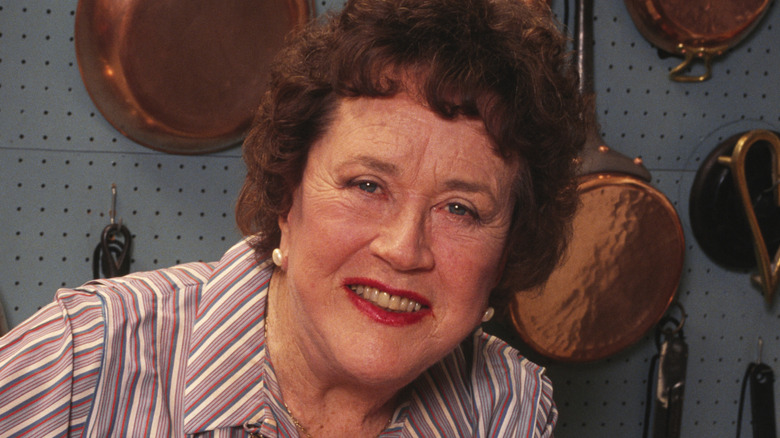
Unlike more polished modern cooking shows, Julia Child's iconic series "The French Chef" was simple, down-to-earth, and sometimes slightly chaotic. When watching old episodes, much of the advice she gives focuses on using items you already have in your kitchen or repurposing other items to create gourmet meals rather than buying expensive luxury cookware or kitchen gadgets. In a Season 8 episode of "The French Chef," Child shows us how to make the "perfect pizza" using tiles or fire bricks and a cedar shingle or wooden board.
During the Julia Child on PBS video, she explains that commercial pizza ovens typically have a surface made of tile or fire brick that prevents the pizzas from getting soggy bottoms. This is because baking the pizza dough on such a hot, porous surface allows it to develop a crust like bread. The high heat from the bricks allows moisture to evaporate quickly. This keeps the dough from retaining too much moisture and prevents homemade pizza from getting soggy.
The celebrity chef recommends buying fire brick splits, which are half the thickness of the type of bricks used to build fireplaces or fire pits. These bricks are usually used to line wood stoves, brick ovens, and outdoor pizza ovens, but Child says that you can also use tile. Though she doesn't specify what type of tile she means, you don't want to use any that have paint or glaze on them, as that could leach into your pizza dough. Fortunately, unfinished and unpainted clay tiles have high heat resistance and are relatively inexpensive to buy at a home improvement store.
Using Julia Child's pizza method in your home oven
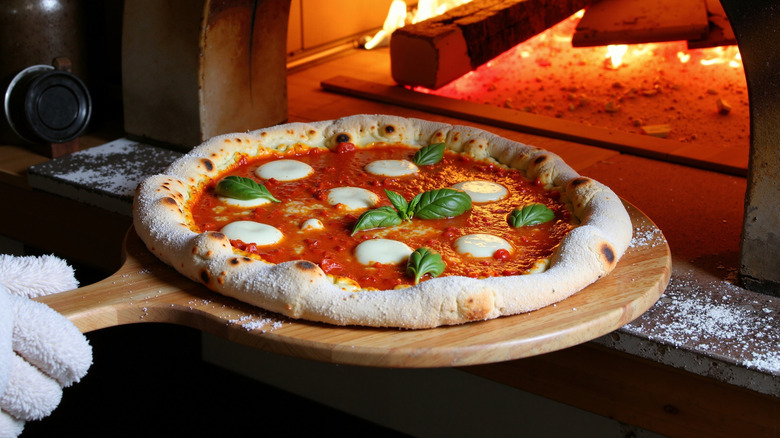
To make your stellar homemade pizza, Child recommends starting by putting the bricks on the middle rack of your oven and preheating them to 450 degrees Fahrenheit. Use Child's recipe and tips to make homemade pizza dough, and then assemble your pizza on your cedar shake. When your oven is preheated, transfer the pie from the cedar shake to the bricks by tilting it at about a 45-degree angle towards the bricks and pulling it out from under the pizza swiftly. The pizza will then bake directly on the fire bricks. You could even bake two pizzas at once by placing bricks on both oven racks.
To do this at home, purchase some fire brick splits at a home improvement store like Home Depot, where this six-pack of U.S. Stove Fire Bricks costs just $19. These six bricks can be assembled into an 18-inch by 13.5-inch surface, perfect for baking a 12-inch pizza. Alternatively, you could take a more modern route and invest in a pizza stone. This Hans Grill Pizza Stone is one of the highest-rated pizza stones on Amazon, and for just under $50 you will also get a wooden pizza peel.
While unfinished cedarwood can also be found at Home Depot, this New Star Foodservice Restaurant-Grade Wooden Pizza Peel on Amazon is certainly less expensive. Additionally, Child suggests using "the bottom of a drawer" if you don't have a cedar shake, but that might not be the most sanitary solution. Plus, you only want to use unpainted wood that isn't treated with varnish or sealant. Whatever you use, following Child's instructions will result in a delicious pie worthy of the "homemade" label.