

Instantly Improve The Taste Of Store-Bought Rotisserie Chicken With A Little Seasoning Trick
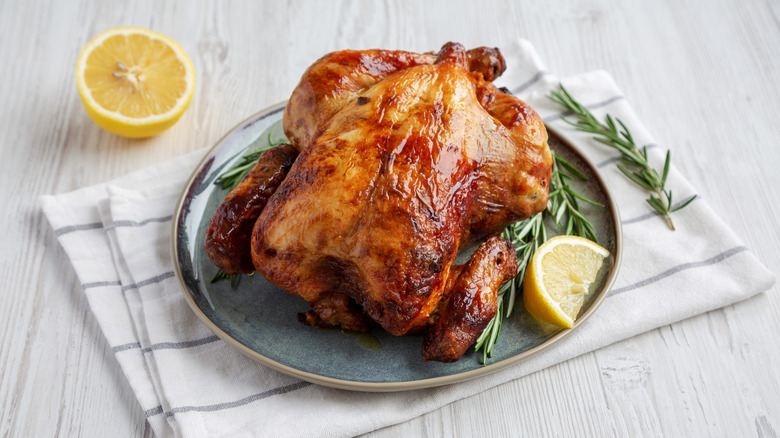
The holidays are always a frantic race against time, and on days when you've got a dinner party to plan, it's best to just buy a rotisserie chicken at the store. It's the tried-and-true shortcut we've been utilizing for years now, saving us time and time again from a lackluster feast. Unfortunately, grocery store rotisserie chicken can only do so much, and occasionally, you wind up with flavorless meat. Change this sad ending with just a quick twist in the routine, starting simply by adding dry rub to your store-bought chicken.
In the world of BBQ food, a dry rub is downright essential. This blend of various spices, herbs, and other seasonings is rubbed directly onto the meat before you cook it. And just in case you were curious, yes, there's a difference between a dry rub and a marinade. Whereas the latter's primary role is to tenderize, a dry rub mainly adds flavor, which is exactly what your rotisserie chicken needs most.
A dry rub coats the meat in a brand-new crispy crust of flavors. In an interview with Tasting Table on the most delicious ways to elevate store-bought rotisserie chicken, chef and restaurant owner Fanila Roshan of Mimi's Kabob in Maryland described this upgrade as giving the meat "a smoky, spicy depth while enhancing its aroma and color." Brought to life by the oven heat, these notes form a depth that could almost pass the chicken for some good old homemade food, all at once both gourmet and heartwarming.
Get as creative as you want with the dry rub
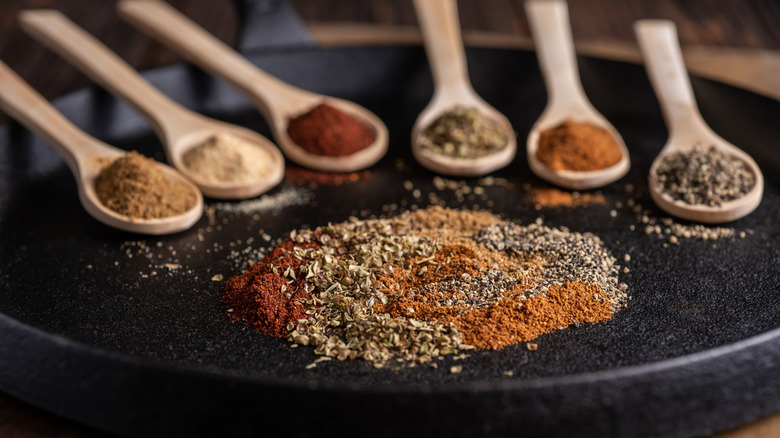
Savory, spicy, herbaceous, and sometimes even flickering here and there with a sweet caramelized edge, there's no limit to how a simple dry rub can transform your store-bought rotisserie chicken. If you're not sure where to start, begin with salt and sugar as a base, then expand to your palate's desire. Do note that you won't need too much salt as the chicken is likely already salty on its own, so just use enough to enhance the meat's natural taste.
Already, just a three-ingredient dry rub consisting of salt, paprika, and brown sugar can fill in the missing flavor gaps. Of course, the more you experiment with different spice combinations, the more intricate your roasted chicken will turn out. Maybe you'll want a smoky heat from paprika, chili powder, and cayenne pepper, or delight in the earthy fragrance of dried herbs such as thyme, parsley, cumin, and rosemary. Beyond familiar staples on the spice rack, there are also fennel seeds, sumac, celery salt, dry mustard, tarragon, Old Bay seasoning, Cajun seasoning, and many more to try out.
You're probably wondering how much time these spices need to thoroughly soak into the meat. It's relatively flexible, as the spice blend can be applied right before you reheat it. Much like a good marinade, however, sitting on the meat for a few hours or overnight will allow it to reach its full intensity potential.