

Add This Fishy Ingredient To Store-Bought Mayo For Bursting Flavor
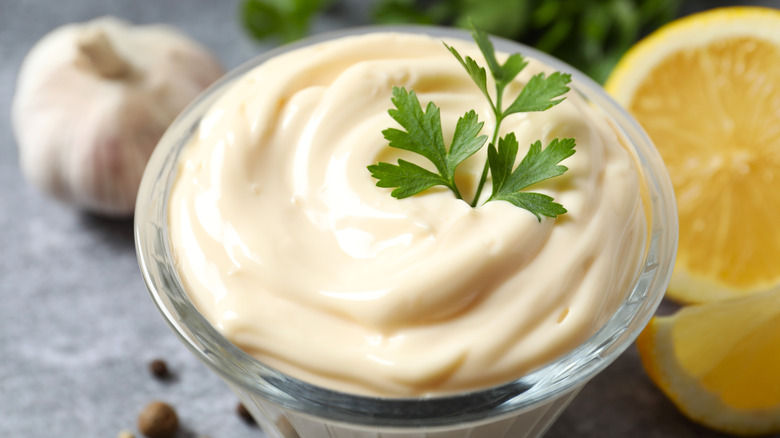
Store-bought mayo is steady and reliable, but let's be honest, it doesn't really have a strong point of view. It's more of a culinary amendment than a bold statement, blandly pale and agreeable, waiting for you to do something interesting. Anchovy paste may just be that "something interesting." Anchovies are kind of the queen of controversy, the stinky-salty ingredient everyone loves to hate until they realize they've been eating them all along in Caesar dressing and bagna càuda, a melted anchovy dip. They're a secret ingredient that will enhance your mayo.
Anchovy paste is probably the simplest way to bring that same savory depth to plain mayo. It's basically anchovies that have already been pounded, salted, and aged into a soft concentrate. If you don't have a tube, one fillet mashed under the flat of a knife works just as well. You can also lightly sauté them in a little olive oil and break them up with a wooden spoon, then add the slurry to the mayo base. Start with a quarter cup of mayonnaise and stir in a half teaspoon of paste, or the mashed fillet, until completely smooth. Taste, then adjust. You want the mayo to taste deeper and more dimensional, not overtly fishy.
The anchovy paste easily dissolves into the fat of the mayonnaise. This is essentially the process of making an aioli, and why stop at the fishies? A squeeze of lemon or a shaving of zest will add some brightness; a twist of the pepper grinder, a little bit of grated garlic, or a splash of Calabrian chili oil brings a kick. If you want to try something a bit unexpected, combine the anchovies with a little bit of miso; you'll be surprised at the copacetic marriage of flavors.
Small fish, big impact
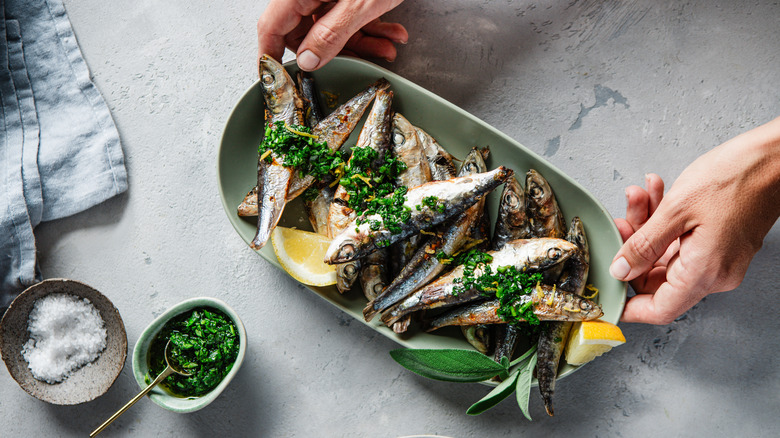
Anchovies earn their strong reputation the slow way. They don't come that salty naturally but are packed in salt and left to cure over time. As the weeks and months pass, enzymes break down the fish's proteins into free glutamates and inosinate, the compounds that taste deeply savory. This is the same family of flavor people instinctively develop in long-simmered broths, long-aged cheeses like Parmesan, fish sauce, and cured meats. Anchovies carry a high concentration of these compounds in a compact form.
That breakdown process is also why anchovies meld so naturally into other ingredients. Give them a little fat, like olive oil, butter, or, in this case, mayonnaise, and watch them dissolve and infuse. The flavor settles in and spreads out, confidently taking up space. Cooks have wielded this quality for centuries. Italian cucina povera uses anchovies as the backbone in countless dishes, melting them into oil before adding greens or vegetables. Venetian bigoli in salsa cooks onions down with anchovies until they become one. Even Worcestershire sauce, a British invention, uses anchovies to pull the acidity and sweetness back to earth.
Anchovy mayo is a natural continuation of that thought. The emulsified fat is already prepared to take on flavor, and the anchovy jumps right in. Anchovy mayonnaise is kind of like a compound butter, and you can use it anywhere plain mayo feels a little timid. It's good in tuna salad, as a dip for artichokes, or drizzled over roasted vegetables. You can also thin it out with more lemon juice and a little water, and it's a creamy dressing.