

The 2-Ingredient Mop Mix That Cuts Grease And Leaves Kitchen Floors Sparkling
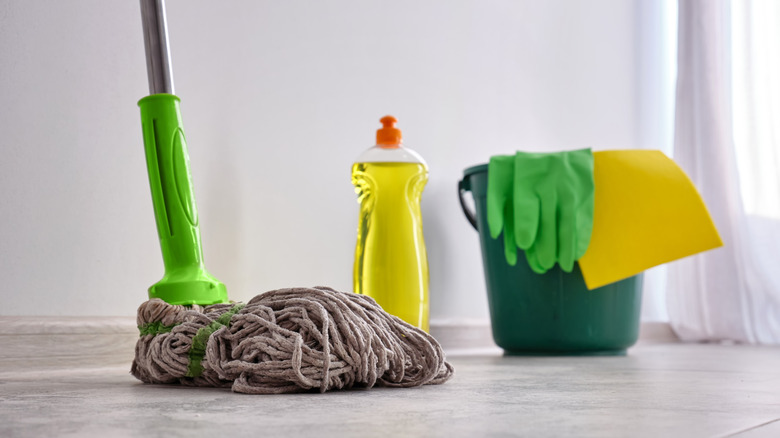
The cleaning aisle of the grocery store is a sight to behold. Dozens of different products are lined up, some for dishes, some for counters, some for stainless steel, and some for your floor. Among those, you can choose between pine scent, lemon scent, oxygen-boosted, or extra-concentrated formulas — and the list goes on. In short, there's a lot to choose from, and it all puts a dent in your wallet. Luckily, there's a simple solution you can make at home that works just as well out of dish soap and distilled white vinegar.
Cleaning with vinegar is no secret. You can find a million tips about how to use it to clean everything in your house — from teapots to wine glasses, to degreasing your kitchen cabinets. However, most people don't think of it as a solution for floors. The key component in vinegar is acetic acid. This acid provides the tart flavor we enjoy from distilled white vinegar, but it also makes it an effective ingredient at cutting through residues such as soap scum and mineral buildup — which is what makes it such a good floor cleaner.
Soap is another well-known essential for cleaning up grease and other dirt. Soap molecules have both hydrophilic and hydrophobic ends, which means they can bind to grease and oil on one end and pull it them into water with the other. When used together, soap can clean grease and grime off the floor and vinegar can be used afterward to clean up everything it left behind. You don't want to use them together, though.
Be cautious with cleaning
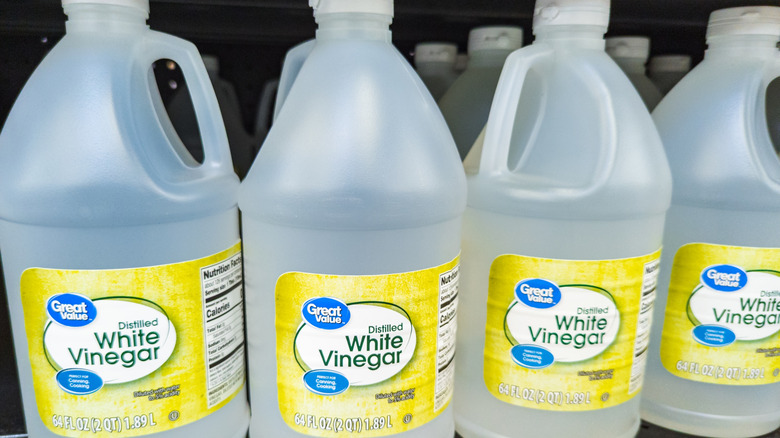
If you go looking, you will find dozens of articles that tell you to mix soap and vinegar together. If you do this, you can probably clean your floor with it. The problem is that soap is alkaline and vinegar is acidic, meaning that they actually neutralize each other. It's widely shared that you shouldn't mix vinegar and castile soap, but any dish soap will be neutralized by vinegar as well. It may still clean your floor through the mechanical act of cleaning, but they are much better if used separately.
The best thing you can do for cleaning your floor is to use a bit of dish soap and warm water to mop the floor to get off any dirt and grease, which is what soap excels at. Then dilute a cup of distilled white vinegar to a gallon of water to clean any of the remaining residue the soap may have missed. This includes harder-to-clean mineral deposits from dried water that left calcium or lime stains, plus any residue from the soap itself. All kitchen flooring materials are different, however.
Always make sure you spot test with vinegar before using it to clean your kitchen floors. Natural stone surfaces will react poorly to vinegar, so you shouldn't use it to clean marble or granite floors. Hardwood is difficult to gauge. Depending on how it was sealed, the vinegar could wear down the finish over time. If you don't know what kind of sealant was used, definitely try a spot test and proceed with caution.