

What Really Makes Oysters So Expensive
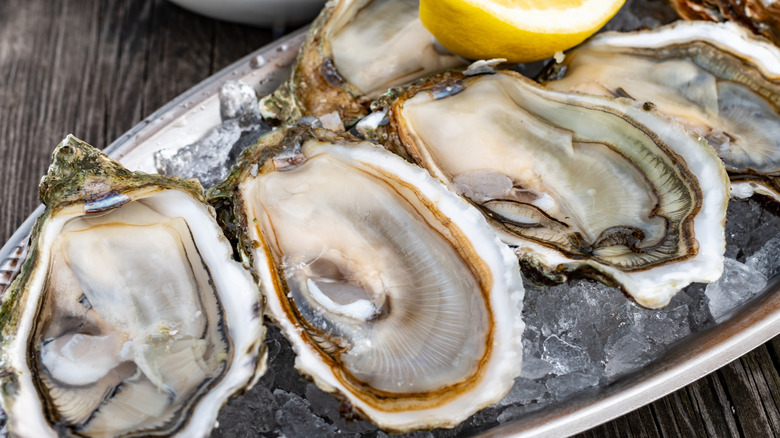
Have you ever wondered what makes oysters so expensive? Oysters are quite lucrative in the food world. In fact, according to Global Market Insights, "the global oyster & clam market size was valued at around USD 151.2 billion in 2024."
We asked an expert, Franklin Becker, the chef and owner of Manhattan seafood restaurant Point Seven NYC to further explain why oysters are so costly these days. He tells us, "There are many reasons for price increases in oysters these days. Cost of production, increased demand of product, and global warming affecting the estuaries." According to Sustainability, climate change has led to oysters becoming more frequently diseased and harder to sustain. When it can take up to three years to raise a high-quality oyster, this feat becomes difficult when the sea creatures succumb to diseases in warmer waters.
Oyster supply just simply can't keep up in a world where there's an increasing demand for this delicacy. Now, when asked if oyster prices vary based on where in the country we are, Becker answers, " ... I would assume the cost of shipping plays a part in the prices." Becker is correct. Oysters are highly perishable and require chilling. So the farther they travel from their estuaries, the higher their cost, considering transport and proper storage measures. Becker adds, "Raw oysters must be alive to be eaten." This makes the food, especially the ones you find at some of the best oyster bars, a luxury or premium item.
Health concerns associated with raw oysters

If you're not looking to pay five to six dollars per raw oyster, there are always places you can shop at to find more affordable options. Additionally, Becker explains that pre-shucked oysters are usually not premium-quality ones, and are likely less expensive. He explains, "With pre-shucks, you never know what you are getting as they are typically rejects or over-harvested product. Some of the pre-shucks are preserved as well. There is a higher risk of foodborne illness and they must be cooked before being consumed."
Thus, if you're not consuming live oysters shucked on the spot, be sure they are cooked. And if you are into the raw products, be prepared to pay a premium and know that there is always a risk of illness when you're consuming any raw food, especially shellfish. Oysters are especially susceptible to carrying Vibrio bacteria, responsible for many foodborne illnesses and multiple deaths in the U.S. every year. So, to best ensure that you are enjoying them without having to worry about feeling ill afterwards, we recommend cooking them, regardless. This week, consider making our recipes, like our ritzy oysters Rockefeller, or try broiling oysters with scallion ash butter.