

The 8 Best Ceremonial-Grade Matcha Powders
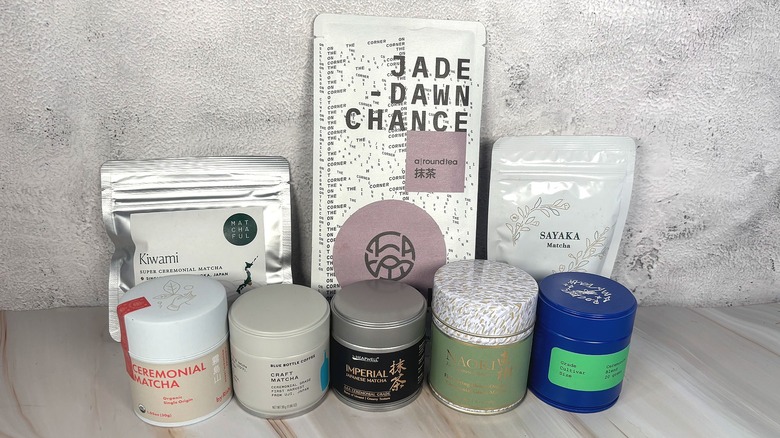
I remember the first time I tried a matcha latte. My first experience was an interesting one — I didn't like it at all, and couldn't understand why the green-hued bevvy was the drink of choice for some. I suspect I just may have been caught off-guard by the earthy, grassy taste of the drink, and I definitely didn't like that it had been sweetened with oodles of syrup. I've changed my tune since then, particularly since discovering the magic of an unsweetened iced matcha latte made with oat milk (aka one of my go-to summer orders). Since then, I've frequently used matcha as my morning pick-me-up when my stomach needs a break from coffee, and I've found it to be quite the delightful refresher.
In an effort to expand my ever-broadening matcha horizons, I figured it was time to get my hands on some of the best matcha money can buy. You know — the ceremonial-grade stuff, as opposed to culinary matcha. Ceremonial-grade matcha is harvested early from shade-grown leaves. They're sweet and a bright, vibrant green. Because this matcha tends to be expensive, it's rather unorthodox to dilute it with milk or other flavorings (and you definitely shouldn't bake with ceremonial-grade matcha), so you'll notice I didn't when trying them below. I compiled this list based on some extensive Reddit inquiries, and many brands below are recommended online by high-grade matcha enthusiasts. Want to get your hands on some really, really good ceremonial-grade matcha? Go with one of the following picks, and thank me later.
Some recommendations are based on firsthand impressions of promotional materials and products provided by the manufacturer.
1. Ippodo

When in the throes of my research for this piece, one brand that was recommended again and again for its ceremonial-grade matcha was Ippodo. That comes as no surprise when you consider the company's longevity — it's been a Kyoto mainstay since 1717, and a company doesn't stick around that long unless it really knows what it's doing. Kyoto's mountain region grows all the teas sold by Ippodo, including its ceremonial-grade matcha (though you won't find the company using the term, which it says is a way to market matcha to Western audiences).
Ippodo sent me a bag of its Sayaka matcha, a good entry-level matcha for the new consumer. The company says this matcha has ample umami and a slight bitter astringency to it, and I'd have to agree. This matcha surprised me. It was very earthy and indeed slightly bitter, and its flavor was rather one-note, which isn't a bad thing here — that one note was deep and complex and, indeed, full of an umami appeal. The tiny bit of bitterness mellows out quickly, leading to an overall very smooth cup. It's very full and not too exotic. I'd call this matcha palatable to any consumer and, as Ippodo itself said, a great way to enter more fully into the matcha world.
2. A|round Tea

Another brand frequently recommended (especially for its more budget-friendly offerings) was a|round tea. This Tokyo company loves the rituals behind tea-drinking, which is meant to be enjoyed as a way to connect with your community. The company's Jade Dawn Chance matcha claims to be smooth and not at all bitter, with an innate sweetness. Like much ceremonial-grade matcha, it's grown in Uji, Kyoto. Reviewers corroborate the company's claims that this matcha is sweet and not at all bitter. Will I find the same?
Yes, reader, I did indeed find the same. This tea is full of an umami sweetness and it has bright floral characteristics, with an almost fruity appeal behind. Moreover, reviewers were correct in saying this isn't the least bit bitter. It has an effortless finish that invites the drinker to take sip after sip. I'd recommend enjoying this sans accoutrements — it's too delightful to be drowned in anything. I'm tempted to pour some atop a sponge in poke-cake style, and finish with strawberry slices and some berry coulis. Yum.
3. Rocky's Matcha
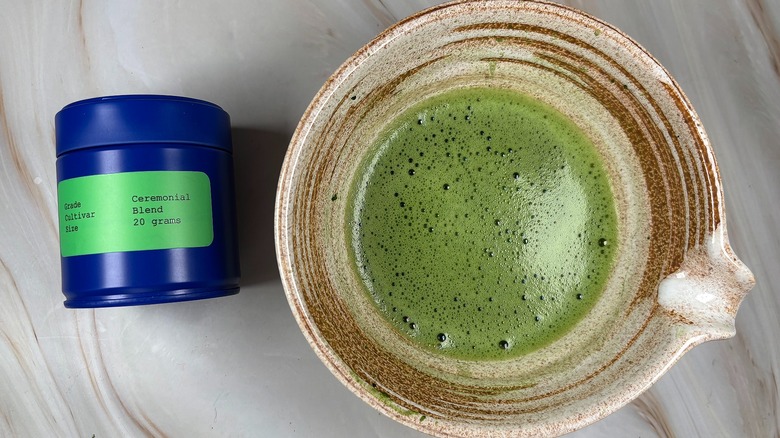
Rocky's Matcha boasts a ceremonial-grade blend that combines four cultivars (or types of matcha plant): Okumidori, Saemidori, Okuyutaka, and Tsuyuhikari. The matcha is grown in Yame, a region that produces matcha distinct in taste from matcha grown in Uji. Use this matcha as your go-to, all-purpose drinking matcha. The company says it tastes great when enjoyed straight, but will shine just as well in a matcha latte.
I can't point to exactly why Rocky's ceremonial blend smells exactly like chocolate upon opening the tin, but I didn't at all find that to be a bad thing. Tasting it revealed the same — there were some deep chocolate notes that sat squarely against the grassy, earthy appeal of the matcha. This matcha is bursting with well-balanced flavor and it doesn't have a very bitter finish. If you like potent, well-rounded matcha, this would be an excellent one to make with only some hot water. Alternatively, it's strong enough to hold its own when paired with milk. Moreover, it has a bright, floral sweetness to it that negates any need for a sweetener.
4. Blue Bottle
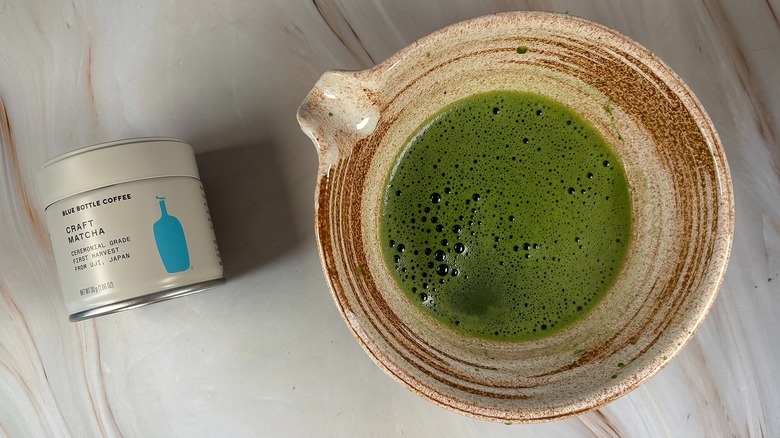
Okay, my bias is showing — I love Blue Bottle. I'm a longtime fan of the coffee company. It produces consistently great roasts, and I've never had a coffee from Blue Bottle that I haven't enjoyed. I didn't know until recently that Blue Bottle also carries a matcha that's garnered some rave reviews. Blue Bottle's Craft Matcha is a small, ceremonial-grade tin that holds stone-milled leaves from the first harvest in Uji, Japan. Its matcha has been described as exceedingly balanced, easy to drink solo or as part of a latte. Moreover, Blue Bottle partners with highly acclaimed Japanese tea company Rishouen to source its matcha.
I can confirm everything claimed above — Blue Bottle's matcha is indeed scrumptious. I found a mellow, herbal sweetness in the matcha, and it didn't finish too bitter at all. I got very light hints of a floral appeal, too, but grounding everything was the deep, earthy, grassy flavor you'd expect to find in a good matcha. "Balanced" is a good word to describe it. It starts and finishes very smoothly, and there's a certain brightness to it that will help it stand out among its competition. I really enjoyed this cup, and think it would make a great matcha cocktail.
5. Rishi Tea
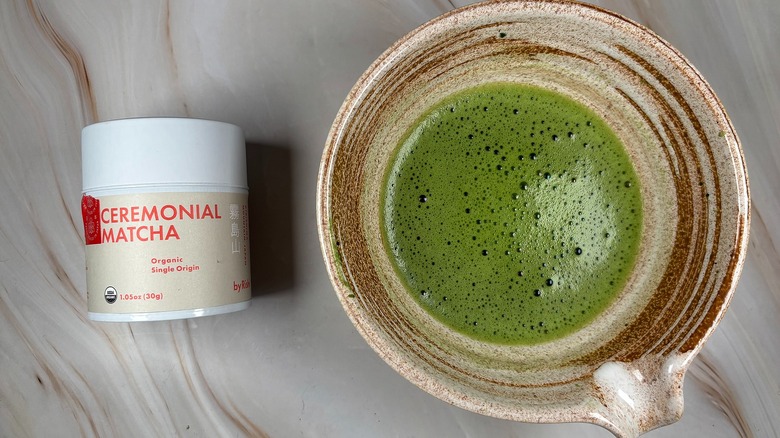
Rishi Tea sources direct-trade, organic teas from farmers around the world and carries its commitment to quality and sustainability throughout every part of its operations. The U.S.-based company wants to make high-quality tea accessible to North American audiences, so its team is constantly traveling around the world to source the best teas available, and works directly with farmers and tea-makers to bring their products to the U.S. Rishi's Ceremonial Matcha comes from Kirishima Mountain in Kagoshima, Japan, and is made of Saemidori, Okumidori, and Tsuyuhikari cultivars.
There's an astringency to this matcha, a certain "zing" that helps it set itself apart from the competition. It's almost a lemony twist that, when combined with the matcha's grassy appeal, makes a potent sip that quickly smooths out into an earthy finish. I can see this matcha being amenable to a variety of uses. It'll certainly be a great pick-me-up when enjoyed straight, but it has enough body to hold up in lattes and would pair really well with any floral or herbal accompaniments.
6. Heapwell
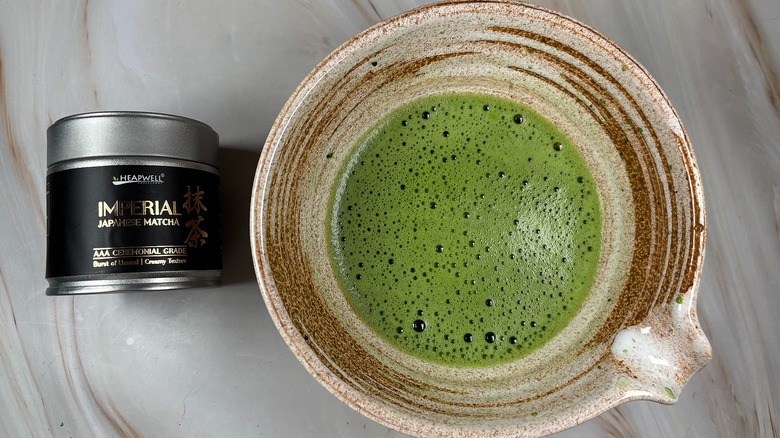
Heapwell Matcha is a U.K.-based importer of small-batch matcha. The company gets its matcha to consumers as fresh as possible — the leaves aren't even ground until Heapwell orders the tea from Japanese farmers. Its AAA Imperial Matcha is grown in Uji, Kyoto, and gets boatloads of positive reviews from matcha-loving customers, who describe it as being bright and not too grassy. It's favored among those who have spent eons searching for a staple matcha, and its price point isn't half bad, either.
My first reaction upon sipping is that I'm surprised at how sweet this matcha is. That isn't to say it has a sugary appeal, but rather that it boasts some bright, almost honeyed notes that really carry the drinker through the sip. It's also full of floral, botanical character, and I'd have to say I agree with what reviewers are saying. It's not as grassy or earthy as some of the other matchas on this list, which I think will make it exceptionally palatable for those who tend to snub matcha and say it tastes like dirt. I'm almost getting some citrus after the sip finishes, but that could just be a carryover from its bright floral flavor. Either way, it's delicious.
7. Naoki
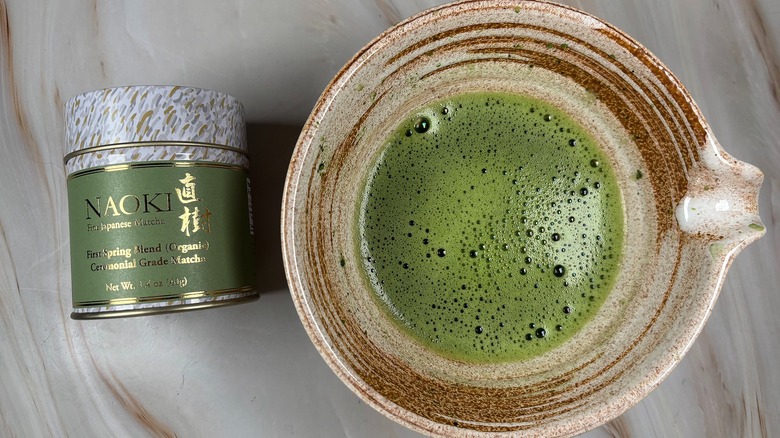
Another U.S.-based company, Naoki sources its teas from various regions across Japan, including Uji, Kyoto; Kirishima, Kagoshima; Yame, Fukuoka; and Chiran, Kagoshima. Naoki initially only offered one matcha blend, meant to be an adaptable tea suited for a variety of uses. As of the time of writing this piece, it offers five blends (including a barista blend and a culinary blend) as well as various starter kits for the matcha newbie. I'm trying its Organic First Spring Blend, which is harvested in Kirishima, Kagoshima. It claims notes of cacao and some toastiness with gentle umami.
Surprisingly enough, I get that slight cacao appeal coming through in the full, savory appeal of this matcha. I'm immediately tempted to pair it with a chocolate square. It's also exceptionally smooth — there's hardly any bitterness in this cup whatsoever, yet boasts ample umami with somewhat of a toasted sesame character. It's still earthy, though not quite as much as some other matchas here. This makes for a very well-balanced tea that's a smooth sipper on its own or easily amenable to whatever concoction you may whip up on the fly.
8. Matchaful
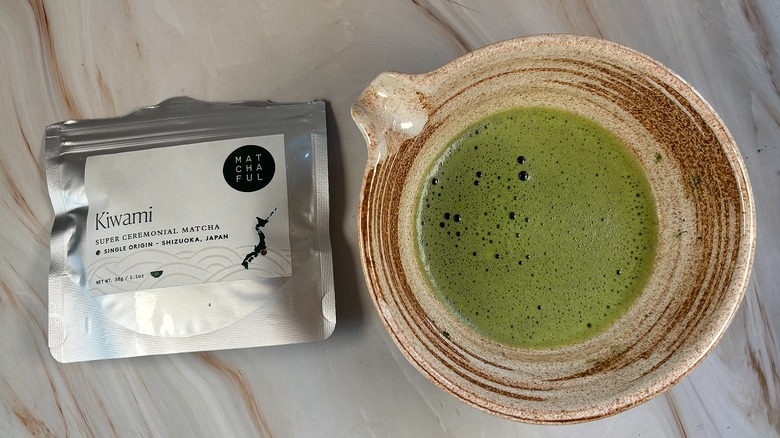
Female-founded Matchaful takes an expansive view of the tea, and the menu at its New York City locations features matcha in a variety of iterations from donuts to matcha-berry lattes. Matchaful's tea is sourced from a farm in the Shizuoka Prefecture, and the farm uses an interesting shading method — its matcha plants are shaded with solar panels that supply power for the surrounding neighborhoods. I tried the highest grade of matcha that Matchaful offers. Its Kiwami is a single-origin matcha grown in Shizuoka that exclusively uses the Okumidori cultivar.
This matcha had almost a woody flavor to it, alongside some floral appeal that didn't necessarily make it bright (as I usually find with floral notes). Rather, the florals were deep and almost rosy, lending significant depth to the cup. It's also amply grassy and very savory, with the distinct purity of flavor I expect to find in anything single-origin — single-origin products (coffee and tea alike) really boast of themselves loudly rather than trying to achieve the balance strived for in blends. This makes for a rich cup with a very full mouthfeel and ample botanical appeal. In other words, it's delightful.
Methodology
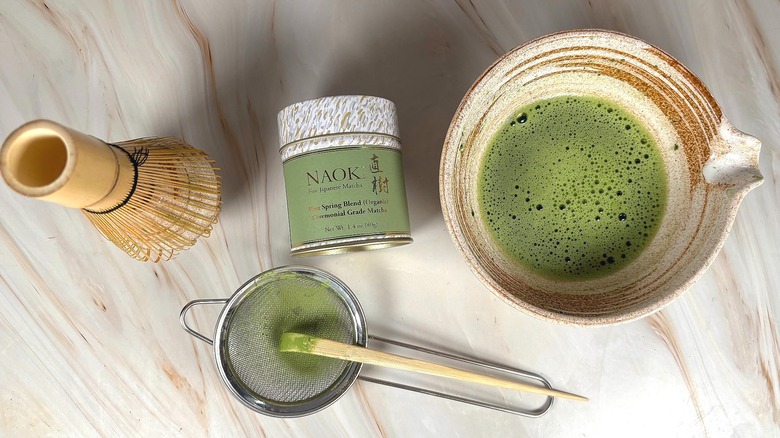
To round up the "best" ceremonial-grade matchas on the market, I looked for a variety of consumer reviews and professional opinion. All of the companies featured here are recommended by matcha drinkers (both novice and advanced) on Reddit, and each brand had to see some crossover between good consumer opinion and acclaim from more authoritative matcha spokespeople (big-name food magazines were a helpful resource here).
After gathering my samples, I tasted each by making a concentrated tea. I used 2 grams of matcha and 75 grams of water at 195 degrees Fahrenheit. I sifted the matcha, then whisked it with a bamboo whisk (a matcha must-have) with 20 grams of water at first, and then an additional 55 grams. I didn't turn any into lattes (though I definitely will be now that I've tried them all), nor did I take into account how each matcha would pair with other flavors like strawberries. Instead, I focused on the tasting notes of each matcha, taking into account variations between each one I tried. I was surprised to find that they all tasted really different from one another. Don't believe me? Do your own taste test and see for yourself.