

6 Vintage Cheese Dishes No One Eats Anymore
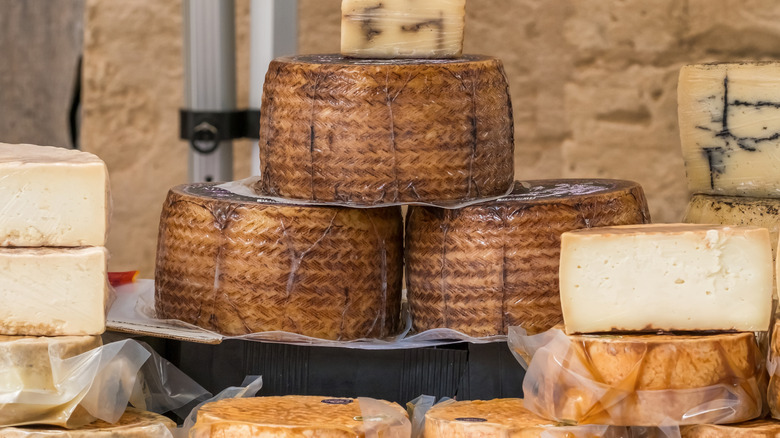
Cheese has been around for thousands of years: its production has been linked to the ancient Egyptian and Greek empires and can be traced back to the domestication of livestock. Therefore, there has been plenty of time for a plethora of cheese dishes to emerge. Many, like pizza and cheesecake, have stood the test of time, but some have become obsolete, becoming relics of bygone eras and somewhat unappetizing by today's standards. Others have become clearly outdated with recipes better suited for decade-themed parties.
A vintage cheese dish can become outdated when it subscribes to the trends of the era, preferring fashion over flavor. For instance, from the '50s through to the '70s, jellied molds were at the height of culinary sophistication. Fondue was also popular, in part due to the manufacturing of at-home fondue party kits. Dishes were convenient, economical, and cosmopolitan. As women increasingly spent less time on housework, recipes were designed to appear elevated while utilizing leftover ingredients, feeding in bulk, and being easy to make. However, there was sometimes much to be desired in terms of taste.
Often, such dishes incorporated bizarre flavor combinations and processed ingredients, such as calling anything with gelatin a salad. In other words, by today's standards, some vintage cheese dishes appear just a little gross, while others could do with a comeback. If you're feeling brave or want to cosplay Betty Crocker, you could recreate these six vintage cheese dishes that no one eats anymore.
Cheese ball
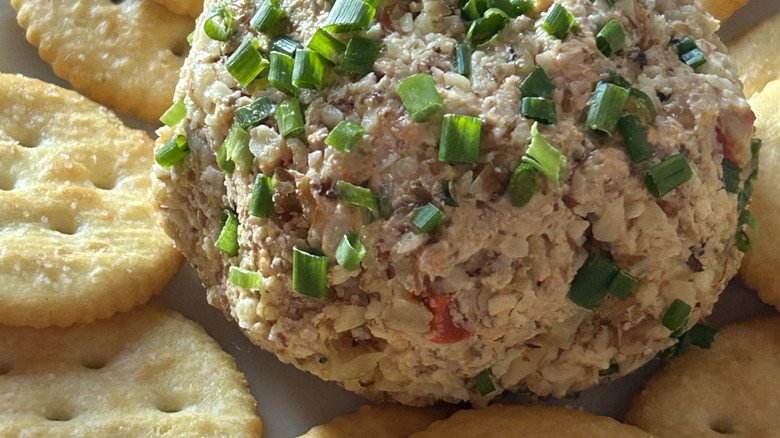
True to the name, cheese balls are exactly that. Made from soft cheese as the base, the balls are generally served as appetizers or snack plates and can be made in an infinite array of flavors. While the dish is commonly associated with the mid-20th century, the first U.S. record of a cheese ball dates back to 1801, when one was gifted to Thomas Jefferson by John Leland, an elder in the town of Cheshire, Massachusetts. Unlike later cheese balls, this was far too big for the average dinner table, weighing 1,253 pounds. The first contemporary cheese ball recipe may be found in Virginia Safford's 1944 cookbook, "Food of My Friends."
Generally speaking, cheese balls are already considered quite outdated or even a little kitsch, or as Amanda Hesser of The New York Times puts it: "associated with shag rugs and tinsel." What makes vintage cheese ball recipes especially retro is the common use of cheese spread or other popular cheese-like products, which have since fallen out of favor for being unhealthy.
For instance, a vintage cheese ball recipe might include softened cream cheese, crumbled blue cheese, American cheese spread, or hickory-smoked flavored cheese spread, as well as whipping cream. These are then seasoned with Worcestershire sauce, olives, onion, and parsley. To modernize cheese balls, incorporate high-quality cheeses, such as aged cheddar or goat cheese. Or, if your dinner party is '70s themed, stick to the original recipe and pair it with a Harvey Wallbanger cocktail.
Cheese loaf
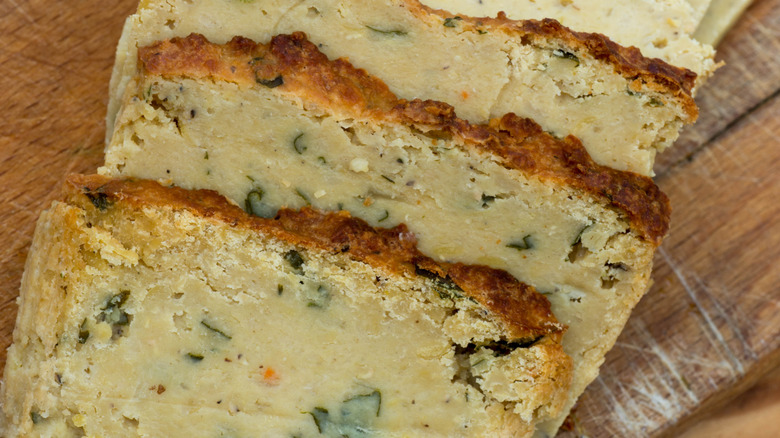
The cheese loaf (or cheese roast) is a bygone dish of the early to mid-twentieth century. At the time, cheese was considered a cost-effective and nutritious alternative to meat. Many foods have resulted out of wartime, and during World War I, the U.S. Department of Agriculture sent out postcards imploring people to eat more cheese, suggesting that 1 pound of cottage cheese supplied more protein than the equivalent portion of chicken, beef, or lamb. Furthermore, the 1932 Kraft cookbook, "Cheese – and ways to serve it," calls cheese "the ideal food" and features recipes that simply replace the meat portion of a dish with cheese. Hence, the cheese loaf.
The cheese loaf, akin to a meat loaf, was most likely served as a contribution to a luncheon, potluck, BBQ, or dinner spread. It's made by combining one whole onion, grated cheese, walnuts for texture (or your choice of nut), and bread crumbs. Some recipes include seasonings such as ketchup, Worcestershire sauce, lemon juice, and paprika, and several variations of the recipe include beans. The mixture is placed in a greased tin, topped with more breadcrumbs, and baked in the oven. What results is a true oddity of the 20th century: part loaf, part roast, definitely mushy, and totally outdated.
That being said, with a few simple tweaks, the loaf can be elevated for modern tastes. For instance, include hearty vegetables like mushrooms, eggs and rice for consistency, and you have a lovely vegetarian addition to a Thanksgiving table.
Jell-O cheese salad
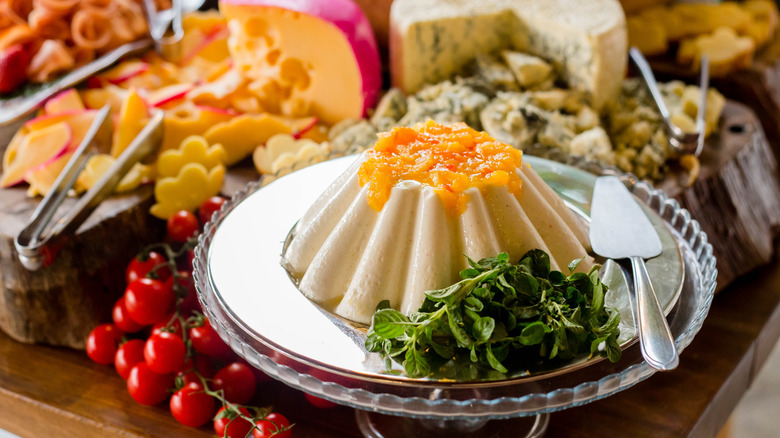
In 1904, Mrs. John E. Cook's perfection salad won third place in a cooking contest sponsored by Knox Gelatin. The dish consisted of typical salad ingredients like shredded carrots, onion, and bell pepper, all nestled in a lemon juice and vinegar gelatin mold. Despite placing third, the recipe took America by storm and was a popular culinary phenomenon for decades to come. So popular, in fact, Jell-O introduced savory gelatin flavors like Italian salad, celery, and mixed vegetables.
Since refrigeration was costly, Jello-O cheese salads were the potluck dish of the stylish, sophisticated, and well-off. Consequently, the gelatin cheese salads of the 1950s were seen as status symbols. In particular, one's choice of decorative mold was crucial to the dish's reception; the more ornate the mold, the more impressive the salad was.
Savory jellied dishes are found worldwide, although these dishes are typically made with aspic, a jellied broth made from animal parts. Such aspic-based dishes are collagen-heavy and protein-rich, a far cry from the Jell-O cheese salad, which was a true mid-century American occurrence. The dish is most commonly associated with the Midwest and Deep South and is unique in its reliance on processed, often brightly colored, and pre-packaged gelatin. Generally, the cheese dish is made by combining soft cheese and gelatin with your choice of vegetables and seasoning. The mixture is then placed in a mold, set overnight, and served on greens with bread, crackers, or even turkey. Voilà, a firm jellied cheese salad that died in the era it was born.
Cheese fondue
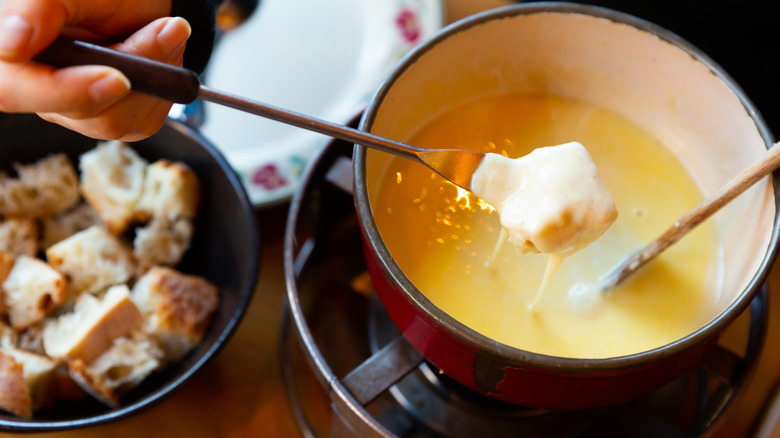
Cheese fondue has a long and storied history. The dish can be traced back to around 800 B.C., when it was mentioned in Homer's Iliad as a dish combining sheep or goat cheese, wine, and flour. Fondue as we know it is believed to have originated in the Swiss mountains, where peasants made resourceful meals from off-cuts of bread and cheese during the winter. By the early 1800s, a melted cheese dish cooked with wine was featured in a Swiss cookbook, and in 1930, the cheese recipe was named the national dish of Switzerland. Around 20 years later, Americans were introduced to the recipe.
In 1964, during the New York World Fair, fondue debuted at the Alpine restaurant of the Swiss Pavilion. Needless to say, the cheese dish captured the public's imagination. The dish soon made its way onto New York menus, fondue restaurants began opening up, manufacturers designed at-home fondue kits, and fondue became the main event at chic dinner parties. The cheese dish was showcased on Julia Child's cooking show, and fondue party kits were flying from the shelves. By the '70s, cheese fondue was such a phenomenon that it featured as a key story element on episodes of shows like "The Odd Couple" and "The Mary Tyler Moore Show."
Typically, fondue is made with gruyere, but it is versatile and can be made from a variety of cheeses. The dish lost favor by the '80s, but then saw a minor comeback around 2010. Here's hoping it has another resurgence.
Cheese soufflé
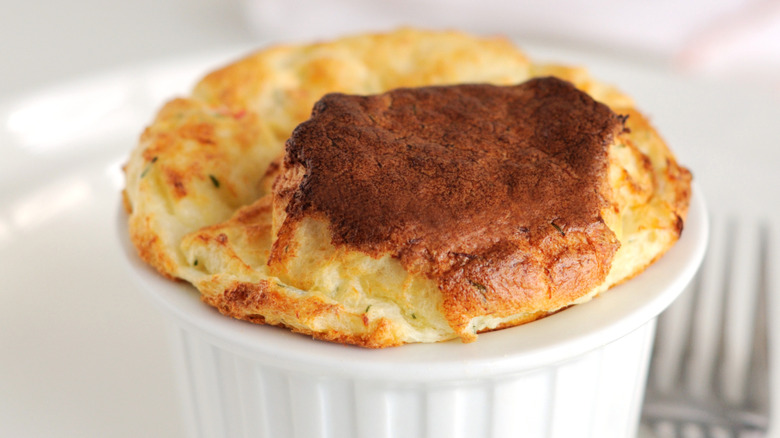
Cheese soufflé is a French culinary invention that dates back to around the mid-1700s, and its name is derived from its constitution, meaning to "puff up." A savory cheese soufflé is made with a béchamel sauce base, along with egg yolks and seasonings. Stiff egg whites are then gently folded into the mixture, without breaking the air bubbles, and cheese is finally added. The soufflé enters the oven, and panic ensues as you wait for it to rise. Soufflés are notoriously difficult to pull off, as the dish requires the perfectly timed alchemy of air bubbles and heat to achieve its namesake.
Soufflés were fashionable around the '60s, which some attribute to culinary figures like Julia Child, who popularized a widespread interest in French cuisine. Kitchenware stores even started selling white soufflé ramekins for consumers who wanted to replicate the French dish at home. By 1979, the cheese dish had hit its peak, with restaurants like Cafe Jacqueline in San Francisco solely dedicated to a menu of various sweet and savory soufflés.
However, by the 80s, the dish fell out of favor, slowly receding into the background of culinary culture, perhaps due to dining trends like the demand for shorter wait times for meals and less kitchen space in the average kitchen. Furthermore, soufflés cannot be prepared in advance, so the dish requires time and patience from both chefs and diners.
Cheese and pineapple hedgehog
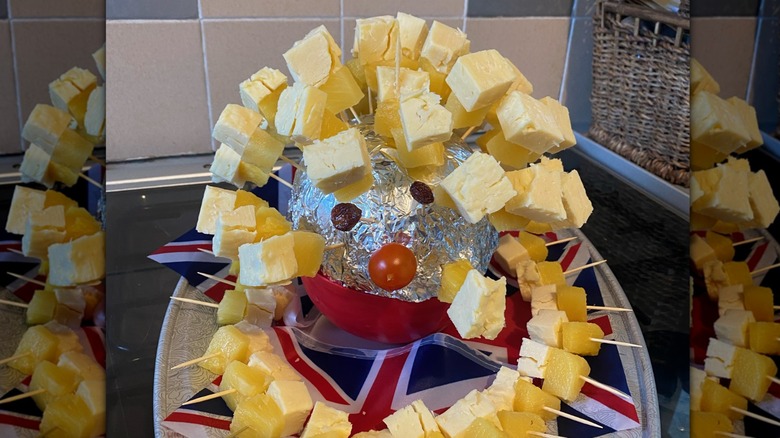
The combination of pineapple and cheese is notoriously controversial and goes beyond Hawaiian pizza. The cheese and pineapple hedgehog was a mostly British sensation of the '70s, a decade widely derided for having bad taste in food. The cheese dish is made by fashioning a hedgehog out of skewered cubes of pineapple and cheese. The base of the pineapple was made using melon, watermelon, or baked potato, typically covered in foil, and the eyes were usually fashioned from maraschino cherries. One might imagine the cheese and pineapple hedgehog as an adorable dish at a children's party. However, believe it or not, the cheese dish was a popular centerpiece at grown-up events like dinner parties or potlucks, and was considered the height of sophistication.
Variations of the dish include adding (or substituting) grapes, melon, strawberries, or any fruit your heart desires. Alternatively, you can make a savory cheese hedgehog using cherry tomatoes, cocktail onions, or pickles. Whatever the variation, apart from perhaps a children's birthday party, this retro cheese dish is unlikely to make a comeback anytime soon.