

I Made Oatmeal 6 Ways And One Bowl Was Hands Down The Best
Even if you don't know how to cook anything else, it's worth learning how to make oatmeal. Widely regarded as one of the healthier breakfast items, a bowl of oats can keep you full for hours with its high fiber and protein content. It can be made in a flash, and if you use the right ingredients and techniques, oatmeal can taste wonderful all on its own with just a pinch of salt and a spoonful of brown sugar.
Allured by its outstanding convenience, flavor, texture, and nutritional profile, folks have been inspired over the years to experiment with different methods of preparing oatmeal. We're still feeling the effects of the overnight oats craze, and microwaveable oats are a staple at hotel breakfast bars. Instant Pot oats enable a hands-off approach to breakfast, while baked oats invite you to put a little more effort into your morning meal.
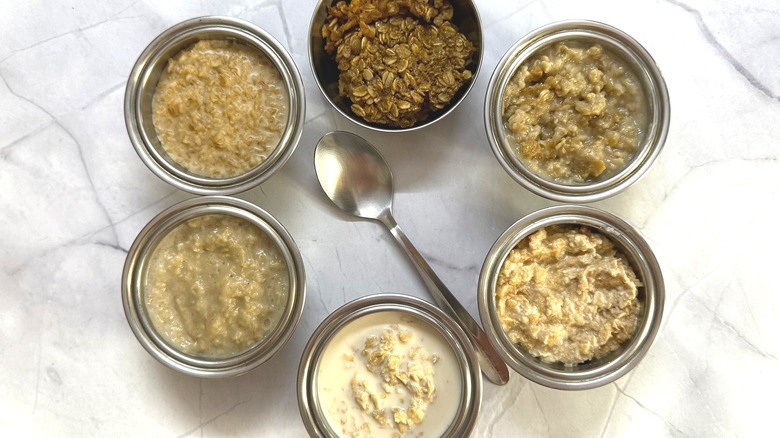
For this article, I ranked six methods of preparing oatmeal based on flavor and texture. I used the most basic recipe possible for each style, and recipes typically included little more than oats, oat milk, a pinch of salt, and a spoonful of jaggery (an unrefined sugar with a flavor similar to brown sugar). There are many types of oats, with each variety imparting a different texture and flavor. I therefore used rolled oats in all but one recipe, which required steel-cut oats. More notes on my methodology are available at the end of this article.
6. Microwaved oatmeal
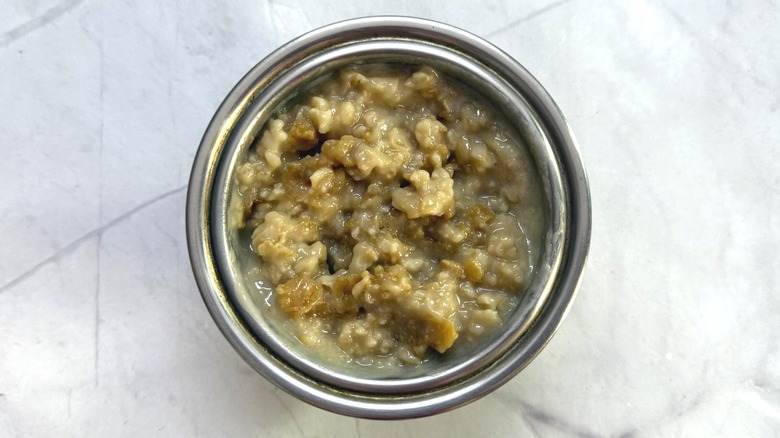
Making breakfast for one? Take heed: Attaining success with microwaveable oatmeal requires finding the right microwave-safe bowl, nailing the oats-to-liquid ratio, and figuring out the right settings on your microwave. It is possible, but you might have to be patient to finally end up with the perfect bowl.
Though I used to frequently cook oatmeal in the microwave, by the time I set up this experiment, it had been a few years. I therefore approached the microwave method like a novice, using a ratio of ½ cup of oats to ½ cup of water, plus a bit of salt and jaggery. I opened and shut the door several times to check on my oatmeal until I felt that it finally looked right (around 2 to 3 minutes total). I had to watch the bowl with a hawk's eye, and towards the end, I stirred the oatmeal every 15 seconds or so as a safeguard against it overflowing.
The end result was not necessarily poor. Nor, to my relief, was it messy; I used a larger bowl to prevent a flash flood, but in the future, I'll try an overnight soak to prevent oatmeal from overflowing in the microwave. Sadly, though, this oatmeal was not nearly creamy enough. In fact, my bowl erred on the chewier side, but again, results will vary wildly depending on microwave strength and settings. So while this cooking technique has the potential to be convenient, it can also be anything but, earning it the lowest rank.
5. Overnight oats
I woke up to overnight oats more mornings than not during my first few years of college. They were a handy way to avoid the dorm's communal kitchen, and they saved me from unnecessary stress on those mornings when I hit the snooze button one too many times. And if I woke up and decided I actually wanted something warm for breakfast? No problem: I could just pop the jar in the microwave.
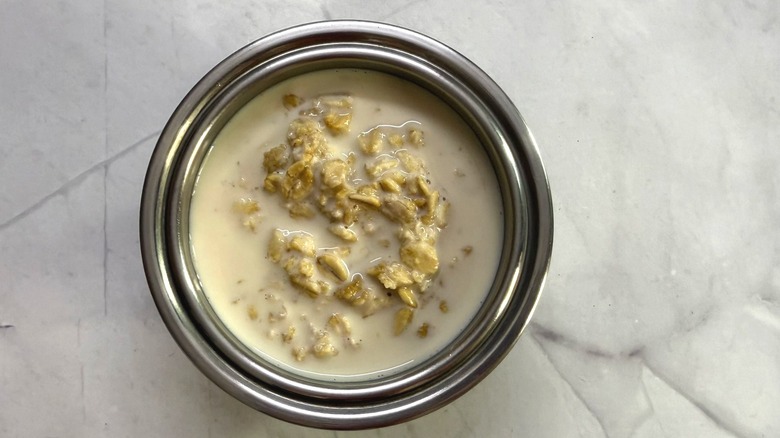
For this review, I made a simple jar of overnight oats with ½ cup of rolled oats, ¾ cup of oat milk, a pinch of salt, and a spoonful of sugar. With the right milk (say, a flavorful plant-based milk or whole milk), you won't need any other toppings or add-ins to amp up the flavor of overnight oats. I left the jar in the fridge for 12 hours before conducting my taste test, which was sufficient time for the oats to soften.
I could have used less milk, but I enjoyed the extra liquid that filled each spoonful, making the texture of this breakfast somewhat akin to a bowl of cereal. And because the mixture included jaggery, the oat milk took on a sweetness reminiscent of cereal milk, too. Besides, I know from experience that adding too little liquid can result in dry, chewy oats. So why didn't overnight oats earn a higher ranking on this list? In short, this bowl of oatmeal wasn't creamy enough. Instead of melding and congealing, the oat flakes remained distinct from one another. This was unsurprising, considering oatmeal's stickiness is a product of gelatinization under heat.
4. Instant Pot oatmeal
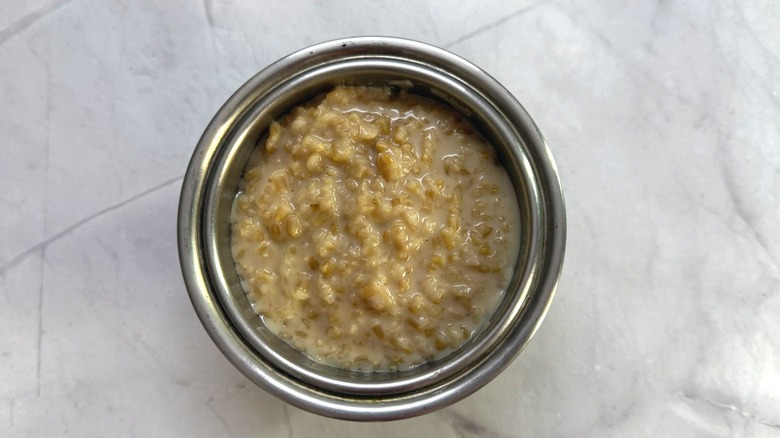
For those with large families, convenience is the name of the game when it comes to breakfast. So why not let an Instant Pot do all the work for you? Instant Pot oatmeal works best when made with steel-cut oats, which are essentially chopped oat groats. They hold up well under pressure and shouldn't turn to mush. I added 1 cup of oats and 3 cups of oat milk to the pot along with a pinch of salt and a few spoonfuls of jaggery. Then I shut the lid, sealed it, and cooked the mixture for 3 minutes at high pressure before allowing the pressure to release naturally.
Before this taste test, I had only made steel-cut oats once in my Instant Pot, and I had to throw out that batch because the oats had gone rancid (oats are sometimes, but not always, safe to eat after their expiration date). This batch, though, was delightful. The texture of the steel-cut oats reminded me of softened puffed rice, and yet, the grains melded well with one another into a cohesive porridge. Their flavor was also earthier than that of rolled oats.
Though I would certainly make Instant Pot oatmeal again, this bowl didn't quite break into the top three positions on this list because it would require a fair amount of trial and error to perfect. I couldn't open the pot to see the oatmeal's consistency while it was cooking, so it didn't turn out as creamy as I would have liked. The outcome will vary, depending not only on the ratio of oats to milk but also on the type of milk you use.
3. Baked oatmeal

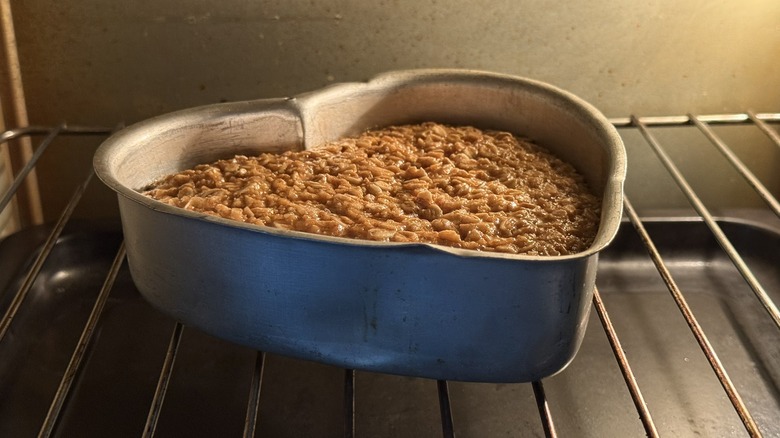
Baked oatmeal typically owes its texture to a combination of eggs, milk, oats, sugar, butter, and baking powder. However, it can also be made vegan using flax eggs, plant-based milk, and vegan butter. Cinnamon, vanilla extract, or caramelizing some sugar on top of the oats can lend this dish an extra decadent texture, but it's not required. I found that baked oatmeal stands up well enough on its own with just seven ingredients: eggs, oat milk, jaggery, butter, baking powder, salt, and, of course, oats. After combining these ingredients and pouring them into a baking tray, I waited half an hour for the oven to work its magic.
My first thought upon tasting this baked oatmeal was, "Wow, it's like my mom's cobbler, but healthier." To be fair, cobbler and baked oatmeal are two very distinct dishes, but the combination of eggs with oats, butter, and sugar resulted in a chewy texture and a sweet, rich flavor that was reminiscent of some of my favorite baked goods. You could also incorporate butter — or even ghee — into other forms of oatmeal. Since rolled oats are the best style to use for baking, you should use them here as well.
Although I loved baked oatmeal, I still missed the creaminess of classic oatmeal. This chewy version is a nice treat to have every once in a while, but it won't replace my everyday bowl of oats. It's a little bit too difficult to customize and not quite satisfying enough to start my day with.
2. Stovetop oatmeal

For a classically creamy bowl of oatmeal, simmer your oats on the stovetop. For this taste test, I used a gas burner, though I frequently use an electric burner, too. I started with a 1:2 ratio of oats to oat milk, plus a pinch of salt and a spoonful of jaggery, and it turned out perfectly. Nevertheless, the strength of your burner will affect cooking speed, so keep extra liquid on hand in case you need it.
This style of oatmeal maxed out on the creamy meter during my taste test. Indeed, no other method came close to capturing the smooth, thick essence of stovetop oats. The flavor of the oats melded with that of the oat milk, and they complemented one another. This was not the case with some of the other methods, where the flavors remained distinct. Though not the most convenient method (I admit to having burned a few batches of oatmeal in my life), it is worth the time and effort. Just make sure to keep a close eye on the pot so that it doesn't scald or overflow.
The type of milk you use here matters a lot. Whole milk usually lends a rich, creamy texture to stovetop oats — a world apart from oatmeal made with water. Don't forget to account for sweetness, either. For instance, cow's milk is naturally sweet and does not need to be supplemented with much sugar. A bland, unsweetened almond milk, on the other hand, could result in a lackluster bowl of oats that is neither creamy nor tasty.
1. Bircher muesli
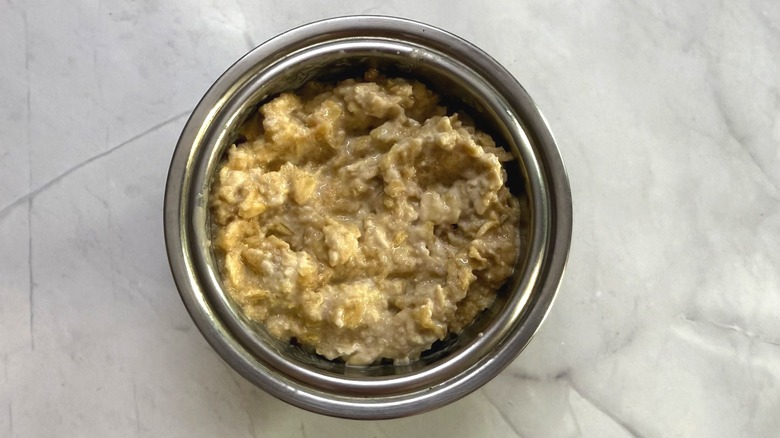
Overnight oats may seem like a new fad designed to suit the speed and chaos of our modern lifestyles. Even so, Bircher muesli, which can be considered the original version of overnight oats, was popularized over 100 years ago. At the turn of the 20th century, Maximilian Oskar Bircher-Benner, a Swiss doctor, gave his patients a concoction of soaked oats, sweetened condensed milk, fresh lemon juice, grated apple, and nuts. He emphasized that Bircher muesli should be eaten raw, without any heat involved. People soon took notice, and today, it is one of the most popular Swiss dishes that everyone should eat.
The recipe for Bircher muesli has evolved over the past century and more. Now, it is usually prepared using milk or yogurt in place of condensed milk. The best Bircher muesli I have ever tasted was infused with orange zest, and another one of my favorite recipes uses grated pear instead of apple.
For this taste test, I soaked ½ cup of rolled oats with ½ cup yogurt, one grated red apple, a pinch of salt, and a spoonful of jaggery. I grated my apple into rather small pieces, though you can choose a larger setting if desired. I usually like to add chia seeds and raisins, too, but left them out for this experiment. Even with this basic recipe, Bircher muesli beat out every other variation of oatmeal for the top spot on this list. The tanginess of the yogurt balanced out the sweetness of the apple. If you could eat fresh air, this is what it would taste like. As far as texture goes, the dish was pleasantly chewy and juicy.
Methodology
For each bowl of oatmeal included in this article, I used the most basic recipe possible that still did justice to the style at hand. For example, classic Bircher muesli cannot be made without apples, and baked oatmeal almost always requires eggs, butter, and baking powder. I used rolled oats in all but one recipe; Instant Pot oatmeal required steel-cut oats for textural reasons. I opted to use oat milk in each recipe, except for the Bircher muesli, which required yogurt instead. I ranked each oatmeal according to taste and texture, giving consideration to convenience only when it affected the quality of the final product. I added a pinch of salt and a spoonful of jaggery per serving.