

Why Pumpkins Can Grow So Big, According To Science
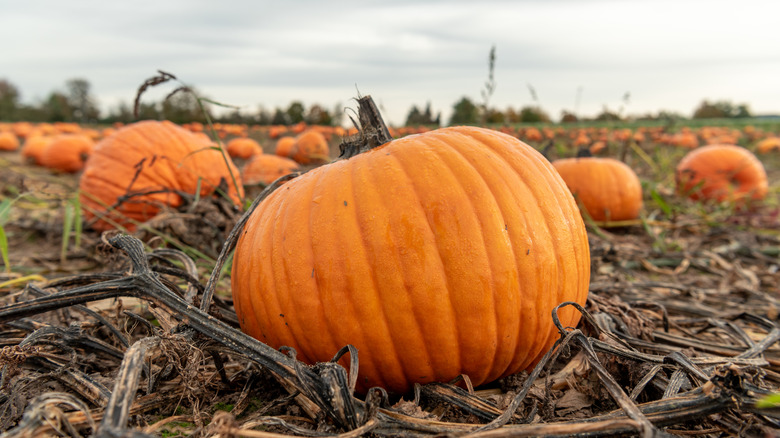
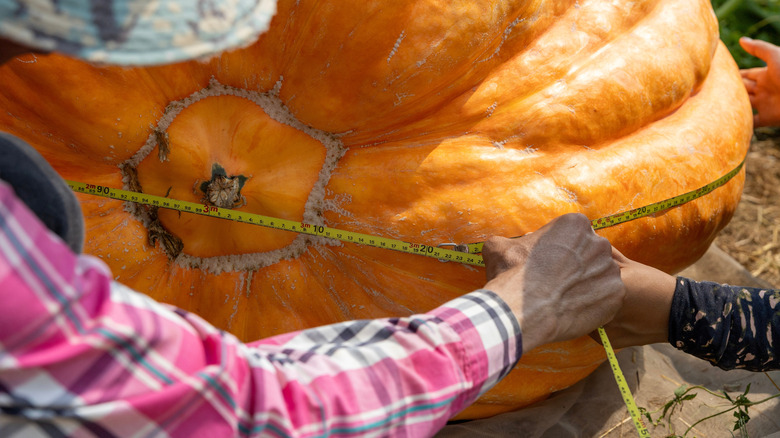
Last month, the Guinness World Record for the largest pumpkin ever documented was broken by two brothers from Hampshire, England, who grew a pumpkin weighing 2,819 pounds and four ounces (heavier than a Honda Civic). The pumpkin also claimed the record for largest by circumferences, measuring 21 feet and 3.8 inches around. The feat is preceded by decades of hobbyists capitalizing on the plant's seemingly unlimited growth potential.
In 1995, the world record for largest pumpkin hadn't broken 1,000 pounds. Nowadays, competitive giant pumpkins increasingly approach the 3,000-pound mark. So, why is this type of fruit (in fact, technically, pumpkins are berries) able to grow so massive while even the largest blueberries remain relatively small? It all comes down to a three-part botanical bouquet: A combination of growing factors, genetic makeup, and selective breeding. Climate plays a smaller role than cultivators of other types of crops might expect.
The pumpkin is an indeterminate plant species, meaning there's nothing its genetic coding that tells it how much fruit or flowers to produce, or what size it should grow to become. With no DNA signals to stop growing, it just keeps going. Sometimes, this looks like a single pumpkin plant sprawling to overtake an entire backyard (which is another reason why you should de-seed old jack-o-lanterns before tossing 'em in the compost pile). Other times, this might look like one pumpkin growing to a mammoth circumference.
How cultivators make the most of pumpkins' indeterminate growth
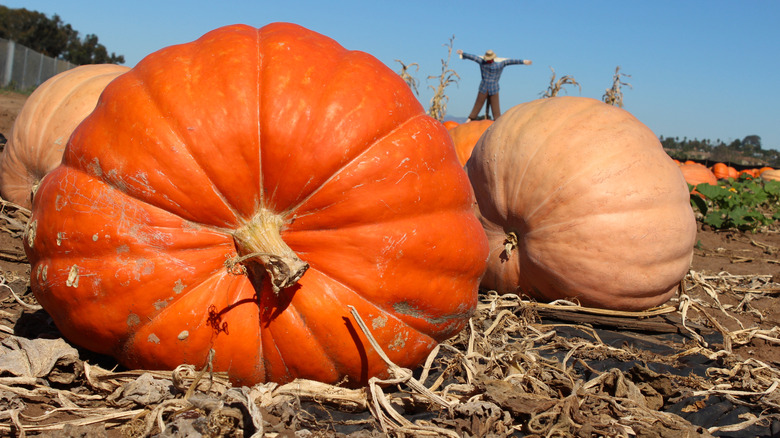
The process starts with choosing and producing seeds optimized for gargantuan scale.Thanks to the plant's lack of biological limit, growers can crossbreed different pumpkin strains to create larger and larger gourds. The Atlantic Giant pumpkin species typically grows to the biggest sizes. Since this isn't a type of pumpkin used for cooking, agronomists can focus on controlling size and color without considering taste. Instead, cultivators selectively breed for traits like cell growth, larger phloem, and thicker cell walls. (Larger phloem means faster transportation of energy-yielding sugars produced in the leaves down to the actual pumpkin fruit.)
Protected by their tough outer skin, pumpkins can stay on the vine for five to six months, continuously accumulating biomass much longer than other less-hardy fruits. Meanwhile, natural biological factors like a high concentration of the hormone gibberellic acid stimulate cell division and multiplication. Also, because pumpkins are a ground-growing fruit, their weight is unencumbered by the limitations of gravity. By comparison, an apple growing on a tree is liable to drop to the ground once it becomes too heavy.
Pumpkin plants can produce their own energy supply, extending the growth period
One of the key factors in the pumpkin's self-perpetuating expansion is the fact that it can produce its own energy source. As the fruit expands, it just grows more leaves to provide more energy via photosynthesis. To funnel maximum leaf-energy into a single plant, cultivators often remove all but one pumpkin from a vine. Growers may also guide the pollination process to ensure necessary nourishment during the crucial growing stages — when a single pumpkin can gain over 30 pounds a day. The plant's cell division process lasts for around 20 days and is supported by an expansion period of roughly 55 days, which is markedly longer than what's observed in many other crops.
While greenhouses can help growers manipulate the environment and soil conditions, a few specific climates around the world are optimally suited for growing giant pumpkins. In the U.S., they thrive in places like Oregon, Minnesota, Wisconsin, and the Northeast. The New England Pumpkin Grower's Association was even formed in Willington, Massachusetts, in 1989 for enthusiastic, size-oriented hobbyists. Abroad, France, Germany, and New Zealand tend to grow the largest pumpkins (although, the world record-breaker came from British soil, so the pumpkin game remains unlimited).