

What's Really Behind The Wave Of Grocery Store Closures
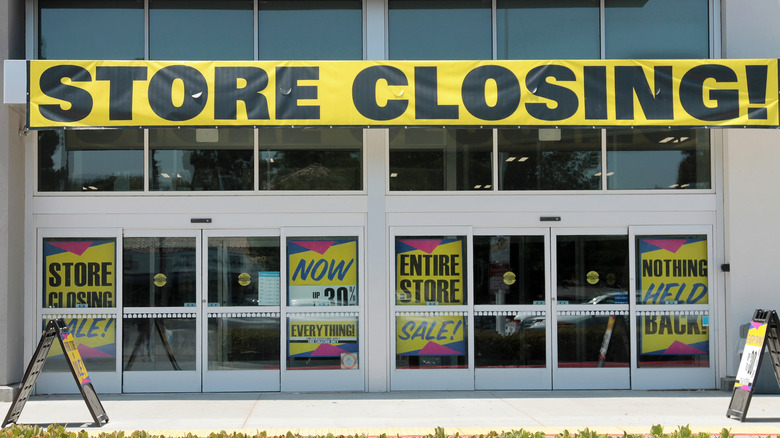
From the closure of a beloved local grocery chain in Boston to the loss of Shaw's locations in New England and Piggly Wiggly stores across the South and Midwest, 2025 was a bruising year for America's grocery stores. At the heart of the crisis is a combination of factors that have come to a head: A fragile model that's long operated on wafer-thin margins, now under pressure from inflation, rising costs, and a shift in consumer behavior.
According to a 2023 DoorDash report, grocery chains operate on just a 1-3% margin. For context, liquor stores operate on margins of 15-20%, while most small businesses operate at margins of 7-10%. What this means is that any small increase in costs or slight drop in sales can cause seismic shifts to a grocery business balance sheet.
Not only are American consumers spending less in 2025, they aren't expected to start spending any time soon with inflation rising above 3%, the job market flatlining, and tariff-related price hikes in the offing through mid-2026. On top of this, physical stores are also facing increasing competition from online shopping, with over 60% families with kids saying they shopped for groceries online. While physical stores still dominate in the retail space, two key statistics paint a grim picture for them: One, while online sales grew 15.7% between 2022 and 2024, sales at physical stores only grew 1%; secondly, the convenience of shopping online cuts across age groups, with research showing 45% people between 58 and 76 years of age are comfortable shopping online.
In the wake of these factors, grocery stores are having to take some hard calls as they reorganize their businesses to remain profitable. But, it's not just independent grocers that are being impacted.
Competition with large retail chains is a factor that impacts grocers big and small
Other reports show that competition with large chains is a big challenge for grocery stores as well. This doesn't just impact small mom-and-pop shops, either. With both Iowa and Nebraska reporting sharp drops in independent grocery stores ranging from 15-30% in the last decade, it's clear that they have been suffering. But, considering the many Kroger and Kroger-owned brand locations that closed nationwide following its merger with Albertsons, the closures have been led by grocery giants too.
As two of the biggest chains in America, Kroger and Albertsons have around 5,000 stores between them. The two giants were locked in protracted talks over a merger that, in theory, would've helped them take on even bigger retail chains — the Walmarts, Costcos and Aldis of the world. But the deal fell through after the courts blocked the move on grounds that the reduced competition would not be in the best interests of American consumers. Following the ruling, Kroger announced that they would be closing down 60 underperforming Kroger and Kroger-owned stores in 2025 and 2026.
Meanwhile, Albertsons was forced to close down a dozen Safeway locations, leading to more than 600 jobs potentially affected in the state of Colorado alone. The fallout didn't end there, with other Kroger-owned brands such as Pick 'n Save facing repercussions as well. As if this wasn't enough, Albertsons and Kroger now find themselves locked in a legal battle of their own. Albertsons sued Kroger for not doing enough to get regulatory approval, which Kroger filed a countersuit against. The legal bills only continue to mount.