

Seriously, Stop Rinsing Your Dishes Before Loading The Dishwasher – Here's Why
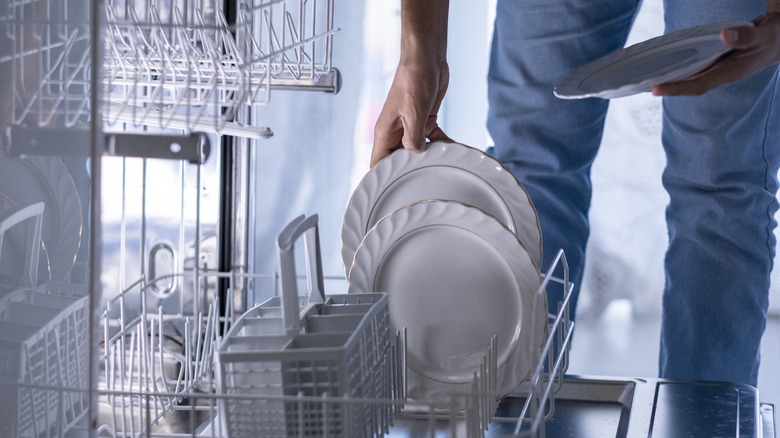
Owning a dishwasher is a bit of a luxury because it makes things so simple. This appliance does the work for you, saving you precious time and energy you'd otherwise spend scrubbing at the sink. But there are still things to remember and mistakes to avoid with your dishwasher. One of the most important tips is to stop fighting that aforementioned simplicity by adding another step to the dishwasher-loading process and pre-rinsing your dishes.
Not only does this complicate what should be a quick task, but it's actually counterproductive for getting the cleanest dishes out of the washing cycle — and that equals waste, since you're using water unnecessarily. The enzymes in dishwasher detergents actually work better when they can directly access the food on dirty plates without remaining water in the way. Specific enzymes are included in detergents because they work with different substances, like amylase with starches, protease with meat and dairy remnants, and lipase with fats and greases. In short, let them do their job.
The dishwasher itself also works better without that pre-rinse. It has sensors that detect how clear its water is in order to determine how strong of a cycle to run. If you've pre-rinsed, that water will look clearer, so the dishwasher won't run as strong, but you'll still have residue on those plates. The water from pre-rinsing throws off the dishwasher's temperature and water pressure, too. Pre-rinsing essentially tricks dishwashers into thinking dishes are cleaner than they are.
What to do instead of pre-rinsing dishes
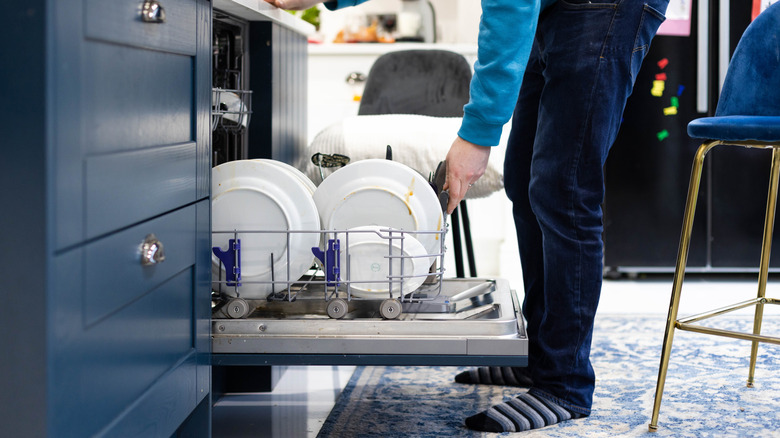
Skipping the pre-rinse is one of the key tips for loading your dishwasher, but there's one exception: if you've got an older model. Newer versions from the best dishwasher brands will have those smart features that tailor how strong of a cycle to run and where to target their own water jets. But less recent dishwashers — models older than 10 or 15 years — won't have these, so a pre-rinse may in fact help with the cleaning process.
As long as you have a more up-to-date dishwasher, what's instead recommended is a dry scrape. Gently rid dishes of larger, loose food bits and any other remnants. Make sure you don't overload your dishwasher, and place dishes inside so their dirty surfaces are facing the appliance's spray arms. When dishes aren't crowded and aren't pre-rinsed, your dishwasher will immediately detect where the buildup is and how bad it is and get to work accordingly.
All in all, you don't need to put as much time into your dishwasher process as you might be — or money, since you can skip those pricey dishwasher detergent pods, too. Just scrape, load, run, and relax, trusting in your appliance. 1.5 gallons of water flow through the average faucet per minute; pre-rinse for just a couple of minutes and you'll surpass the 3.5 gallons your dishwasher uses for the entire cycle on only a few dishes. Skipping the pre-rinse makes for a much more eco-friendly routine.