

The Red Flag That Indicates A Grocery Store Baked Good Has Seen Better Days
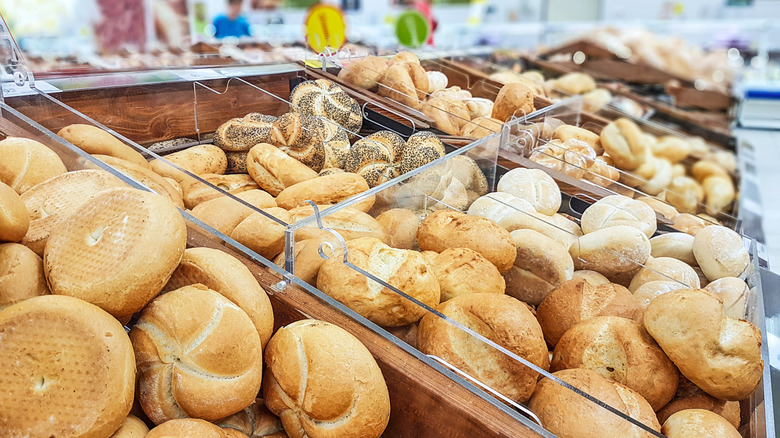
There's nothing quite as disappointing as biting into a store-bought croissant that's clearly been on the shelf too long. As someone who's worked at her fair share of bakeries (and a national grocery retailer), I can tell you that while stale baked goods are indeed a letdown, there are ways to prevent bringing them home in the first place. Particularly, the ultimate red flag that indicates grocery store baked goods have seen better days is signs of surface dryness. Since you can't always (and you probably shouldn't) touch the treats at the grocery store bakery, it's key to use exterior visual cues like paling and dullness to assess whether they've gone dry or stale.
The best grocery store croissants should be golden brown and plump — indicating that their layers are airy, flaky, and fresh. Bakers often brush pastries and cakes with a lightly sweetened glaze to lock in moisture and preserve taste and texture, so look for bakes with a smooth, shiny exterior, indicating the coating has been applied (and relatively recently). If there's a glaze but the baked good appears to have lost its shine, take it as a sign to move on. Cookies, brownies, and breads don't typically have glazes, but you can examine the outsides for any signs of crumbly or crusty texture, condensation, or dulling they could be dry and past their prime. If pies topped with merengue look cracked or dusty, add them to the list of grocery store bakery items to avoid.
Other indicators that store-bought pastries are past their prime
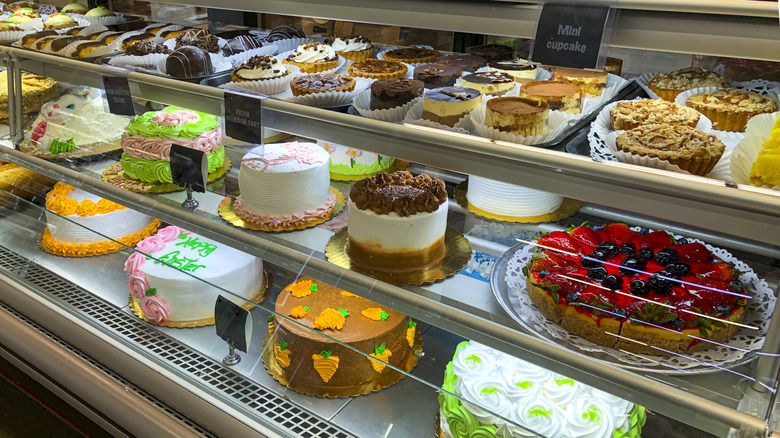
In addition to using your best judgement to assess if a baked good in the bakery section has become dry from factors like sitting out too long or improper storage, you can also check for "bleeding" or leaking fruit juices on a cake or cupcake. This could indicate that the fruit topping was placed on too early, should have been glazed, or that the cake itself isn't fresh. If cookie or cake frosting appears to be rock hard instead of fluffy and light at the edges, that's another cue the treat may not be as fresh or appetizing as it should be.
If your store's bakery allows you to pick out your own baked goods from the shelf or case, you can give the items a light squeeze to evaluate freshness. If the bread or pastry feels overly hollow or hard, it might be stale. Leave it on the shelf and choose something else. Just use parchment paper or gloves before touching any baked goods that others may consume. To avoid picking up dry baked goods from the grocery store, you can also pay attention to sensory signals like the fresh-out-the-oven smells in the bakery section, which could mean certain items were baked recently. The quality of a grocery store bakery can vary greatly, but you can choose wisely. Now, how to keep your cakes from going stale once you get them home is a different story altogether.