

The One-Ingredient Upgrade For Any Meal That Everyone Throws Away
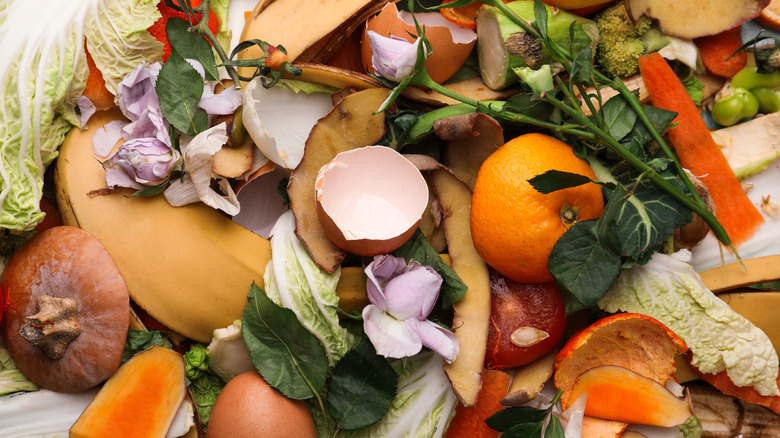
We learn early which parts of food are "supposed" to be eaten and which parts aren't. Crusts should come off sandwiches, apples need to be peeled, and herb stems go into the compost. But those neat little piles of herb stems we sweep aside are still useful, and actually, they're sometimes the most flavorful thing on the board. They hold the same aromatic oils as the leaves, sometimes even more. They're sturdier and more aromatic, and they're flavor you've already paid for, so you might as well put it to use.
Not all stems have the same application, though. The tender ones, like those of parsley, cilantro, dill, and basil, can be chopped fine and stirred straight into sauces, dressings, and salads. They're stronger than the leaves but mild with a subtle crunch that tastes fresh, not too fibrous or bitter. The woodier stems of the stronger-tasting herbs like rosemary, thyme, and sage are better used whole. Drop them into a simmering pot or roasting pan and they'll perfume everything around them before being discarded.
If you're worried about them getting lost in a broth, tie them together like a bouquet garni. If you're making pesto or tomato sauce, basil stems are your friend. They blitz into the vivid green base and add that spicy-sweet, anise note cooks usually have to make up for with extra leaves. The same goes for parsley stems in chimichurri, or dill stems in a quick pickle brine. For quick, clean brightness, blend cilantro or parsley stems into vinaigrettes and other homemade dressings. This technique is using what you have and being less wasteful, but it also amplifies every dish.
Don't toss the good parts
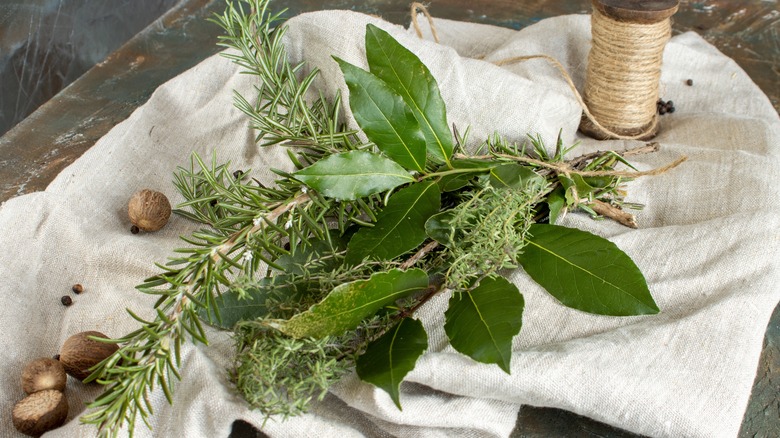
Part of why we eschew stems comes down to meticulous aesthetics and cultural influence. French haut cuisine, and the technique cookbooks that followed it, prized a rigid, polished sameness. Leaves look delicate and symmetrical on a plate; stems look like... twigs. It's true that lots of non-aromatic vegetable stems are not worth eating, or downright inedible. It's not fun to chew on the ropey ribs of kale, and the stiff little caps of green beans are culinarily useless. It's possible that herb stems got scooped up and thrown into the compost bin along with those less desirable plant parts — a case of guilt by association.
Science tells a different story. The stems, like the other plant parts, carry the same essential oils that give herbs their scent. Those oils are produced by tiny glandular trichomes along the plant's surface, on leaves, buds, and sometimes on the upper layers of the stem itself. The tougher tissues of the stem hold on to those oils longer, which is why a bruised stem can smell even stronger than the leaves. Heat or acid can coax out that flavor, the way bones release richness into broth.
Chefs have been correcting the record for years. Samin Nosrat adds cilantro stems to salsa verde for heat and body. Yotam Ottolenghi blends entire bunches of herbs for sauces that taste exactly like the color green looks. Dan Barber at Blue Hill built an entire menu around using every edible scrap of the plant. Cooking with stems means paying attention to the architecture of flavor instead of only its surface, and truly respecting and celebrating every part of every ingredient.