

Why You Might (Or Might Not) Want To Cook Ribs Wrapped In Foil
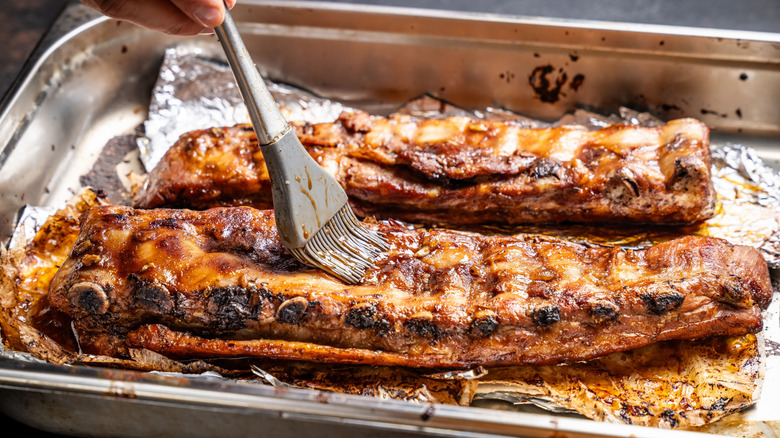
Many of us reach for a roll of aluminum foil the second we fire up the grill, especially if we're planning to cook meat. One of the most commonly wrapped items is ribs, a dish that often benefits from the steamy environment that aluminum foil creates — but there are some occasions where you might not want to seal those babies shut. To find out exactly when to use foil on ribs, we sought out the advice of Christie Vanover, head cook and pitmaster for Team Girls Can Grill on Season 4 of the Food Network's "BBQ Brawl." The champion pitmaster and cookbook author says that the cooking technique is great for "enhancing tenderness," but it should be done a certain way.
"During the first phase of the cook, leave them unwrapped to pick up some smoke flavor," she says. "Then, wrap them with some butter and syrup to braise them." Another option is to add vinegar or some apple juice as a cooking liquid when wrapping or to toss in some barbecue sauce toward the end of cooking. Beer works too — it's really all about flavor preference. Either way, wrapping your ribs will enhance the flavor of your barbecue. "[It] helps the meat cook faster and keeps it juicy," Vanover adds. It comes in handy when reheating your barbecue ribs as well.
Wrap ribs in foil for more tenderness
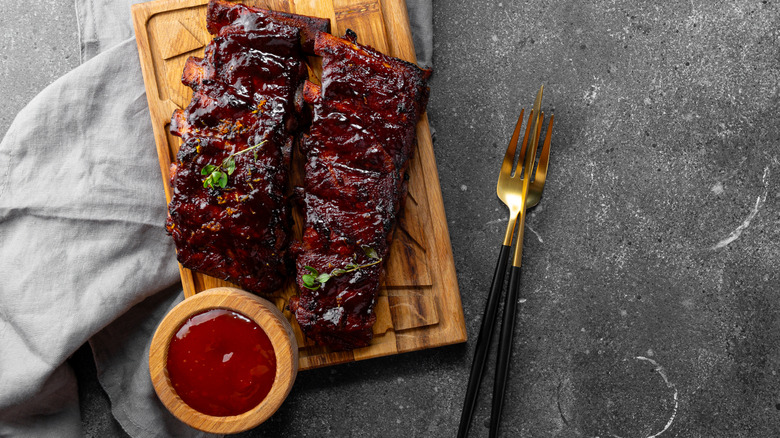
If you want to follow Vanover's technique and wrap the ribs during the second phase of cooking, check the bones to see when you should break out the foil. If the meat has pulled back from the edge of the bones about a quarter-inch and they're looking dark, then you're probably in a good spot. If you want to check the temperature, a good aim is somewhere between 150 and 170 degrees Fahrenheit. It should take about three hours to get to this point. Once they're wrapped, cook the ribs for another hour and a half or so, with the final temperature around 200 degrees.
All that said, wrapping isn't essential, and it should actually be avoided in some situations, like when you're cooking over a very high heat. Ribs that aren't cooked in foil will have a crisper exterior and a smokier flavor, which some people might like better. It really comes down to personal preference. "Using the foil method reduces the cook time," Vanover adds. "It also locks in moisture. If you prefer to pick up more smoke flavor or if you like a dry-crusted rib, skip the foil." After you've mastered that, be sure to follow up with these additional tips on cooking ribs in the oven to cook a perfect rack of ribs.