

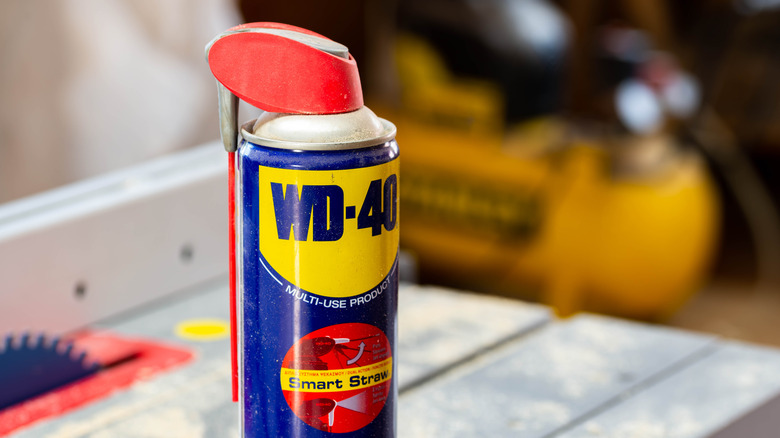
Bye WD-40, Olive Oil Is The Unexpected Solution For Squeaky Doors
We may receive a commission on purchases made from links.
It's hard to ignore when your kitchen cabinet door hinges squeak after the last of their lubrication has dried up. Cabinet doors are prone to this annoying squeak, especially if you use them daily — opening and closing them as you cook, clean, and grab ingredients. Plus, cabinet hardware isn't exactly heavy-duty, so they'll wear down much faster than, say, your kitchen door's hinges. But if you don't have WD-40 on hand? The solution might be right there in your kitchen — more specifically, inside your olive oil bottle.
The reason your cabinet door hinges creak is that the metal grinds against each other. Olive oil's the perfect fix for this because its fatty acid chains create a slippery barrier between metal surfaces, reducing friction. Add a bit onto a paper towel and daub it on the offending hinges (take special care to oil the pin threading through the hinges, removing it to oil it if necessary). Move the door back and forth a bit for the oil to really get in between the moving parts, and the squeaky noises will stop.
The catch is that it won't last. Two to three weeks is all you'll get before oxidation does its thing, turning the oil rancid and useless when air breaks down its lubricating properties. Dust loves oil, too, sticking to the slick surface until it gums up the hinge. When that happens, you'll need to reapply or switch to something like WD-40 Silicon Spray or WD-40 Lithium Grease.
Other ways to use olive oil in your kitchen
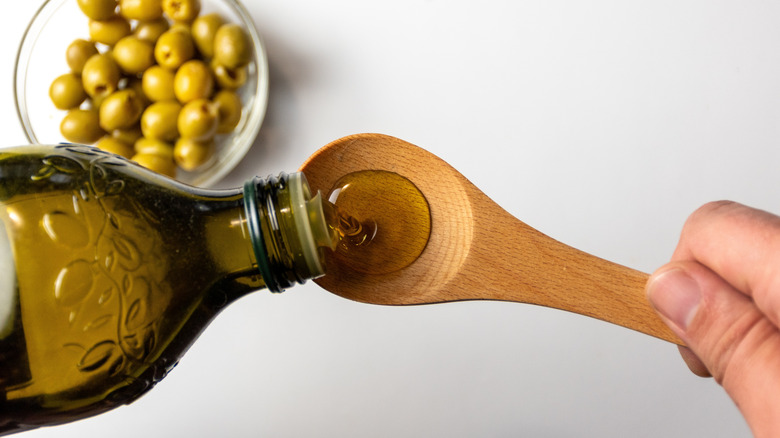
Olive oil isn't just for hinges. This stuff works for all sorts of non-cooking kitchen tasks — conditioning wooden cutting boards, seasoning new pans to prevent sticking and rust, and removing sticky residue from cabinets. It works nicely with stainless steel, brass, and iron hinges because its natural acidity is mild enough to avoid corrosion during short-term use. The oil even creates a protective film and repels water, making it surprisingly versatile for kitchen maintenance.
The real beauty here is safety and accessibility. It doesn't cause harsh fumes to fill your kitchen. There's also no need to keep it from food prep areas like you would with WD-40 or other chemical solutions. It's biodegradable, won't harm your kitchen's finish, and you probably already have a bottle sitting next to your stove right now.
Other cooking oils work too — vegetable oil, canola oil, whatever's in your pantry can handle the same lubricating jobs in a pinch, but olive oil's ubiquity makes it the obvious first choice when cabinet hinges start screaming.