

Why Marcella Hazan Regretted Introducing Americans To Balsamic Vinegar
We may receive a commission on purchases made from links.
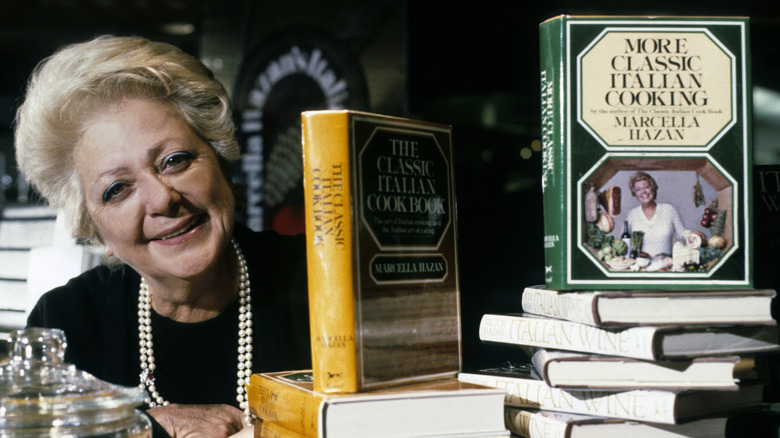
Few people had as big an effect on cooking in America as Marcella Hazan, so much so that many younger people today might not realize someone actually had to introduce balsamic vinegar in the first place. Born in the north of Italy in 1924, Hazan came to the United States with her Italian-born American husband in 1955, and her disappointment with American food encouraged her to learn to cook, especially dishes that she missed from home. Hazan went on to become a legendary teacher and author, writing some of the most beloved Italian cookbooks ever, which introduced Americans to real Italian cooking in the 70s. She is credited with kicking off our love of extra virgin olive oil, sun-dried tomatoes, and yes, balsamic vinegar, but her adopted home didn't always use these prized ingredients as she intended.
Being a traditionalist who venerated the fresh Italian style of cooking, balsamic vinegar was something to be used with a light hand. However after Hazan popularized it, balsamic vinegar became a classic case of an overused, trendy ingredient, with balsamic glazes and reductions being thrown around haphazardly by chefs trying to capitalize on the name. It was so widespread that Hazan bemoaned ever introducing it in the first place, according to talking heads in a clip from "Marcella," a documentary about her life. "I remember going to a dinner with her and she would cringe with the fact that people used it everywhere," says a friend. She felt that Americans were completely misusing balsamic vinegar. For her it was an accent. You added a few drops to a recipe to complement food, you didn't slather it on a sandwich as the main flavor.
Marcella Hazan thought Americans overused balsamic vinegar
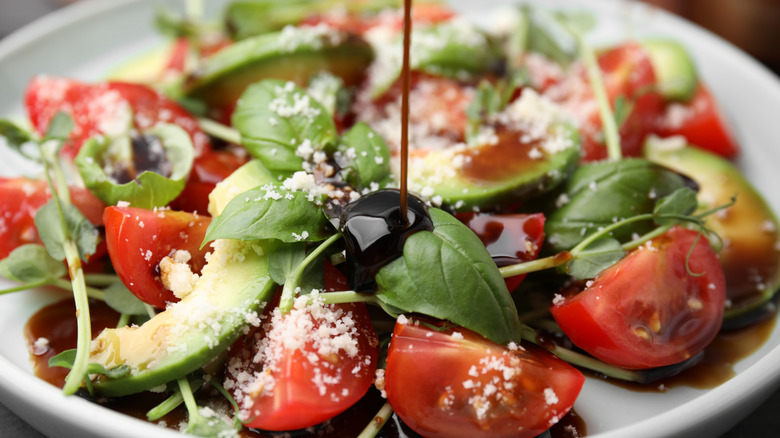
An example of how Hazan liked to use balsamic vinegar came from her seminal cookbook, "Essentials of Classic Italian Cooking." In it she explained how to make a proper Italian salad, and noted that all vinegar, not just balsamic, should be used lightly, with more emphasis on the olive oil. And even with that her go-to vinegar was red wine. You can add balsamic vinegar, but it should not replace the red wine, it was only a dash for extra complexity.
Part of Hazan's concern over how balsamic vinegar was used likely stemmed from the fact that she was from the Italian region of Emilia-Romagna, not far from Modena, the traditional home of balsamic vinegar. True balsamic from Emilia-Romagna is made from grape must from the region's wine grapes, which gets cooked down and aged into a thick, viscous liquid. It's aged for a minimum of 12 years, with some versions being aged up to 25. All that work means only about 75,000 bottles of real balsamic vinegar are produced each year. Everything else you buy is an imitation, often with added flavors. In other words this is precious stuff. Making an entire bottle of salad dressing from it would be unthinkable to someone like Hazan. But if you can get your hands on a real bottle, look for the D.O.P. label; you'll soon understand why she would use it so sparingly.