

How Schlotzsky's Went From '90s Fame To Almost Closing For Good
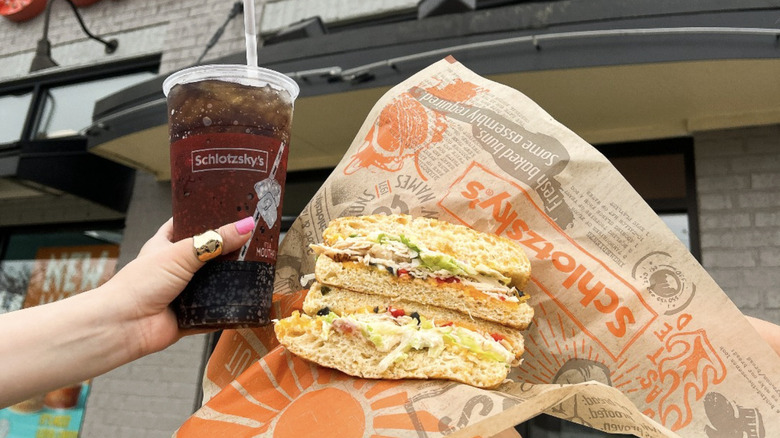
In the 1990s, Schlotzsky's was firmly in the ascent. The chain was bringing its signature sandwiches, on unique rounds of freshly-baked bread, to ever-larger markets, and it looked as if the sky was the limit. By the early 2000s, however, the chain's prospects had fully reversed course, and bankruptcy was now the only thing on the menu. Nearly a quarter of a century later, the chain does still endure, but it has never returned to its glory days, despite many efforts throughout the years to bring it back to the forefront. So, what is it that took the wind out of the sails of this popular sandwich chain? In the case of Schlotzsky's, the trouble came primarily from taking on too much expansion and too much risk.
The very first Schlotzsky's opened on South Congress Avenue in the heart of Austin, Texas in 1971, and was owned and operated by Don and Dolores Dissman. The deli sold only one item, an 8-inch muffuletta-style sandwich featuring three meats, cheese, olives, lettuce, tomatoes, and dressing on freshly-made sourdough bread. These days, that sandwich is still on the menu, known as "The Original."
The sandwiches being slung were clearly a hit, as just a decade later there were over 100 Schlotzsky's franchises. It was at this point that the Dissmans decided to sell the company, getting out of the sandwich game and giving control to a pair of brothers named John and Jeff Wooley — as well as their business partner Gary Bradley, though he parted with the company a year later — for a purchase price of under $3 million.
The rapid rise of Schlotzsky's
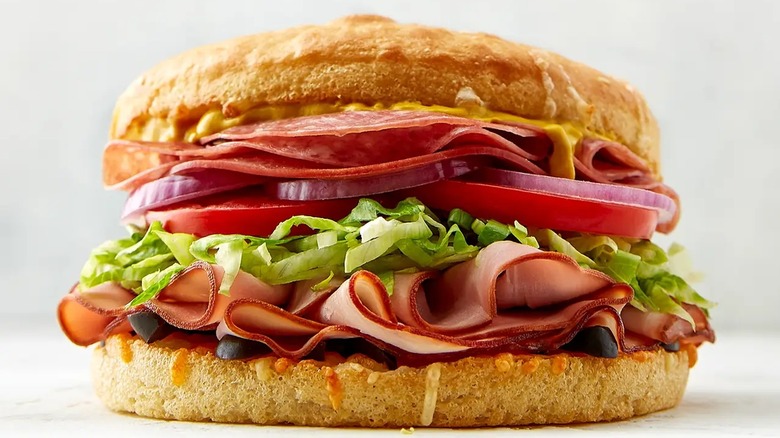
Under the control of the Wooley brothers, Schlotzsky's continued its trajectory of expansion over the following two decades. The menu expanded rapidly to include not only a wide variety of sandwiches, but also pizzas, wraps, salads, and soups. The company also continued its aggressive franchise-based expansion throughout the U.S., and even across the country's northern border into Canada.
Throughout the 1990s, this growth continued, with the company going public in 1995. The chain continued to excel, reaching its peak with over 700 restaurants around the world. There was, however, trouble at its core. Throughout this period of growth, Schlotzsky's continually took on more risk, beginning with assuming the credit risk of franchisees, and continuing into a buyout of developer rights. While these moves increased the company's vulnerability, it was all balanced by consistently great sales — until it wasn't.
In March of 2001, the sandwich chain announced its 25th consecutive quarter of same-store sales growth, a figure believed to be one of the longest such trends in the restaurant industry. Only a few years later, however, it was in financial ruin. In 2003, Schlotzsky's reported an $11.7 million loss that year. A few months later, in June of 2004, the Wooley brothers were removed from operations. By August, the company had filed for Chapter 11 bankruptcy, and by the end of 2004, it went to auction at a price of less than half its previous value.
How is Schlotzsky's doing these days?
Despite the bankruptcy, Schlotzsky's has held on. In 2006, it was purchased by Focus Brands — now known as GoTo Foods — the parent company of franchises like Auntie Anne's, Cinnabon, Moe's Southwest Grill, and Carvel, among other well-known names. Under this new management, significant changes were made to revamp Schlotzsky's, focusing on what made the restaurant chain unique and updating its look.
By the early 2010s, Schlotzsky's was back to holding its own, narrowly avoiding the list of failed restaurants chains we miss and instead finding its way back to moderate success. In 2013, the chain had opened 30 new restaurants within two years and had another 50 on the docket. This was thanks not only to rebranding and reworking, but also the synergistic effects of including sister brands like Carvel and Cinnabon into some franchises. But, at least at present, it does not appear that Schlotzsky's is headed for the same sort of ubiquity the chain once hoped to achieve in the fast food market.
As it stands, there are 300 Schlotzsky's restaurants across the U.S., with over 180 of those in the company's state of origin, Texas. The 2020s have been a period of slow decline for the sandwich chain, though the company is still making every effort to reverse this trend and hang onto its share of the market. For now, Schlotzsky's certainly remains one of the most iconic sandwich shops in its home state. Given how close it came to collapse in the early 2000s, maintaining a 300 restaurant presence isn't bad at all.