

The Kitchen Remodel Details That Can Make The Space Noisier Than You'd Expect
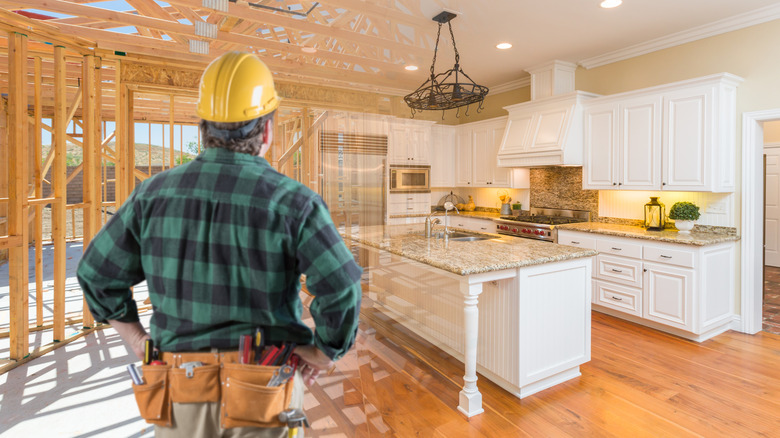
There are those of us who think of a kitchen as a quiet, meditative workspace, and others who see it for what it usually is: The noisiest room in the house by some distance. When you're in the zone cooking a meal, the sounds of a kitchen can be drowned out by your own thoughts — "chop it finer", "check the oven", "the onions are not brown enough". But from anywhere else in the house, the sounds of a meal being cooked involve pots and pans clanging, noisy appliances coming on, and buzzers going off. And while there are ways to refresh your kitchen without going in for a full remodel, when it comes to decibel levels there's no quick fix. But there are many details to consider that can make the kitchen noisier than you'd expect — starting with the layout.
According to Carmine Argano, owner of Creative Design Ceramic Tile & Bath, open kitchen layouts, while popular, are a big part of the problem as the sound bounces around the larger space. Other details that add to the noise are the type of flooring, the material used for counters, types of appliances, and the detailing on the cupboards and cabinets in the kitchen. "It's a big problem, especially for people who work from home or simply want some quiet," Argano says, adding that a series of interventions during a remodel can help significantly cut down noise in the kitchen. "You can quiet things down with soft-close cabinets and drawers, thicker counters, and even by putting a rug runner in front of the sink or stove." The absolute best rugs for the kitchen are usually designed to absorb sound. And thicker counters are not only more durable, the extra inches also help absorb noise. As for soft-close cabinets, they come with a piston attached to the hinge, which forcibly slows down the movement of the door just before it shuts to avoid a bang.
More tips to cut the sound in your kitchen
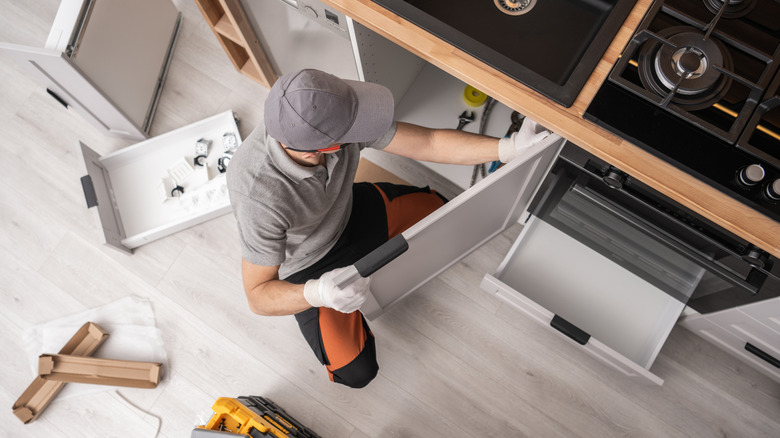
If this were anywhere else in the house, the first step to cutting noise levels down would be to put down thick wall-to-wall carpets. While this won't work in the kitchen for obvious reasons, there are other options. If you have a sitting area in the kitchen, put a carpet there to absorb some noise. According to Argano, cork flooring can be great for minimizing sound. But if tiles are the preferred choice, as they usually are, there's a simple trick you can use. "You can use pads under appliances and dishwashers, and seal gaps so sound doesn't bounce," Argano says.
And while picking silent appliances helps, it's also important to keep a close eye on where in the kitchen they sit. For example, simply move your blender a few inches away from the wall, or place it on a folded towel, to see how the immediate environment can affect noise levels. And ensure that the person building-in appliances, pays attention to the acoustics. As Argano says, "sometimes it's not the motor but how it sits in the cabinetry that makes the difference." Likewise choose items such as dishwashers, extractor fans, and ovens with fans by paying attention to the number of decibels they produce when on.