

The Spam Recipe People Loved In The '50s But Rarely Eat Anymore
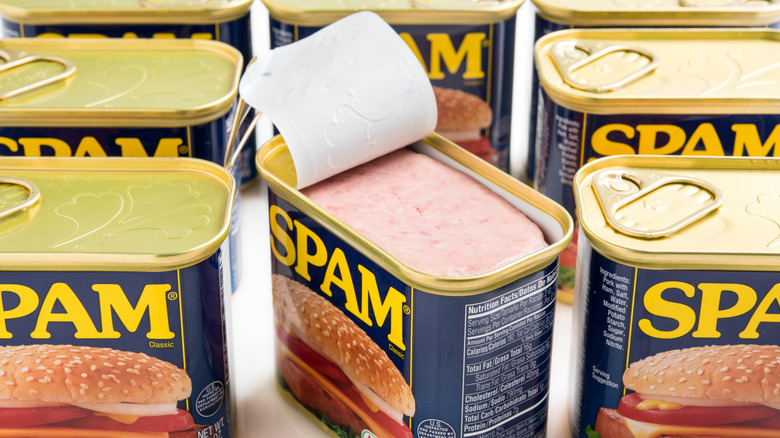
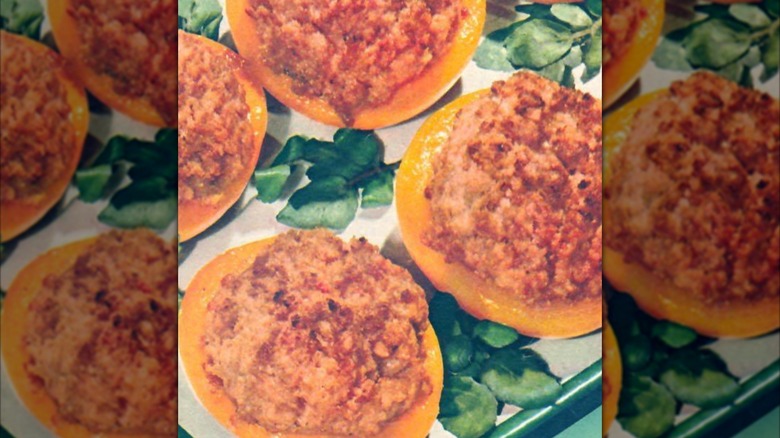
In the 1950s, a spread alongside a traditional Baked Alaska and smiling, bouffanted hostesses presided over avocado green kitchens where the Spam Fiesta Peach Cup was the jewel of the postwar party tray. The dish was made from canned peach halves stuffed with an intriguing melange of ground Spam, oats, milk, ketchup, and mustard, which was then shaped into balls and placed in the fruit's hollow before being broiled until golden and warm. An edible sculpture of atomic optimism, advertisements promised that it would "bring California sunshine to winter's meals." Back then, canned food represented the aspirational homogeneity of modernity, and the Spam Fiesta Peach Cup was at its center.
In the 1950s, convenience was chic, and housewives were praised for speed and novelty, not for scratch-made labor. Just another reason the Spam Fiesta Peach Cup was a dish to impress: with a single, decontextualized Spanish word, it gave instant glamour that evoked a kind of performative globalism. That being said, pairing syrupy fruit with highly processed, perpetually pink ham-adjacent pork was actually kind of genius. On a food-foundations level, hot, salty pork and something sugary-sweet (like bacon and maple syrup or sweet-savory roasted pork char siu) are always going to work.
The Spam Fiesta Peach Cup came from the same aesthetic dreamscape as Jell-O salads and molded aspics, hovering between statuesque centerpiece and stomachable sustenance. It also belonged to a Cold War-era country rehearsing sophistication. Post-WWII America wanted to taste cosmopolitan without leaving the suburbs, and recipes like the Spam Fiesta Peach Cup let ordinary families imagine they'd arrived. It was the illusion of worldliness — suggesting participation in the fanciness of something global, even if the ingredients were resolutely domestic and could have been safely assembled from any backyard bunker in Levittown.
Cold war, hot lunch
The canned-food boom was a postwar conversion project. When the war ended, the same factories that had packed rations for soldiers pivoted to feeding civilians, and the government urged companies to keep the lines running. Spam, born in 1937 as a Depression-era miracle, became a peacetime commodity — an edible emblem of plenty after a period of belt-tightening rations. The idea of eating out-of-season peaches, tasting summer's sweetest fruit in the middle of a Midwestern winter, has obvious appeal, and so it was no surprise that the Spam Fiesta Peach Cup was born, as kitchens of the early '50s were America's new colony.
The recipe called itself a fiesta, but the party was private. The guise of foreignness was ornamental, a borrowed headdress for an empire that wanted to seem friendly while owning it all. The same imagination that tested bombs in Pacific lagoons quickly staged backyard luaus in Ohio, serving strong, garish tiki drinks and appetizers like rumaki alongside the Spam Peach Fiesta Cups. Mid-century recipes borrowed foreign words the way they borrowed culture — flattened, sweetened, and packaged for domestic use. Canned foods made that possible. They brought the harvest in a single, shelf-stable and obedient shape.
Industrial food changed what cooking meant. A homemaker no longer had to source, peel, or preserve — she only had to assemble. Every label offered the security of fruit that never browned, meat that never spoiled, and food that looked the same in every season and in every state. The fantasy was sold as freedom from labor, but under that, it was also freedom from unpredictability.
From Spam appetizers to spam filters
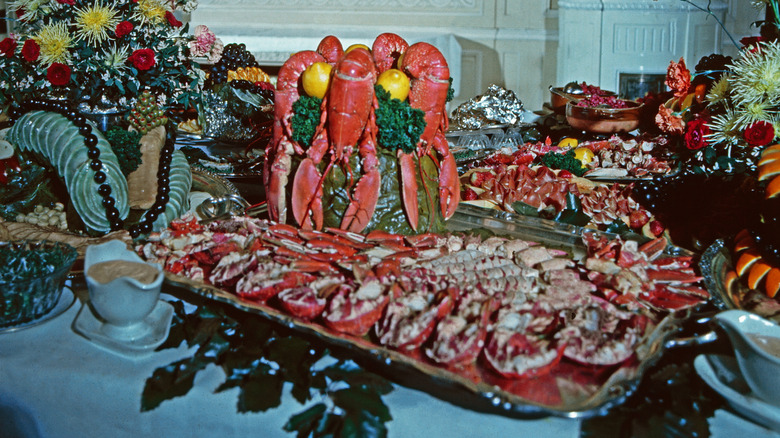
Atomic and tropical were part of the same fantasy of a world that was bright, safe, and under control. The show of abundance became its own comfort, the performance of having enough, again and again, until the performance became the appetite. But by the late '60s, the fantasy curdled, and canned food fell out of fashion. New appliances promised fresh food over shelf life, and the palette of gelatins and canned fruit began to look artificial next to the emerging language of health. Women continued to leave the home for waged work, and the table soon lost its stage lighting. Spam survived, but not in the Fiesta Peach Cup.
Across the Pacific (and especially in Hawaii), Spam found a real role crucial in recipes like simple Spam musubi, fried rice, and stews — eventually becoming a symbol of cultural identity. The mainland version never made that turn, because vaguely foreign-sounding party-tray food belonged to an era that mistook arrangement for sophistication. When that illusion broke, so did its recipes.
Now the Fiesta Peach Cup circulates as a joke recipe, a retro curiosity shared with nauseated disbelief. Mid-century party platters tried to turn anxiety into order, a failed experiment to prove that chaos could be managed if it was stuffed with enough green olives, mayonnaise, and marshmallows. While the dish remains a thing of the past, the instinct that created it persists as we arrange, brighten, edit, and post. Our optimism is digital, our abundance algorithmic. Mid-century cooks trusted the can; we trust the 'gram.