

Keep Your Rosemary Plants In Top Shape With This Little Maintenance Tip
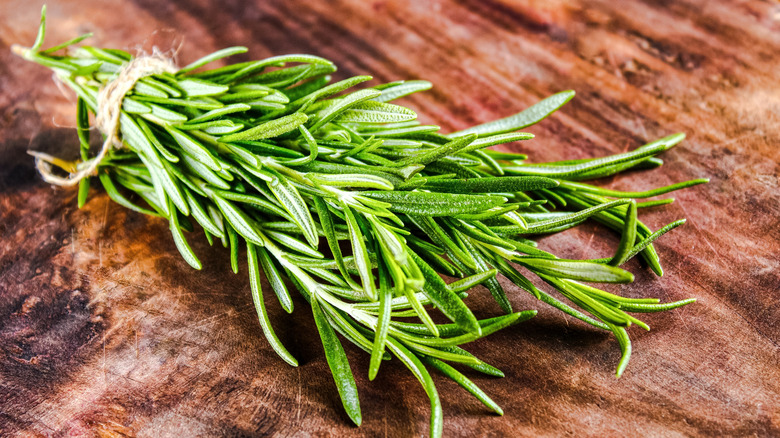
Growing rosemary at home can be as rewarding as harvesting it to use in a variety of recipes – that is, if you keep it nice and healthy while it grows. Planting rosemary in your yard can be a fruitful endeavor. But to keep your rosemary plants in top shape, you can maintain them in a simple yet effective way: Pruning them regularly. If you've ever cultivated a rosemary bush only to notice it growing wild and developing dry, woody stems, this isn't a healthy situation. Though lots of growth may seem like a good thing (and it can be, with the right maintenance), regular pruning — or cutting the plant back three to six inches — can encourage healthier, denser leaves to flourish.
By pruning rosemary regularly with gardening shears, the plant is more likely to thrive. Plus, it looks more well-kept in your yard or by the kitchen window. You can trim off damaged or dead branches as you see fit, but for proper rosemary bush pruning, it's best to do so at the end of spring or in early summer, after the plant has blossomed, so it has a chance to grow anew with plenty of time before winter freezes begin. Also, avoid pruning before the plant has ceased blossoming, since that can cause an undesirable excess of growth throughout the season.
More tips for growing rosemary at home
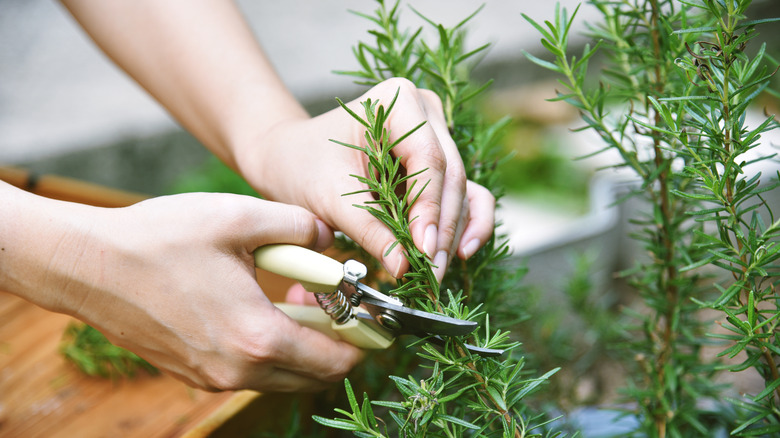
Pruning rosemary is a simple maintenance tip that keeps the plant healthy, producing plenty of bushy stems for you to harvest and add to your water for a refreshing twist. Of course, you can also sprinkle the chopped herb into meals or desserts. However, if the idea of pruning and harvesting your rosemary regularly has you overwhelmed about what to do with all those cut stems, rest easy knowing you can easily propagate them to grow new plants for your own yard or as gifts for friends or hang excess rosemary spigs to dry the herbs to keep on hand in the pantry. Just don't go too crazy with the pruning, since cutting the plant too far back (past the woody part) can kill the shrub.
Pruning properly for maintenance is among the best beginner gardener tips out there. But how you cultivate rosemary is just as important. Rosemary thrives in areas with high sun and with limited moisture, so you can add gravel to keep the soil dry and well-drained. It also helps to plant rosemary in the spring or fall with companion herbs that thrive under similar conditions, like thyme or sage. For this reason, avoid planting rosemary and basil together, since basil plants need a lot more moisture. With these techniques, plus regular pruning, your rosemary should grow nicely and healthily.