

The Popular Midwest Grocery Chain That Fizzled Out In The '80s

It's always shocking when a business that has been open for more than 50 years suddenly closes its doors. Unfortunately, that was the case with a popular Midwest grocery chain that was a rival of Piggly Wiggly stores in the area, but is now a forgotten grocery store that should still exist today. The Hinky Dinky chain of grocery stores got its start in Omaha, Nebraska, in 1925 and grew steadily for over 40 years. By the mid-30s was responsible for about 30% of the Omaha grocery market. Hinky Dinky reached its peak in the mid-60s, with 40 stores operating throughout the Midwest.
However, the company's demise began shortly after it was sold in 1972. By 1985, just before what would have been the company's 60th anniversary, some of the remaining 25 stores in the grocery chain were closed for good. In 1999, the final stores were acquired by Nash Finch, who got rid of the Hinky Dinky name entirely.
Hinky Dinky was opened by brothers Jule, Henry, and Albert Newman, along with their cousin Ben Silver. When choosing the store's name, they were inspired by beloved Southern staple Piggly Wiggly to come up with a similarly silly name. The family-owned business ended up taking its name from the chorus of a WWI song called "Mademoiselle from Armentières," which had the line "hinky dinky parlez-vous."
Hinky Dinky was a grocery store pioneer, but faced challenges
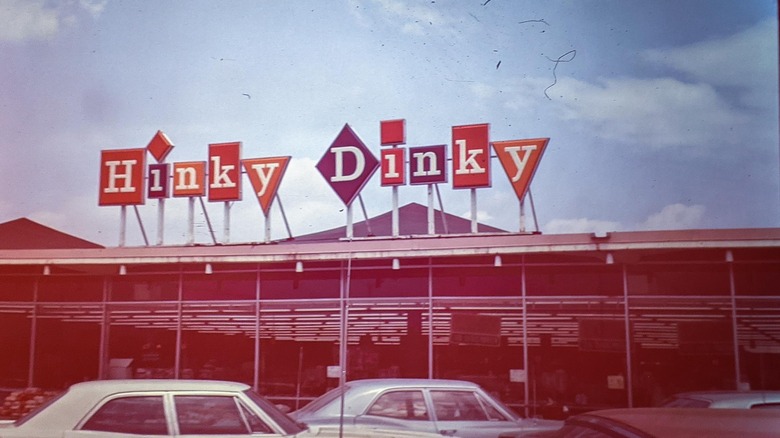
Hinky Dinky was one of the first grocery stores to employ specialists in certain food and beverage areas like meat, dairy, and frozen foods. It was also a pioneer of the grocery store banking movement. In 1974, the First Federal Savings & Loan bank placed stalls in certain stores that contained computer banking terminals that allowed shoppers to update their accounts.
The store was also one of the first to hold excess stock in a large outside warehouse, allowing it to offer a greater variety of options in its stores, as well as both private-label items and name brands. Hinky Dinky was the first grocery chain in Omaha to employ the use of handbaskets, and later, nesting shopping carts and automatic entrance doors to make shopping easier.
However, the company did face its challenges over the years, which ultimately contributed to its downfall. In 1929, Piggly Wiggly sued the chain for trademark infringement. When the family turned to the president of the Omaha National Bank, Water W. Head, for help fighting the lawsuit, he agreed only in exchange for shares of company stock. Though Hinky Dinky won the suit, the family lost some control over the company due to the stock sale.
Head repeatedly tried to convince the family to sell. In 1972, he was successful, and Hinky Dinky was sold to the Cullum Companies of Dallas. Cullum used Hinky Dinky profits for his own chain of Tom Thumb grocery stores, eventually leading to the stores becoming neglected, run-down, and unpopular.