

The Simple Label Check That Will Stop You From Buying Low-Grade Cinnamon Forever
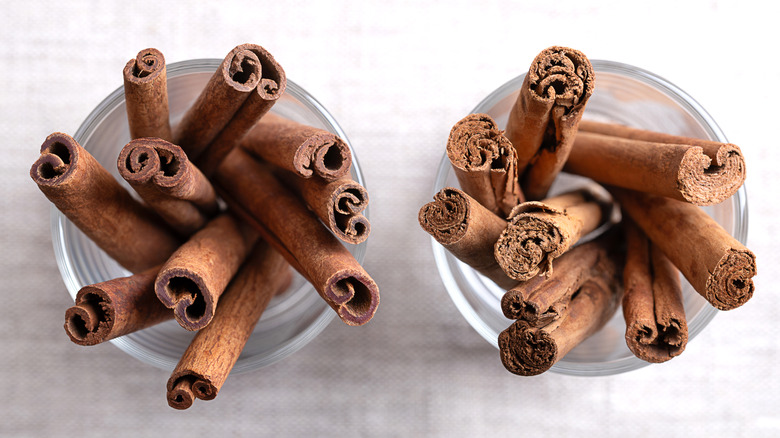
When shopping for true cinnamon, there are some key words to keep an eye out for on the label that will help you distinguish between true cinnamon and its lackluster counterpart. Look for the words Ceylon, Zeylanicum, or Sri Lankan on the label to let you know you've selected the real deal. Avoid cinnamon labeled with the words cassia, Chinese, or Saigon.
While neither is technically fake cinnamon there are different types of cinnamon, and one is higher quality than the other. All cinnamon comes from Cinnamomum trees (although different types of the tree). In both, the inner layer of bark is cut off the tree and the strips are dried, which then naturally curl up and roll into a stick-like shape that most people are familiar with. After this, the cinnamon sticks, also known as quills, are also commonly ground into a fine powder. Most jars of either cinnamon sticks or ground cinnamon you'll find at the typical grocery store are usually cassia cinnamon, which is thought of as a lesser quality or sub-par cinnamon.
So while both Ceylon and cassia are technically cinnamon, Ceylon is referred to as the true cinnamon and comes mostly from Sri Lanka and the Cinnamomum verum tree, which has light brown bark. The rolled up quills of Ceylon cinnamon are lighter in color, thinner, and more brittle than Cassia and are usually filled inside with tiny fragments of the bark. Ceylon cinnamon sticks are fragile and are breakable in your hands, and they grind up easily without much effort.
Not all cinnamon is created equal
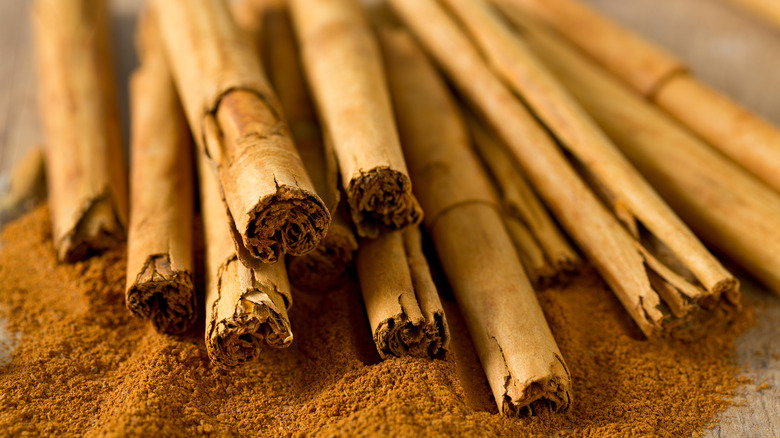
Ceylon cinnamon has a very mild flavor and scent compared to the typical pungent cassia cinnamon scent we've all smelled wafting through a mall food court from a Cinnabon bakery. Ceylon cinnamon still has a warm fragrance, but it's more delicate and sometimes has floral and even citrus notes. True Ceylon cinnamon doesn't give off heady, pungent taste or scent but is more subtle, and is more rare and expensive than Cassia cinnamon. It's also more difficult to find in stores.
Cassia cinnamon, also sold as Chinese cinnamon, comes from the bark of the Cinnamomum cassia tree, which is native to China but now also commonly found in Indonesia and Vietnam, and has darker, more reddish-brown bark. The rolled quills of cassia cinnamon are darker, thicker, and tougher, and are usually hollow inside apart from the bark itself. Unlike Ceylon cinnamon sticks, cassia quills are very difficult to break apart with your hands, and are equally tough to grind into a fine powder.
The smell and flavor of cassia cinnamon are what you'd typically expect from commercial cinnamon, which is a deep, intense warmth that can sometimes be described as spicy or even slightly bitter. Cassia cinnamon tends to be vilified because it contains significantly more coumarin, a naturally occurring compound found in plants that can be dangerous to humans, but only in large quantities. Unless you're consuming a tablespoon of cassia cinnamon daily, most people don't need to worry about excess coumarin.