

7 Southern Snacks The Rest Of The Country Doesn't Know About
There's no doubt that Americans love to snack, no matter what part of the country they're in. According to a 2023 study published in the journal Nutrients, nine in 10 American adults consume at least one snack per day. But snacks play a special and central role in the South, whether featured in potluck luncheonettes, cocktail parties, barbecues, and crawfish boils, or simply feeding folks on the go. Like Southern cuisine in general, they reflect this region's unique history, robust agriculture and geography, and diverse cultural influences. Whether you're looking for a savory pick-me-up or a sweet treat, there's something for every hankering.
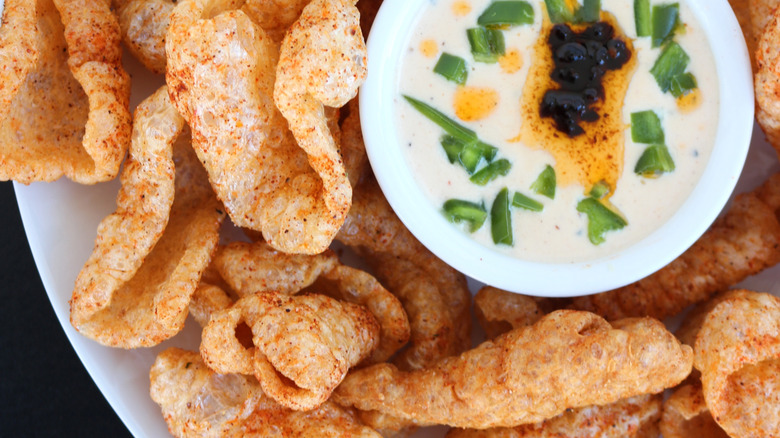
Many Southern snack staples are available nationwide. You can find pork rinds in Whole Foods (try adding a dash of hot sauce to give them a tasty, regional kick), and hushpuppies have become sports bar staples from coast to coast. However, as folks from the South can tell you, other snacks have stayed local. You might have to go down to New Orleans to get proper cracklins — spicy, Cajun pork rinds — or Charleston for benne wafers the way grandma used to make them. For Southerners up north, out west, or around the world, snacks like these taste like home and help define what it means to be there. Hard to find elsewhere, these snacks are some of the South's best-kept secrets.
Cheese straws
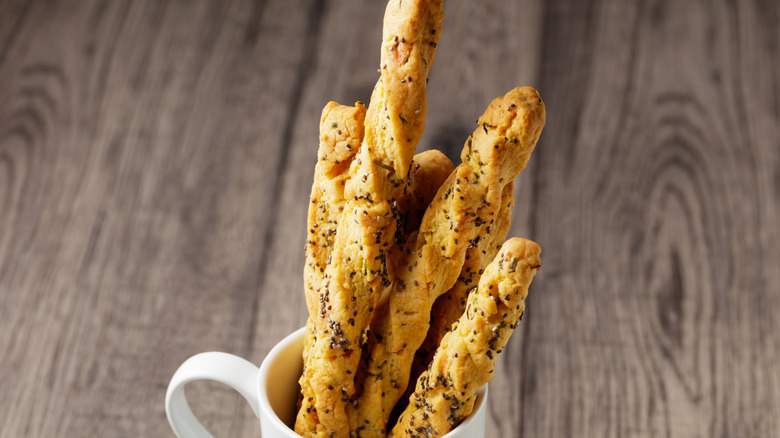
Crunchy and, of course, cheesy, cheese straws are sometimes called "cheese crackers," but that sells them a little short. Cheez-Its or cheese sticks, they're not. Round, thin, and sometimes ribbed, ridged, or twisted, the dough is made with cheese and seasoned with cayenne, red pepper, and salt. Though there are few ingredients, recipes allow for flexibility. Cheddar is the standard, but others add Parmesan or Gruyère, and some use paprika or Aleppo peppers, among others. A good cheese straw has not just snap but a little kick from the spices and tang from the cheese. Pairing well with drinks like a classic Sazerac or mint julep, this cocktail-party staple is common at everything from wedding receptions and church potlucks to college football tailgates.
There's no doubt cheese straws have a long history, but there remains debate about their exact origins. While many food scholars trace them to English cuisine and its "biscuits" (what they call crackers in England) tradition, others think they're a specifically Southern American innovation. We do know that cheese straws became popular in the South in the late 19th century, and a recipe graces the 1887 edition of "The White House Cookbook." Prior to the advent of refrigeration, turning cheese into a cracker helped it last longer, which was critical in the South's hot and humid climates. Today, you'll run into different versions from the Carolinas to New Orleans.
Boiled peanuts
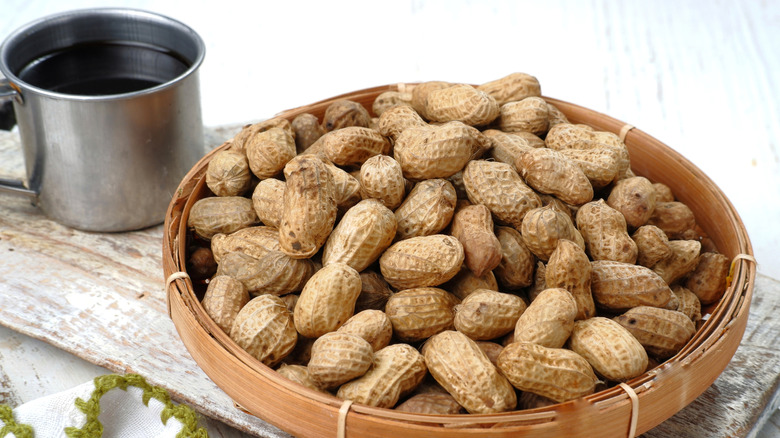
The warmer climate of the South is ideal for crops like peanuts, which is why they're a feature in many Southern snacks. Boiled peanuts are most popular in the peanut-farming areas in Georgia, North Carolina, Mississippi, Alabama, North and South Carolina, and parts of eastern Texas and northern Florida. If you drive down a country road between May and November, when this nut is in season, you'll see roadside stands selling them with signs that say "Boil P-Nuts." Non-Southerners take note: You drop the "ed" in "boiled" when you say the name of this snack.
Boiled peanuts are made outdoors, and there are exactly three ingredients: freshly harvested peanut pods (not roasted), salt, and water. A batch boils for several hours over an open flame, leaving you with hot, soggy peanuts in their shells. These are ladled into a bowl or served in a brown bag. They can be tricky to shell, but the nuts are soft, warm, and salty, pairing well with hot days and glasses of beer, RC Cola (from Columbus, GA), or sweet tea. Though not everybody loves their taste and sometimes slimy texture, others are addicted. And they're an undeniable part of the culture. In 2006, South Carolina named boiled peanuts the state's official snack food, which is celebrated every year on May 1.
Cracklins
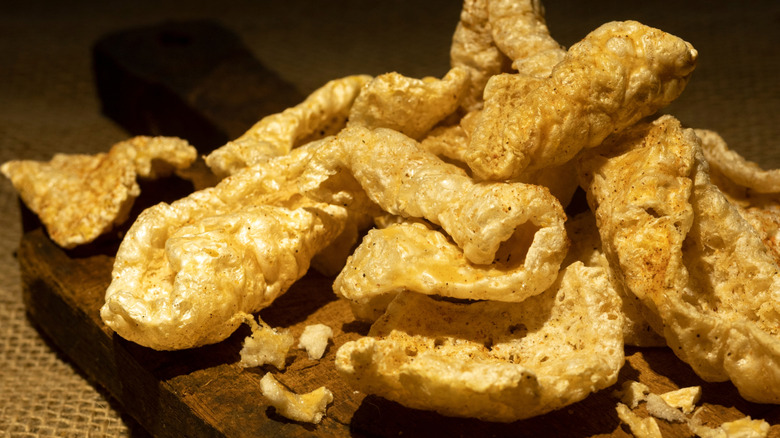
Also known as "crackling" or "scratching," a cracklin is a meatier, richer Cajun spin on the pork rind. Unlike rinds, they're made by rendering (cooking on low heat) pig skin with the fat still attached, making them the thicker and chewier of the two. Mildly seasoned with Cajun seasoning mix (including cayenne and ancho chili pepper), they're crisp on the outside, seductively savory, salty, and have a spicy kick. In Cajun country — southwest Louisiana and Lafayette — and surrounding areas of the Deep South, look for cracklins on restaurant menus and in meat shops.
Cracklins are part of the spread at a Cajun boucherie, a tradition dating back to the days before refrigeration. Unable to store meat long-term, a family would invite the whole community to come together to slaughter, prepare, and eat an entire pig — no leftovers. Celebrating nothing more (or less) than the joy of sharing food, the goal is to use the whole animal, including the intestines, feet, and, of course, skin and fat. Should you go to a Cajun country boucherie, be prepared to party from morning to night (stay hydrated; think "marathon, not a sprint" when it comes to food and drink), and look out for the platter of cracklins.
Pimento cheese
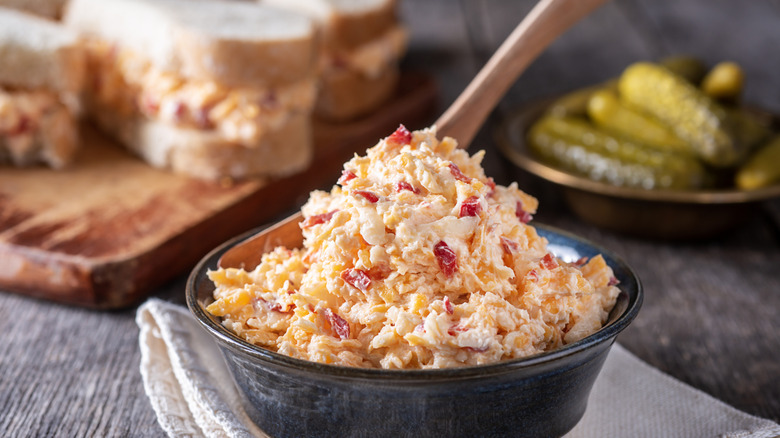
A classic Southern snack staple, pimento cheese is rife with flavor and designed for hot, humid days. Considered the "pâté of the South," it's a blend of mayonnaise, cheddar cheese, cream cheese, and canned or jarred pimento peppers, typically seasoned with garlic powder, cayenne, salt, and pepper. This gives pimento cheese its pink, peachy color and distinctive taste: savory but with a sharp kick. Though widely available in grocery stores like Publix or Winn-Dixie, recipes for homemade varieties are treasured secrets passed down from generation to generation.
Even though it's become synonymous with Southern snack cuisine and is a point of pride, pimento cheese wasn't created in the South. You could find spreads made with Neufchâtel and pimento, in jars or sold fresh, nationwide in the early 20th century. But pimento cheese became a Southern thing — and took on Southern flavors — with the growth of pimento pepper farming in Georgia.
A critical element of the pimento cheese sandwich – classically just pimento cheese between two slices of white bread, potentially with some pickles, bacon, or tomato — is that this snack varies by region. For instance, the proper mayonnaise to use is a subject of debate, and your choice can betray where you're from. Folks in Kentucky and Tennessee traditionally use Hellmann's; Duke's is most common in South Carolina, and Louisianians and Mississippians usually choose Blue Plate.
Fried okra
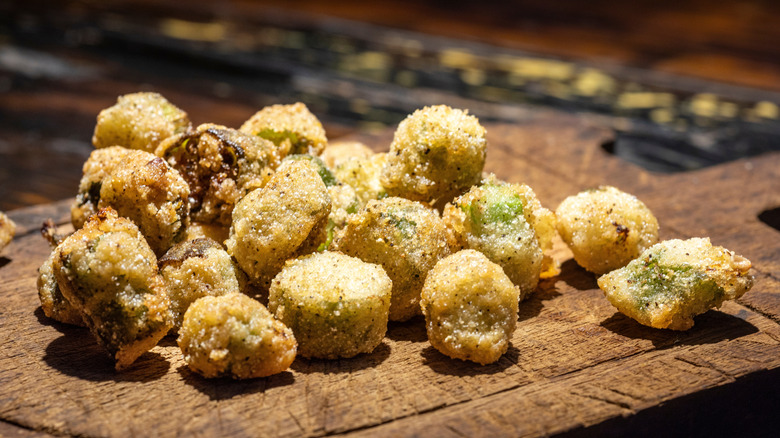
Restaurants and homes throughout the region serve fried okra, a classic Southern staple that, like others, tells us a bit about this region's history. Generations of Southerners have cooked and eaten the green pods of the okra plant, which is native to East Africa. Like many aspects of the South's culture, enslaved people brought this plant and the concept of cooking it to American shores during the trans-Atlantic slave trade. It's likely, too, that deep-frying techniques in the colonial and antebellum (pre-Civil War) periods come from West Africa. Developed and spread by Black cooks and chefs, fried okra is a point of pride for Black Southerners and a way to preserve culture and culinary legacy.
To prepare this snack, you slice the green pods of the okra plant, coat them with a seasoned flour or cornmeal batter, and deep-fry them. This makes each bite crunchy on the outside and softer, juicier, and sometimes slimy on the inside. Though there are few ingredients, fried okra is versatile. Recipes are passed down through generations, and cooks constantly build on these, changing up the spices or cooking method.
Peanut patties
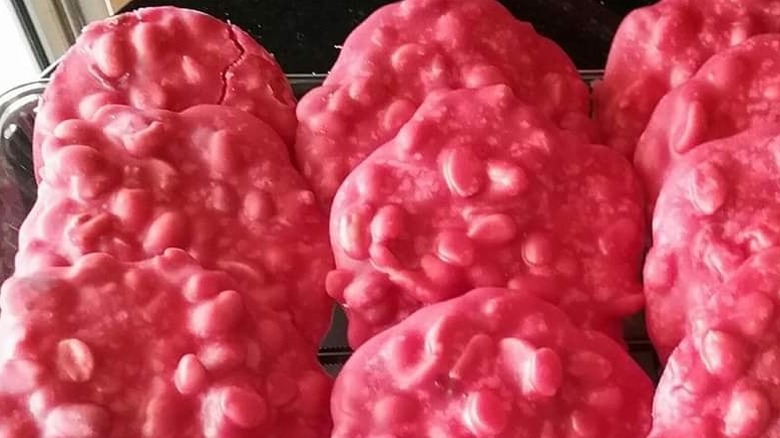
Georgia isn't the only part of the South that grows peanuts. As reported by Texas A&M University, Texas, the second-leading producer, grew about 572 million pounds of peanuts in 2024. West Texas (in particular, Gaines, Yoakum, Terry and Cochran counties) is peanut country, and gas stations and convenience stores in these parts carry a distinct, local treat: peanut patties. These vanilla-flavored, praline-style cookies are circular and have a striking red color, which comes from either Spanish peanuts, beet juice, or food coloring. Rarely seen outside of Texas, this snack is sweet and salty like peanut brittle, but it's chewier and doesn't snap. It also stands up to heat, softening in the Texas sun without melting.
These easy-to-eat snacks are a classic, roadside staple. Peanut farming expanded in Texas in the early 20th century, but the snack first became popular with the construction of interstate highways and growth of car travel. The first commercial variety appeared in gas stations in the late 1930s, when a local seller, Raymond Goodart of the tiny town of Anton, Texas, moved production from his garage to a larger facility in nearby Lubbock. Since then, the recipe hasn't changed, and they've become a regional fixture; seeing peanut patties on store shelves is a sure sign that you're in West Texas.
Benne wafers
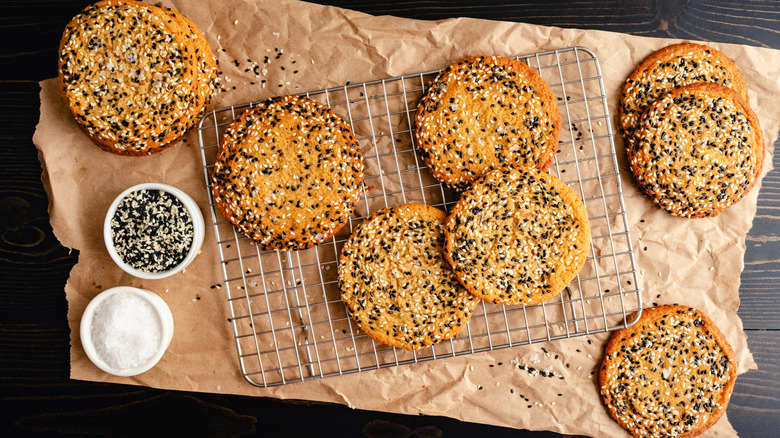
Benne (pronounced "benny") wafers have a long history in the South. They originated in kitchens in the port city of Charleston and the Lowcountry along the eastern South Carolina coast. Benne is a West African term for the sesame plant, which the Gullah people call "the lucky plant," as it was originally thought to bring good fortune. The ideal benne wafers are crunchy and slightly sweet with a distinct nutty and earthy tang coming from roasted sesame seeds. These wafers — the thinner the better — are designed to complement coffee or tea. However, South Carolinians also make a savory variety, which is served as canapés (ready-to-go appetizers) at cocktail parties.
As with many Southern foods, benne wafers can be directly traced to the trans-Atlantic slave trade. Benne plants were imported by enslaved people to the colonies, who planted them in personal garden plots and ground the seeds to make flour to thicken soups. These plants thrived in South Carolina's hot, humid climate. In the 1730s, plantation owners tried growing them, though they eventually turned to other cash crops like rice and indigo. With a legacy that predates the Revolutionary War, benne wafers are a defining feature of the cuisine and cultural landscape of South Carolina; there isn't a good bakery or café in Charleston that doesn't serve them.