

WinCo Vs Walmart: Which Grocery Store Gives You The Better Value?
Feeding a family of five is no small feat — especially when you have growing teenagers with appetites that seem to double every week. Groceries are one of the few expenses that can't really be skipped, only juggled. Every trip to the store becomes a small calculation: what will stretch the budget, fill their bellies, make them happy, and still taste like real food prepared with love? I've spent years trying to find that sweet spot between nutrition, flavor, and cost — and lately, with prices creeping up, I've been wondering if I might need to make some changes to how or where I shop. So, I decided to find out.
I created a simple menu plan with seven days of breakfasts, lunches, dinners, and snacks to feed five people without feeling repetitive or overly processed. Then I created a grocery list and took it to WinCo, the employee-owned, no-frills warehouse store known for its bulk bins and low prices. The following week, I took the exact same list to Walmart, the country's biggest retailer, and often the default option for families chasing value. Same list, same quantities, same menu plan — just a different store.
What I wanted to know was simple: which store truly gives better value when you're feeding a family, not just for one meal, but for a whole week of real life? Beyond the receipts, this project is about time, energy, and what "value" really means when you're doing your best to keep everyone fed, healthy, and happy. Do note that grocery store prices may vary by region.
Fresh and frozen produce
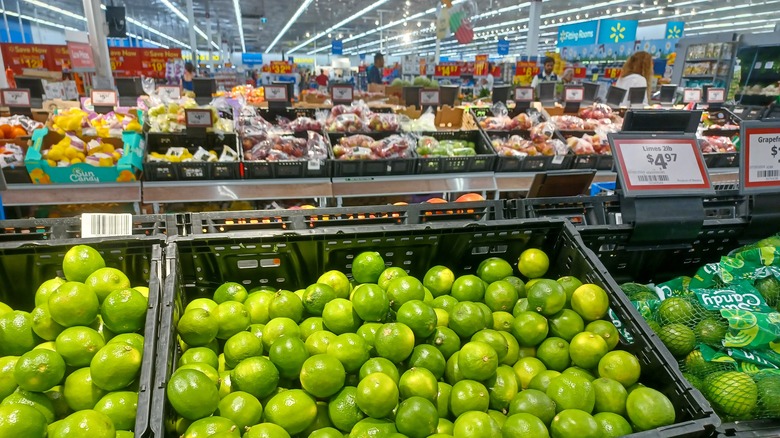
The produce aisle is often where grocery stores reveal their character. At WinCo, it feels like a working person's market: piles of fruits and vegetables on simple racks. Practical, almost utilitarian. Much of the produce is sold straight out of the boxes it arrives in, with minimal merchandising. There are no fancy misting displays, no careful stacking. I even watched an employee literally dump potatoes into bins for shoppers to dig through. It's certainly functional, but if you're used to neatly arranged produce displays, it can seem a bit messy and uninviting. Prices, however, are impressive, so it pays to know how to select the best fruit.
As for quality, I thought the freshness seemed consistent, probably because high turnover ensures items don't have time to spoil. Bananas were $0.62 per pound, green grapes $1.68, russet baker potatoes $0.48, large mangoes $1.48 each, and a three pound bag of Granny Smith apples was $3.98 ($1.33 per pound). In the frozen aisle, we picked up a four-pound bag of blueberries for $9.98 (just shy of $2.50 a pound). I ended up spending $8.09 (when adding up one unit of each item) at WinCo.
At Walmart, the produce section feels a bit more polished, but prices also do inch a bit higher (except on bananas, a common loss leader at many stores). Bananas were $0.54 per pound, green grapes $1.74, potatoes $2.47 for a five pound bag or $0.49 per pound, mangoes $1.37 each (but slightly smaller than WinCo's), and bulk Granny Smith apples were $1.48 per pound. The frozen blueberries at Walmart came in a three-pound bag for $7.82 ($2.61 per pound). The total at Walmart came to $8.23, just 14 cents higher than WinCo, so I'd call the produce category a tie on value.
Dairy
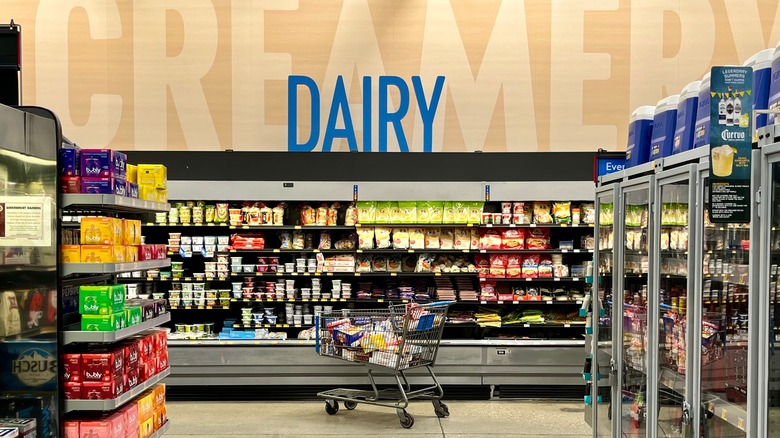
My family loves dairy because it anchors so many meals — milk for cereal, yogurt for lunches, cheese for just about everything. At WinCo, the milk section has always struck me as frustrating. Instead of filling shelves from the back and keeping the display stocked, the racks — which are on wheels — are rotated out when empty, leaving large sections completely bare. I could see fresher milk sitting on racks in the back, just out of reach. It felt lazy rather than cost effective, and honestly, it made shopping a little less enjoyable.
Despite the mild annoyance, the prices are hard to beat. A gallon of the Winco-branded whole milk cost $3.39, a 32-ounce tub of plain Greek yogurt was $3.36, and two pounds of shredded cheddar ran $5.56. I also stocked up some Winco-branded salted butter for $3.48 per pound. As a rule, the house brand dominates here, and while the packaging is simple, the quality and freshness are solid when you pay attention to expiration dates. Total spent: $15.79.
At Walmart, the dairy section felt more curated — brighter, fully stocked, and easy to reach. To make my price comparisons as fair as possible, I looked for Walmart's own brand, Great Value, despite having heard that this brand has a short shelf life. The Great Value milk was more expensive at $3.72, while the Greek non-fat yogurt cost the same $3.36. The shredded cheese was $6.92, and butter was on sale for $3.17 (down from $3.96), making it $17.17 all in all.
In short, WinCo's dairy is cheaper by roughly 10%, but the shopping experience can be frustrating. Walmart costs slightly more, but the shelves are stocked and convenient. For a parent trying to shop efficiently, difference in ease matters, but not as much as the saving money.
Bread and tortillas
Bread is another one of those quiet anchors of family meals — it's there at breakfast with butter and jam, holding sandwiches together at lunch, and soaking up sauces at dinner. For this comparison, I picked up a loaf of rustic sourdough, a bag of garlic bread, a pack of soft breadsticks, and corn tortillas — staples that rotate through my kitchen every week.
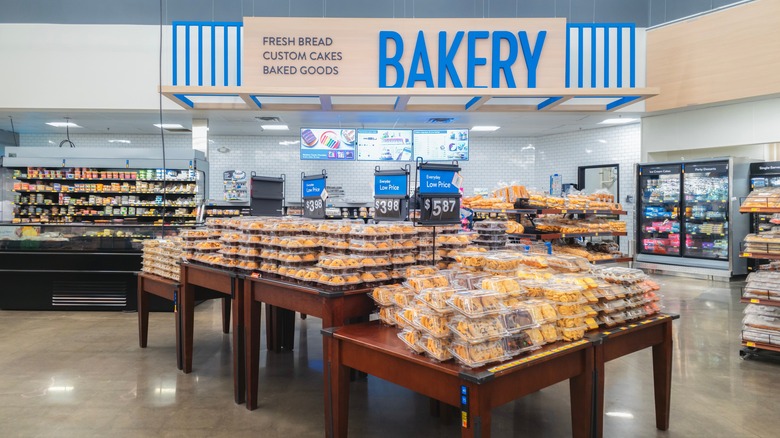
At WinCo, the bakery section feels straightforward, leaning heavily on store-brand and bulk packaging along side of national brands. A loaf of sourdough ran $2.48, Seattle International garlic bread in foil was $4.98, and the same brand's breadsticks cost $2.98. An 80-count pack of Guerrero corn tortillas was $3.88, always great for tacos or quick quesadillas. There's not much in the way of artisan flair, but everything is functional, fresh, and affordable.
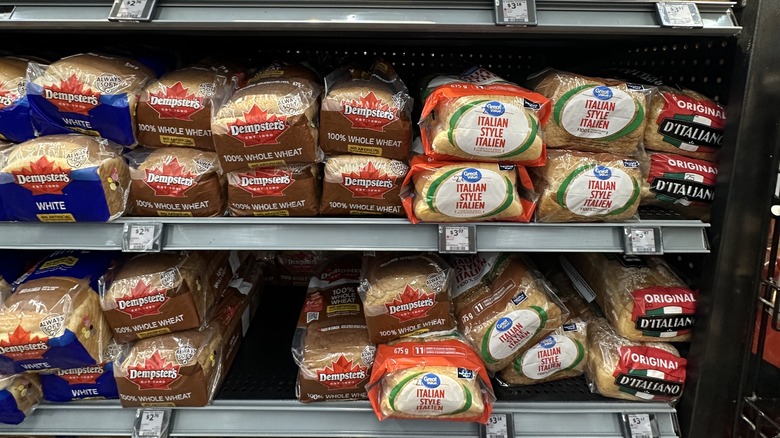
Walmart's bread aisle also has many national name brands, like Sara Lee and Mission, sharing space with their in-store bakery loaves and Great Value breads, baked by none other than baked goods tycoon Sara Lee. Prices were comparable across the board: Great Value sourdough was $2.67, Seattle International garlic bread costs $4.98, breadsticks $2.98, and corn tortillas $3.98.
All in all, I spent $14.32 at WinCo, and just 29 cents more at Walmart, so I am calling this category a tie.
Meat and eggs
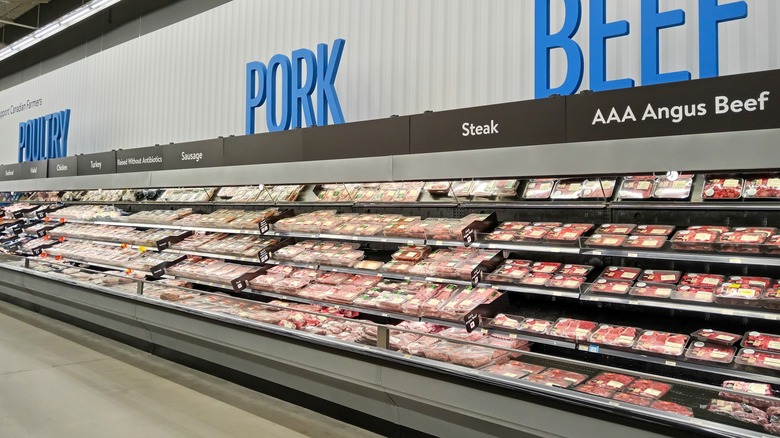
Protein drives the cost of feeding a family, and it is where the biggest price swings happen. At WinCo, the meat section is utilitarian: several rows of open coffin-style cold cases full of bulk bags and packaged over-wrapped trays of just about all the basic cuts of meat you could want with clear labeling. Jumbo chicken breasts were $1.98, drumsticks $0.98, and whole fryers were $1.48 per pound. The ground beef cost $5.98 per pound, and breakfast sausage came in at $8.88 for a three-pound package ($2.96 per pound). In the egg section, I found large cage free eggs for $5.75 for a 30 count ($2.30 a dozen). I also picked up several cans of Starkist tuna, at $0.88 each. Grand total was $16.56.
At Walmart, branding dominates visually: Tyson, Smithfield, and others fill the coolers. I looked for the house label wherever I could. Great Value chicken breast came in 8-pound bags for $19.97 ($2.49 a pound), drumsticks $1.17, and whole fryers $1.54 per pound. Walmart's individual one pound packages of ground beef cost $5.44, and the Great Value breakfast sausage links in a 12-ounce package were $2.42 ($3.22 per pound). Large white cage free eggs cost $1.97 a dozen, but tuna set me back $1.14 per can. All this came out to $16.97.
Across the board, WinCo was slightly cheaper, but staples like eggs and hamburger meat were a better deal at Walmart. Verdict: it's a toss up between the two retail giants in the animal protein category.
Center of store / pantry staples
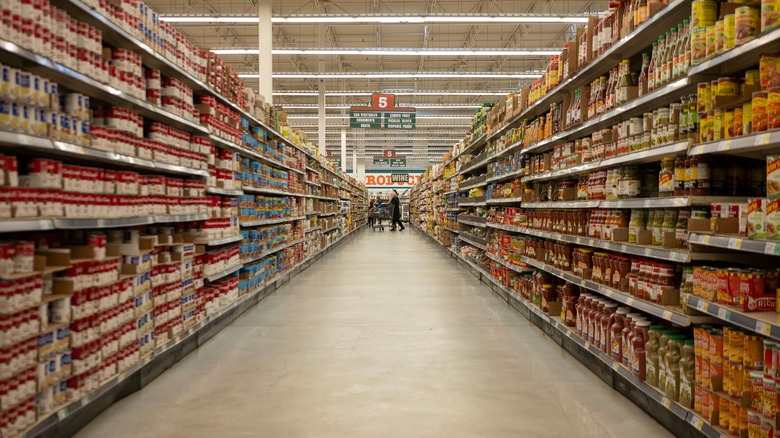
The middle aisles house rice, pasta, canned goods, sauces, baking essentials, and other dry goods you should always keep in your pantry. At WinCo, bulk bins and store-brand options shine in terms of value, but my kids love certain brands more than others, so I don't always reach for the cheapest product. WinCo-branded mac n cheese ran $0.56 per package, a 24-ounce jar of Classico marinara sauce $2.48, and a box of Barilla pasta $1.48 each. WinCo-branded canned black and kidney beans hovered at $0.78 each while Rosarita refried beans cost $1.38. Adding up one of each item, the total comes to $6.68. Prices are transparent, making it easy to plan for five.
At Walmart, the aisles feel curated, with more national brands and organic options. Walmart's house brand Great Value mac n cheese costs $0.58 each, Classico marinara sauce was $2.98, and the same box of Barilla pasta cost $1.84. Convenience and brand familiarity are strong, but prices do creep higher. Great Value label beans cost $0.92 and Rosarita refried beans cost $1.62 each at Walmart. When I added it all up, it came out to $7.94, appx 15% higher than at WinCo.
WinCo wins hands down on price in the dry goods and pantry staples category. For a single mom, those savings matter week after week.
Soft drinks and beverages
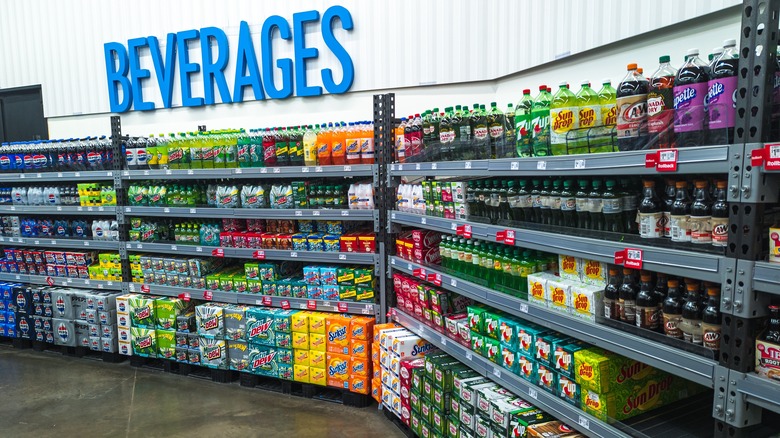
Not gonna lie, buying tasty things to drink is one of my "guilty pleasures" because splurging on beverages can definitely quickly add up. At WinCo, a half gallon of house brand raspberry lemonade was $1.98, while a 59-ounce carton of Welch's passion fruit juice was $2.98, and a Health-Ade kombucha $8.18 for the large 48-ounce size. I also picked up a packet of mint teabags (20 count) for $1.98. Total spent on beverages: $15.12.
At Walmart, juices and sodas were higher. A 96 fluid ounce Great Value strawberry lemonade cost $2.88, and Welch's passionfruit juice was $3.28. They did not carry the large Health-Ade kombuchas at my local Walmart, but the 16-ounce bottles were $3.30 a piece, or $9.90 for three to make the equivalent of a 48-ounce bottle from WinCo. At Walmart, their Great Value brand only offered peppermint tea in a package of 100 tea bags for $3.88. That works out to just $0.78 for the equivalent amount that I bought at WinCo. Total spent: $16.84.
Once again, WinCo wins on overall value with a savings of about 10% in the soft drink category. For feeding five, the savings accumulate quickly.
Snacks and treats
Snacks and desserts are another area where budgets can spiral, but they are also where I like to splurge and make family life a little more fun and sweet by giving my kids choice over their own treats. When I grocery shop with my kids, I usually let each one pick out a dessert for the whole family to enjoy together.
At WinCo, we ended up buying a 48-ounce tub of Tillamook ice cream for $5.64, whipped topping for $2.97, a 12-count package of bakery cookies for $3.68, and five personal sized 2.8-ounce Panettone fruit cakes for $1.38 each, adding up to $6.90 for 14 ounces. The total spent for desserts and sweet treats for the week was $19.19.
At Walmart, we picked up the same or equivalent items. The ice cream cost $5.64, the whipped topping was $2.97, and a package of sugar cookies ran $3.97. Walmart did not have the small, individual sized Panettone holiday cakes, but a 16-ounce cake was on sale for $4.00. All in all, I spent $16.58 on treats at Walmart — a clear reminder that a significant part of the cost of food is wasted on throw away packaging. Lesson learned, again!
Beer and alcohol
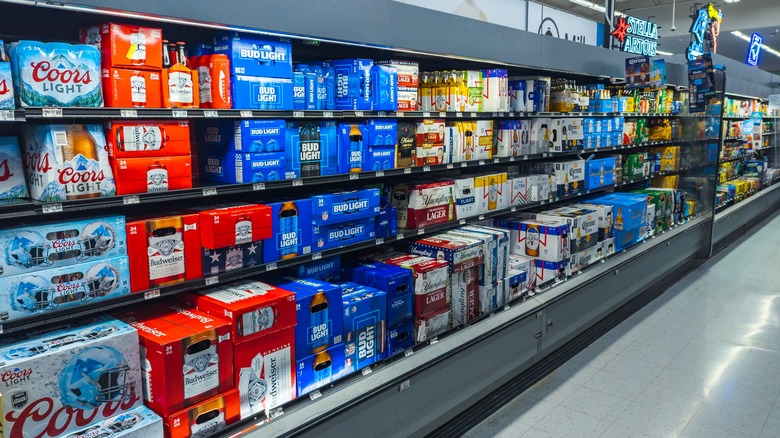
Although I personally don't budget for alcohol as part of my family's regular grocery spending, I do buy beer and wine every now and then when I attend or host dinner parties. To get a better idea of the cost of alcohol, I wandered through the beer and wine aisles at WinCo to do some price scouting. I'm no sommelier, but I know a good deal when I see one.
WinCo's selection is straightforward — nothing fancy, but solid and affordable. Domestic 12-packs started at $12.52, 6-packs of craft beers kicked off at $10.98, and wines ranged from budget-friendly bottles under $5 to more polished options topping out at around $25.
The following week at Walmart, I took a look at their beer and wine selection. My impression was that they offered a broader selection and more familiar labels, though at a higher price point. Domestic beer 12-packs were $13.33, the cheapest craft beer ran $12.27, and wine started around $4 all the way up to over $50.
Since I didn't actually purchase any alcohol, I am not including the cost of this in my final calculations, but I'd say Walmart won in terms of price point and variety in the beer and wine department.
Household goods
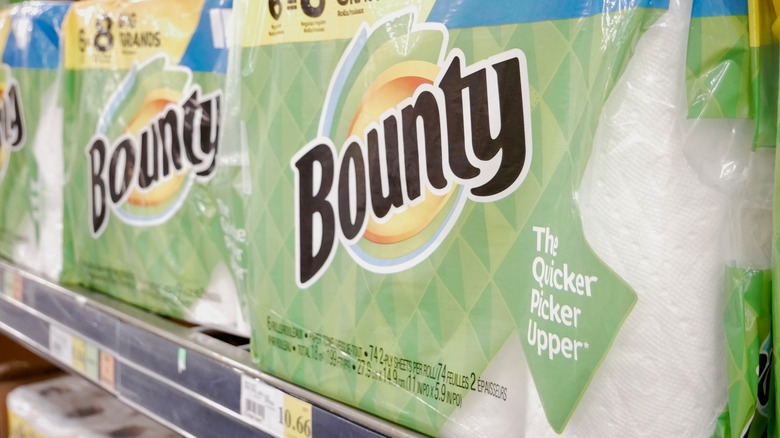
No grocery trip is complete without the unglamorous but essential household staples — paper towels, toilet paper, trash bags, dish soap, and laundry detergent. These are the items that quietly drive up the total at checkout, even though they do not feel like the reason you came to the store. Nonetheless, these items are often affect a family's grocery budget.
At WinCo, the household aisle is pure practicality: bulk packs, simple packaging, and low prices. A 12-pack of double roll toilet paper was $4.98, a six-pack of Bounty mega paper towels ran $19.80, and Arm & Hammer laundry detergent (140 loads) was $9.98. The packaging isn't flashy, but the savings are steady. It's easy to stock up without breaking the budget. In all, I spent $34.76.
Walmart, by contrast, feels more polished. The shelves are bright with all the familiar, big national brands — Charmin, Bounty, Tide — and plenty of size options. But that convenience comes at a cost: Great Value toilet paper 12-packs started at $9.98, a six-pack of Bounty paper towels cost $22.18, and laundry detergent was $13.98 (170 loads). These items came to $43.67 (adjusted for the difference in how many loads the detergent washes).
For households watching every dollar, WinCo's no-frills approach keeps the basics significantly more affordable. Walmart offers brand variety and convenience, but the 20% in price difference adds up fast on these household necessities.
Conclusion
After comparing the same one-week grocery list at WinCo and Walmart, the results were clear: WinCo delivers better value — especially for families willing to plan ahead and buy in bulk. Across nearly every category, I saw savings between 5–15%, which quickly adds up. Our total came to $261.02 at WinCo versus $284.02 at Walmart for nearly identical groceries and household essentials. That's an average savings of about 10%, or roughly $1,000 a year if you shop weekly.
But value isn't just about price — it's about balance. WinCo rewards thoughtful shoppers who don't mind reaching for the store brand or scooping from the bulk bins. Walmart, on the other hand, shines in convenience, brand familiarity, and polished presentation.
For families trying to stretch every grocery dollar while still putting real, satisfying food on the table, the math is simple: WinCo wins. Small savings per item stack up, week after week, turning careful shopping into real financial relief — and maybe even a little breathing room in the budget.