

The Beloved Buffet Chain That Couldn't Survive The Pandemic
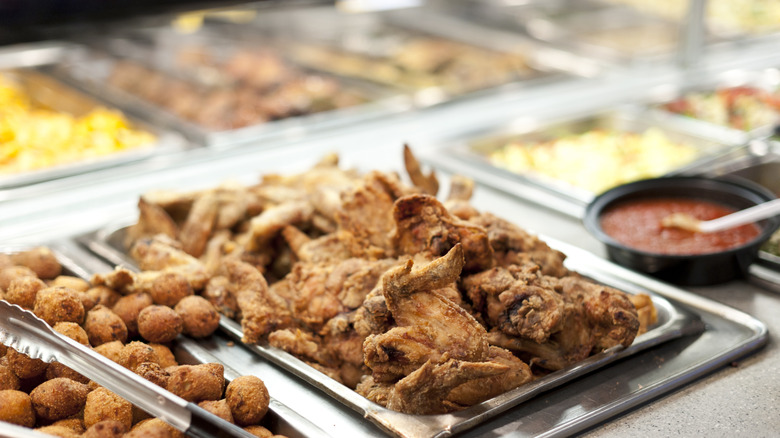
There are few things in the world that scream indulgence quite like an iconic American buffet. From Golden Corral to Sizzler's, the restaurant landscape was dotted with popular chains that laid out all-you-can-eat spreads at super affordable rates. And while the general decline had started in the early 2000s, the struggle became impossible to ignore during the pandemic. One beloved chain that couldn't survive it was Hometown Buffet.
Launched in 1990, Hometown Buffet had over 200 outlets across America at its peak. But a combination of factors, including the rise in popularity of fast-casual dining and an increased focus on health and nutrition, saw Buffets Inc (the company that owned the Hometown brand) file for bankruptcy three times — in 2008, 2012, and 2016. By the time COVID-19 hit, Hometown had closed nearly 90% of its locations. Already on shaky ground, the pandemic proved the final nail in the buffet giant's coffin.
While the restaurant industry as a whole was hit hard by the pandemic, things got particularly rough for the buffet business. Social distancing rules meant most restaurants were running at 50% capacity (according to one estimate, buffet-style restaurants need to be running at 75% capacity to start making a profit, while another benchmark suggested a minimum foot traffic of 6,000 people per day). For cheaper buffets like Hometown, which operated on wafer-thin margins to begin with, the numbers just did not add up.
Cascading impact of social distancing
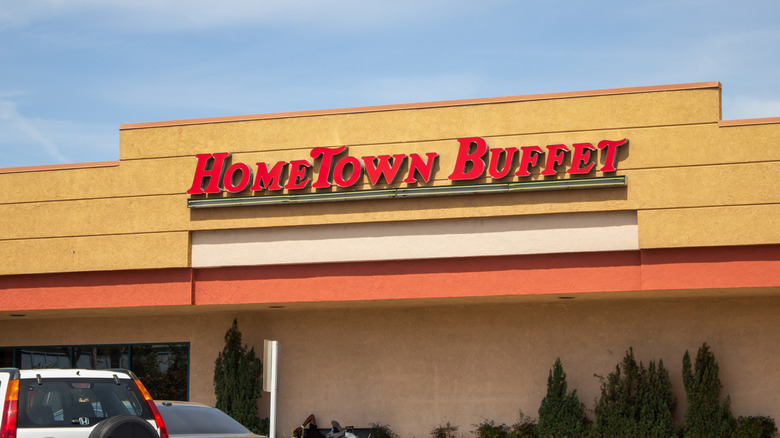
For buffet restaurants, there were cascading effects of social distancing. For example, guidelines released by the Food and Drug Administration for reopening restaurants in the pandemic suggested doing away with self-service stations altogether. To get around this, some buffets stationed staff to serve guests at every counter, while others started washing and sanitizing surfaces and utensils every half an hour. These just weren't sustainable, considering that the foundation of the buffet business model is having a minimum number of staff cater to a maximum number of guests. By 2021, Hometown Buffet had closed all its locations. A year later, indoor dining restrictions were officially lifted in certain cities, and restaurant life began limping back to normal.
Incidentally, not all buffet restaurants seem to be struggling. A 2023 New York Times report notes that it's the cheap all-you-can-eat restaurants that are running out of business, while the premium ones have bounced back in style after COVID-19. A quick look at Las Vegas, the spiritual home of the American buffet, confirms this. There are some shuttered Vegas buffets that we really, truly miss, but the top-end ones like those at the Bellagio and Caesars Palace seem to have returned to pre-pandemic glory. And the fact that they're dealing in truffle and lobster as opposed to fried chicken and mash makes these feel like the Las Vegas buffets with the best value, despite the $65 to $85 price tag.
As for the more modest Hometown Buffet, it appears as if the shutters have come down permanently. BBQ Holdings, which now holds the rights to the franchise, made it clear that it had no plans to reopen anytime soon.