

The 9 Essential Turkey Tips Butterball Thanksgiving Experts Need You To Know
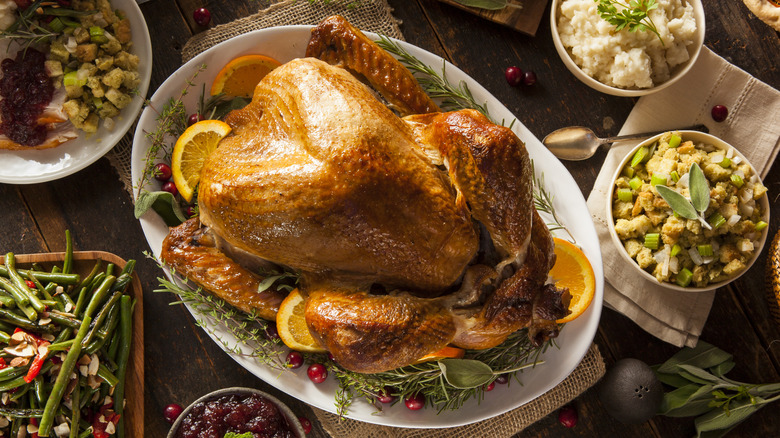
If there were ever a holiday meant for foodies, it would have to be Thanksgiving. A table crowded with dishes on the day of is a heavenly sight indeed, especially when a perfect centerpiece adorns the middle of the table. We're talking about the turkey, of course — that quintessential Thanksgiving symbol so central to the holiday that leaving it out would be tantamount to heresy. Another fateful Thanksgiving faux pas? Not making the bird as delicious as possible.
Whether you're a Thanksgiving pro or newbie, chances are you could definitely learn a thing or two about how to roast the perfect Thanksgiving turkey. And who knows better than the turkey pros? This Thanksgiving season, we sat down with Javier Reyes, Butterball Turkey Talk-Line expert and chef, about his best tips for all your turkey-making endeavors. As it turns out, making a turkey doesn't need to be intimidating (though it can certainly be quite the affair) — rather, these simple tips will ensure there are no hiccups in your Thanksgiving turkey-cooking venture.
Make sure you have enough turkey for each guest
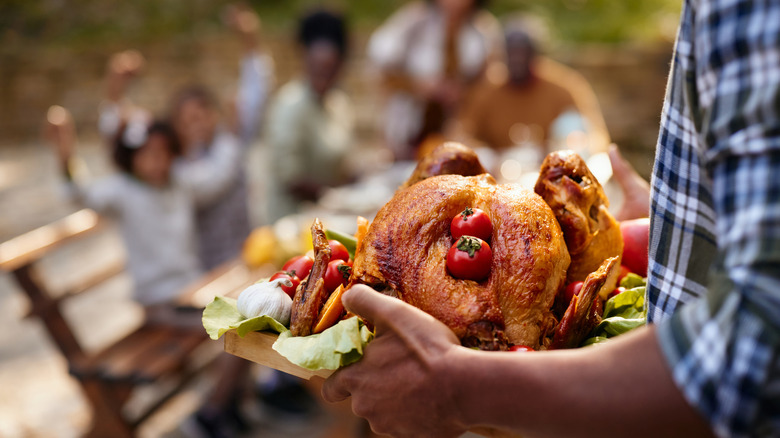
So, you know how you're going to prepare your bird, and you're prepared to spend a pretty penny on your turkey this year, but none of that means anything if some of your guests are left out of the festivities. This seems like a basic tip that shouldn't even need to be said, but it bears repeating, especially in the hectic holiday season: Make sure you have enough turkey for each person at your table.
How much turkey is enough? Javier Reyes suggests it's not as simple as taking a headcount — make sure you consider the types of diners at your table when you're calculating how much turkey you'll need. "A helpful starting point for hosts is to think about how many guests they will be serving, how many adults versus children will be attending, if they are 'light' or 'heavy' eaters, and whether or not they'd like leftovers," he advises. "A good rule of thumb is to account for 1–1.5 pounds of turkey per person — which will give everyone a generous serving of turkey, plus leftovers."
If you're serving a particularly large party, you may need more than one turkey. It would be a bummer to realize you're short the morning of the big day.
Give it enough time to thaw
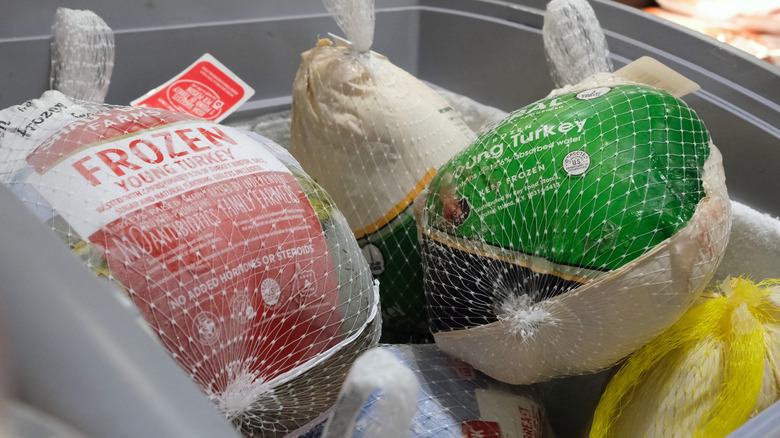
Seasoned turkey experts might not need this reminder, but if you're new to hosting the holiday (or if you're just particularly busy this year), it bears repeating: Give yourself enough time for the turkey to thaw. Nothing's worse than waking up the morning of the big day and realizing your turkey is still sitting in the freezer. But, since turkeys are pretty big birds, many people new to the whole turkey-roasting business don't actually know how to thaw the holiday staple.
In fact, Javier Reyes says that's one of the top questions he and the Butterball team are asked every year. He mentions a couple of foolproof methods you can use — one requires some thinking ahead, and the other is a last-minute quick fix if you ever find yourself in a frozen turkey debacle. If you'd like to go the fridge-thawing method, Reyes says that it "requires 1 day of thawing for every 4 pounds of turkey (not counting Thanksgiving Day) to make sure it's ready to put in the oven" on Thanksgiving.
Alternatively, you can thaw your bird under cold water, which Reyes says is "a faster method for thawing that requires 30 minutes per pound. You should also rotate the turkey in cold water every 30 minutes to keep the turkey chilled."
Don't stuff your turkey too early
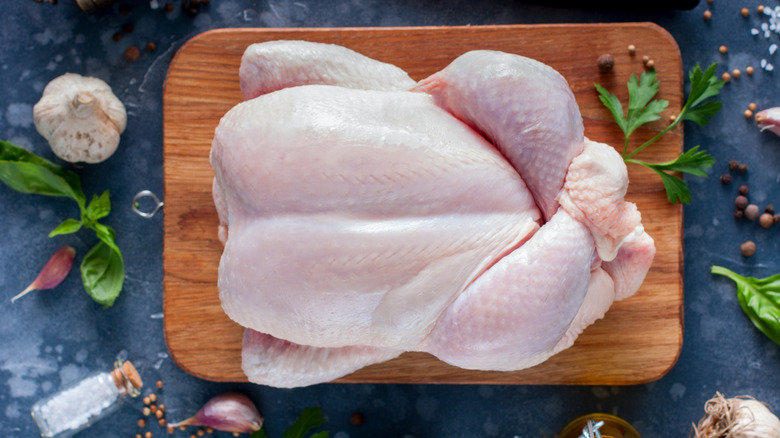
Ah, stuffing: another classic Thanksgiving staple, and one that's all too easy to get woefully wrong if you don't know what you're doing. If you want to make the perfect homemade stuffing, make sure you don't make the easy mistake of stuffing the turkey too early. Not only is it a food safety concern, but when and how you stuff your turkey can also affect the turkey's overall cooking time.
If you want to play it safe (and get crispy, rich stuffing), it's a good idea to cook it separately from your turkey in a casserole dish or other baking vessel. Not only will this preserve the stuffing's own integrity, but Javier Reyes also says it will shorten the time your turkey needs to fully cook through. But if you're intent on doing the actual turkey-stuffing, Reyes advises, "It's best to do so right before you put it in the oven."
Don't be too heavy-handed when seasoning
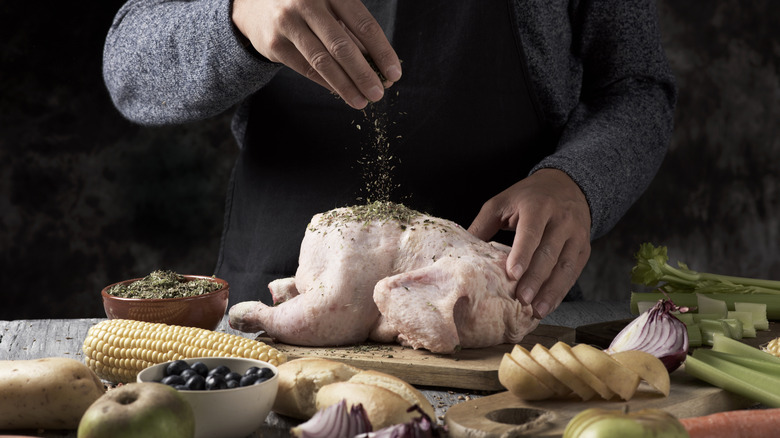
While you definitely need to season your turkey, seasoning it too much can taint the whole meal. We know, we know, you want to be adventurous in your turkey endeavors, but experimentation can lead to flavors that clash with the table's other classic dishes, and that's never a recipe for a good time. Don't be lackadaisical with your seasoning — definitely give it time to marinate and include plenty of salt — but be wary of overkill.
Good news for Butterball customers: Javier Reyes says that, if you're using a Butterball turkey, it doesn't need to be brined or seasoned. However, if you are looking to amp up your turkey's flavors a bit, he recommends keeping it simple, saying, "One of my favorites is to put sliced lemons, rosemary, and sage in the cavity before roasting to add great flavor without any additional seasonings."
Prep your turkey properly for roasting
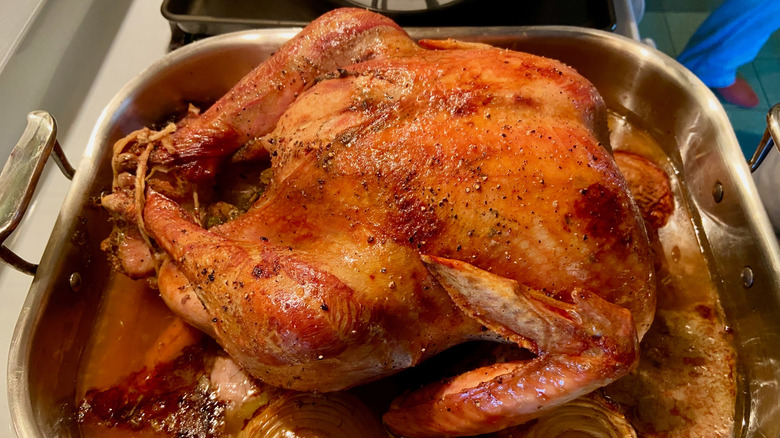
If you didn't invest in the handy Turbo Trusser gadget featured on "Shark Tank," knowing how to truss your turkey is just as important as any other step to ensuring it comes out succulent and juicy. Obviously, you should tie the legs together, but Javier Reyes also says to "turn the wings back to hold the neck skin in place." He adds, "Tucking the wings will help stabilize the turkey in the pan and when carving."
Another tip you'll want to follow to get that crispy golden-brown skin is to elevate your turkey. Reyes says to use a flat rack in a shallow roasting pan that's a few inches deep. Place your turkey breast-side up, and as a final step, "Brush or spray the skin lightly with avocado or vegetable oil to give the turkey that nice golden-brown color." Giving your turkey a light coating of oil is crucial to achieving that covetable finish, but it's all too easy to forget — so, we'd recommend writing this step in all caps on your turkey checklist.
Use a thermometer while roasting
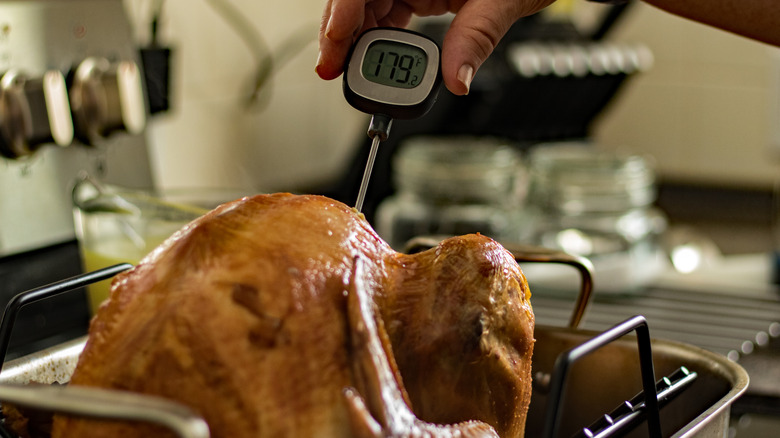
When you're roasting a bird as large as a turkey, it can be more difficult to tell when it's fully cooked through. And you definitely don't want to cut into the meat to check — not only can that cause all of the juices to leak out, but it will also make for an unsightly turkey when it's time to bring it to the table. To that end, having a meat thermometer on hand is crucial, and you'll want to check a few spots on your bird for optimal temperature before pulling it from the oven.
Javier Reyes tells us exactly what to look for when checking the temperature of our turkey: "Look for 170 degrees in the breast and thigh, and 165 degrees in the center of the stuffing, if you choose to stuff your turkey." Curious about how long this takes? It will depend on how many pounds your turkey is and whether or not you've stuffed it. But in general, you can expect it to take a little over three hours to cook a 12- to 16-pound turkey at 325 degrees Fahrenheit.
Serve it on a sturdy, warm platter
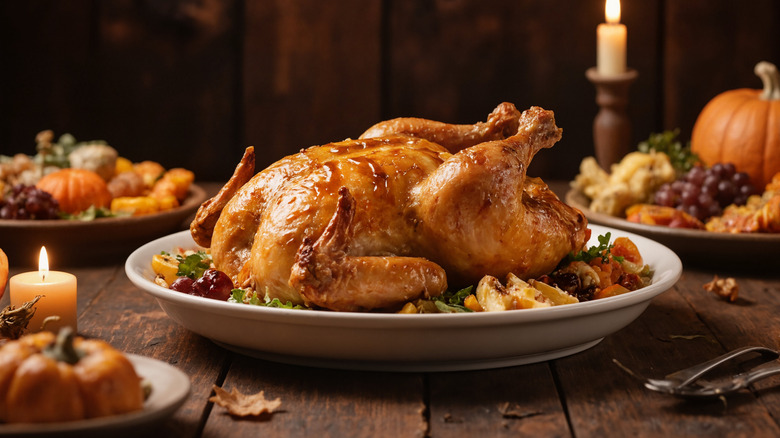
You've done it! Your turkey is fully cooked and resting on the stove, the oven's off, and hungry guests are already salivating over green bean casserole and piles of fluffy mashed potatoes. Yet, there's still room for error — you still have to serve the turkey, after all. Hopefully, you've already picked out a platter that's big enough for your turkey, but if you want to check all the boxes, make sure you've prepared your platter to hold the bird.
Javier Reyes says you'll want the platter to be warm, and of course, you'll want it to be a hardy piece of equipment. "I would recommend using a sturdy ceramic platter, or a large cutting board with a juice groove is another great option!" he tells us. "I'd also recommend putting the ceramic platter in the oven after the turkey comes out and the oven is turned off. Warming the platter will ensure your turkey stays warm for longer."
Moreover, stay away from platters that aren't dishwasher-safe, Reyes advises. And don't worry about using the fanciest platter you own — after all, everyone's going to be looking at the bird on top of it. The most important thing is that it can maintain your turkey's temperature and hold it steady throughout the carving process.
Carve your turkey like a pro
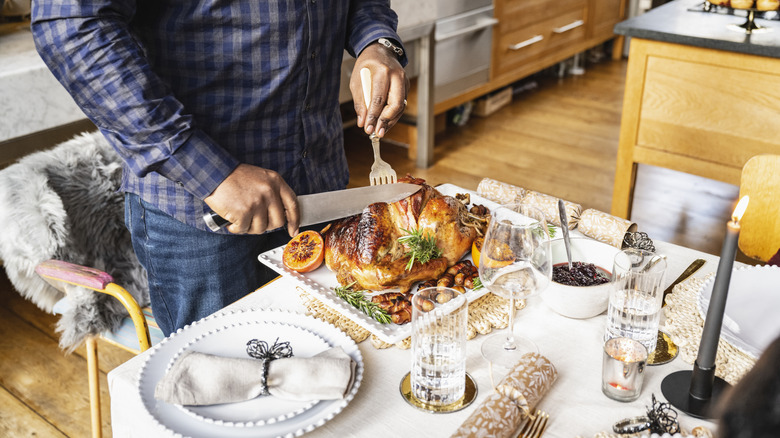
Never carved a turkey before? Don't sweat it (even though you probably are — it's okay, we understand). The first couple of steps are simple: Just make sure you have the appropriate knife on hand (a carving knife or a sharp chef's knife), and don't carve the turkey too early. Let it sit outside the oven for 15-20 minutes so the juices can properly redistribute throughout the bird.
When it's time to dig in, here are the steps Javier Reyes says to follow. "Cut in between the leg and the breast to separate the two and get some space to carve the breast. Cut horizontally to make a big sideways cut at the bottom of the breast meat," he tells us. "Then, you can make vertical slices along the breast."
Once your knife reaches the joint of the wing, the turkey slice should come off easily. And then, you can continue to slice the breast.
Reheat your Thanksgiving leftovers in the oven
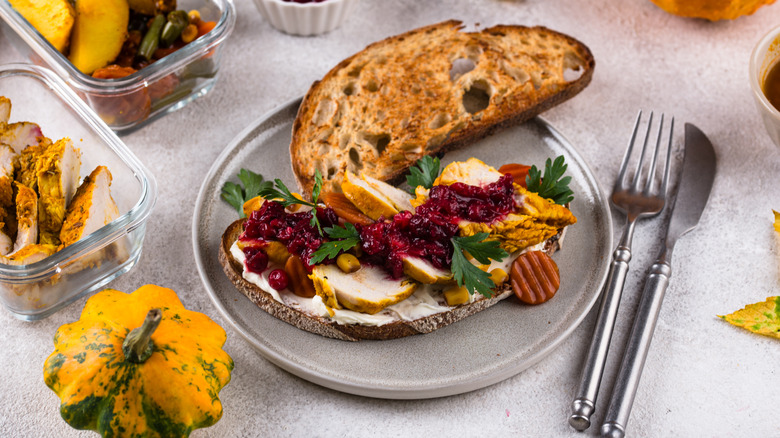
Last, but certainly not least, what's a good Thanksgiving without leftovers to match? Keep the holiday going for as long as you can, but make sure you do it justice along the way. We know it's easy to pile a plate high with your favorite remnants of yesterday's feast and nuke it — but don't do that. If your OG turkey and sides deserved better than the microwave, so do your leftovers.
To that end, Javier Reyes has one recommendation when it comes to reheating your leftovers: Use the oven. Preheat it to 325 degrees Fahrenheit; then, he says, "Lay your leftovers out in a single layer in a baking dish. To keep things moist and flavorful, you can pour a little broth or stock into the pan. Then, cover the whole dish tightly with aluminum foil to trap in the steam, then slide it into the oven." Reyes adds, "Let it bake for about 20 to 35 minutes, until the turkey is warm and registers 165 degrees Fahrenheit inside."
Does this method require a little more work than just microwaving a plate? Sure. But it will yield unmatchable results, so we think it's well worth the effort.