

Don't Be Fooled – Not All Metal Mixing Bowls Are The Same. Here's What To Buy
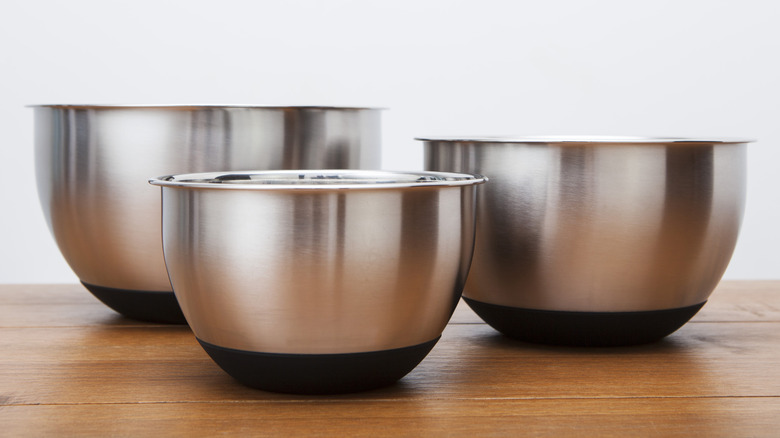
Whisking together a vinaigrette? Tossing a quick pasta? Popping some popcorn? You'd have a hard time doing any of these things without a good mixing bowl. These kitchen workhorses aren't often talked about compared to something like knives, but they quietly and reliably earn their keep every single day. If you're looking to replace your worn-out set with a gleaming set of metal mixing bowls in the kitchen tool aisle ... Watch out — not all mixing bowls are made the same, even if they look identical at first glance.
Most mixing bowls you'll find on the market today are made from either stainless steel or aluminum. Each one offers not just different pricing, but different performance, too.
Can mixing bowls really perform? Actually, yes. Stainless steel's chemical neutrality means zero interference with your food. Aluminum is an entirely different story. It reacts with acidic ingredients like tomato sauce, lemon juice, or vinegar, which can alter both flavors and colors. That's why professional kitchens stick with stainless steel, even though it costs more.
What's the science here?

Let's talk about what aluminum actually does when it meets acid. Vinegar, citrus, tomatoes — any acidic ingredient triggers a reaction that dissolves trace amounts of metal into your food. If you've ever wondered why your lemon vinaigrette tastes vaguely off, or why that tomato sauce you've just mixed has a greyish tint, now you know the culprit. And yes, you've been eating trace aluminum all this time, though the CDC notes it's generally harmless at these levels — more of an annoyance than a danger.
Stainless steel is the mirror opposite. The chromium in this alloy creates an invisible barrier that blocks reactions cold. So go ahead — marinate that chicken in buttermilk, whisk up your citrus vinaigrette, toss whatever you want in your stainless steel mixing bowl. It'll stay neutral, clean, and most importantly, out of your food, no matter what kitchen magic you do with it.
Beyond the chemistry, there's the matter of durability to consider. Stainless steel bowls hold up much better to scratches and dents through years of daily use compared to aluminum. So, while the upfront cost is higher, that pricey set of stainless steel mixing bowls should serve you well for years to come (and look brilliant while they're at it).
How to spot stainless steel bowls from aluminum
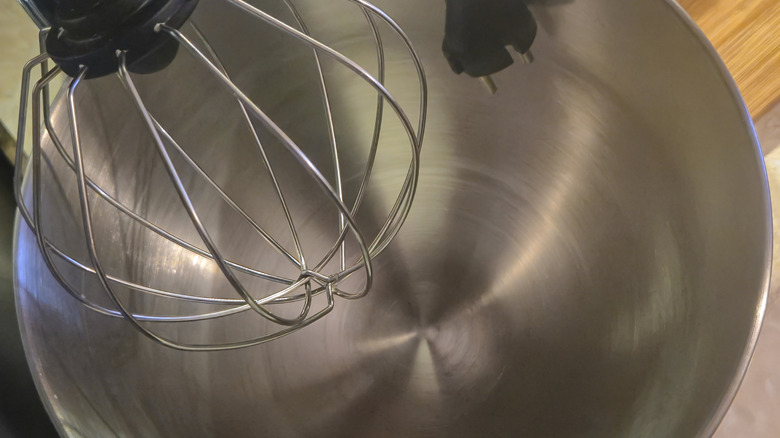
If you're thinking, "How about reading the label?," you'd be correct. That's indeed the easiest way to tell. All kitchenware brands will write right upfront exactly what their product is made from (it's actually required by law). Even if you're buying online, you'll usually have no problem finding this info either in the name or the description field.
Of course, that assumes you're buying new with a nice, clear label. But what if a friend hands you their old mixing bowl as they're packing up to move? Or you find one buried in a bin at a garage sale? The easiest way to test is by simply picking it up. Stainless steel is way heavier than aluminum, so if it's got real weight to it, you're golden (this is why being suspiciously light is considered a red flag when buying new cookware). You can also give it a tap — stainless steel rings out clearly, while aluminum just thuds. And if you've got a discerning eye, you can even check the shine. Stainless steel is bright and reflective, while aluminum looks more subdued and matte.
Sure, mixing bowls don't sound like the most exciting kitchen purchase. But think about how often you reach for them — whisking dressings, tossing pasta, marinating chicken. That's a lot of mileage. Invest in stainless steel now, and you won't be buying replacements every few years. A good set is guaranteed to outlast half the other gadgets in your kitchen.