

Do You Roast Onions With The Skin On Or Off?
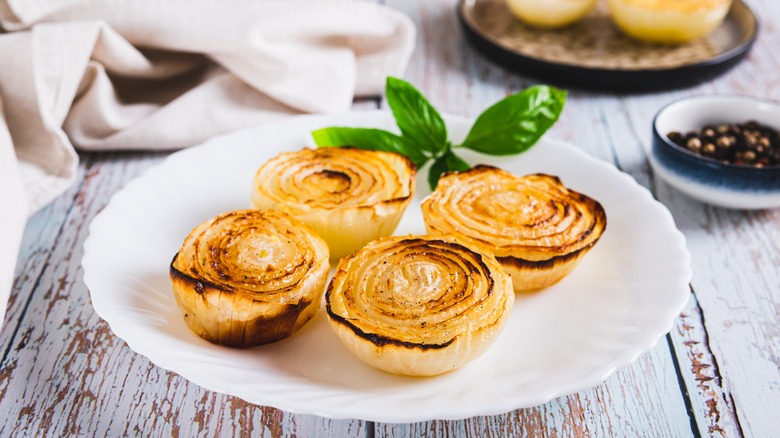
Caramelizing onions may seem like the peak of deliciousness, but roasting the alliums unlocks a whole new world of flavor. The technique turns onions into a bold finishing touch for a myriad of foods, but it takes the right technique to unlock that. To find the best way to roast onions, we sought out an expert at the New York City Wine & Food Festival.
According to vegan chef Shenarri Freeman, whether or not you roast onions with the skin on depends on how you'll be using the ingredient. "I would do skin on if I'm trying to make a stock or a broth or something, and I'm going to strain it out," she says. The decreased water content and concentrated flavor that stems from high temperatures elevate the onions, but when whipping up a broth, it's important to preserve as much of that pungent liquid as possible.
"When I'm making broth, I'm trying to extract those oils and nutrients that come with it ... I definitely get that when I'm roasting with the skins on for broths and stocks," Freeman explains. Not only do the skins help to maintain the moisture of the onion, but they also make a great broth ingredient. They have a mildly bitter taste that can lend an earthiness and a golden or purple hue to your vegetable stock.
Should you ever take the skin off when roasting onions?
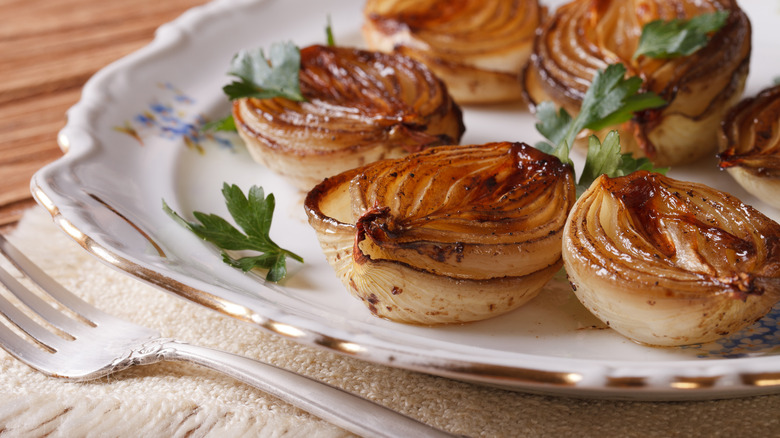
Although keeping the skin on is a sound tip for roasting onions, Freeman sees it as a barrier in certain cases. "If I'm cooking and I want to eat it right away, I'm going to do skin off," the chef says. "You're not missing out on too much if you take the skin off." Removing the papery skin still yields delicious roasted onions; you may just have to keep a careful watch on the alliums to ensure they don't burn without the protective layer.
Additionally, you can lower the temperature you usually roast onions at. Rather than heating them at 425 degrees Fahrenheit, bring things down to 375. Moisten them with oil prior to heating, and keep the seasonings light when roasting onions. Not only does this allow the natural flavors to shine through, but it prevents spices and herbs that burn easily — like fresh basil or cilantro — from charring the surface of the onions. Keep things simple with quality olive oil, sea salt, and pepper.
Roasted onions are the perfect addition to practically any dish. They make a great lightly crisped topping for decadent French onion burgers and roast beef sandwiches, as well as a sweet topping for steak and seared fish. They can be folded into mashed potatoes, stirred into soup, or simply eaten alongside crackers and cheese.