

Why You Ought To Cook Squid On Really High Heat
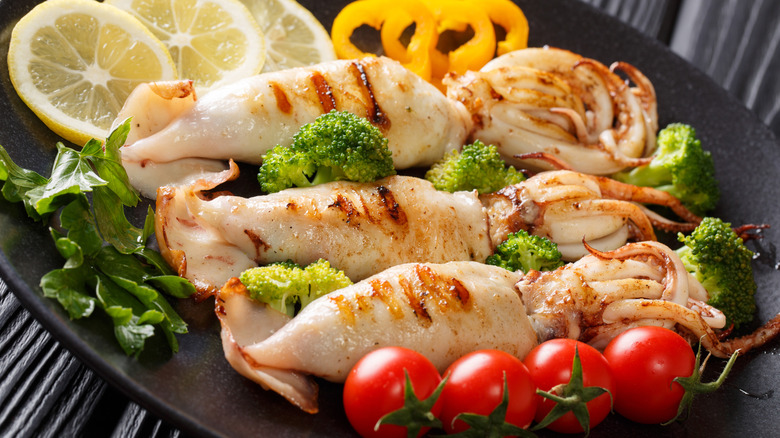
It's happened to all of us. The delectable-looking plate of what should be crispy fried calamari winds up having the consistency of breaded rubber bands. Squid isn't too difficult to cook perfectly as long as you follow one hard-and-fast rule. Tasting Table attended the Food Network New York City Wine & Food Festival and spoke with David Standridge, executive chef and partner at The Shipwright's Daughter of Mystic, Connecticut, about the right way to cook squid. According to the chef, squid and fish should always be cooked at high heat.
"Searing it is probably for me the best way to eat fish, especially with a crispy skin," Standridge explains, "and you need a really high-heat environment for that." A squid's body and tentacles are composed of long muscle fibers and collagen that contract when cooked, and the less time spent cooking, the more tender the squid will be. On the other hand, squid also benefits from braising, but it shouldn't be cooked too long. As Standridge recommends, "either 30 seconds or 30 minutes. Anything in between basically turns into rubber."
Squid can be purchased at a fishmonger or frozen, but at Standridge's restaurant, they clean the whole squid, removing its organs, eyes, and beak. "We leave the skin on and the wings and parts of the squid you don't usually see, but they're really delicious," the chef adds. Standridge emphasized that there's no difference in cooking methods for the bodies and tentacles. "Really, it's the same; it's really quick," he reveals. "You don't want to overcook it."
Keep squid dry for the crispiest calamari
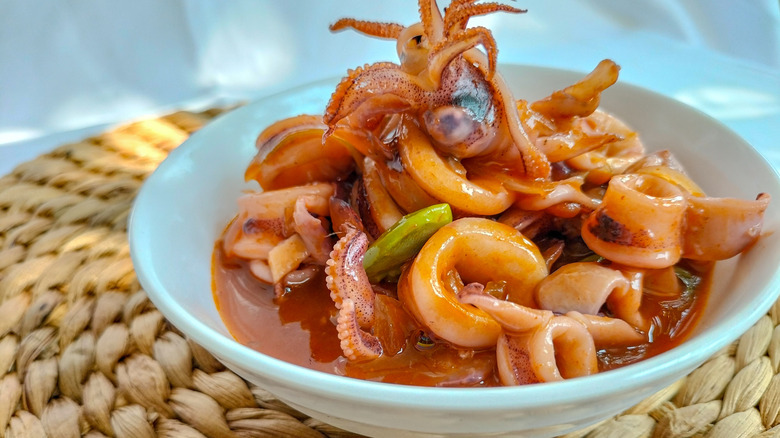
When you're buying squid for fresh calamari, it's best to buy it whole because you can then cut the rings to the thickness that a recipe calls for. The squid should be ivory-colored and have a shiny, moist sheen. If you're squeamish about cleaning it, a fishmonger will do it for you. Whole cleaned squid also come frozen, and when thawed, they're almost exactly the same as fresh squid.
Squid have a high water content — generally between 77% and 80% of their body weight — and need to be thoroughly dried before cooking, or they will steam rather than brown. At his restaurant, Standridge stores squid and fish dry. "It never hits ice, never hits fresh water once it's in the restaurant," he explains. "So, it's in the refrigerator, but it's dry. It takes out some of the residual liquid, and it can get crispier and caramelized faster."
We wondered, though, what his exact method for cooking squid entails. "We tend to cook it on one side till it's super golden brown and crispy, and then barely touch it on the other side," Standridge reveals. Squid doesn't always need to be drenched in a thick coating, and this Cantonese salt-and-pepper squid recipe is a great example of why Standridge's suggestions should be followed. When asked if he had a favorite sauce for squid, the chef highlights a delectable tuna and duck XO sauce. "It's a little spicy, and it's also got a lot of umami and some really cool flavors."