

Can You Put Wooden Bowls In The Microwave?
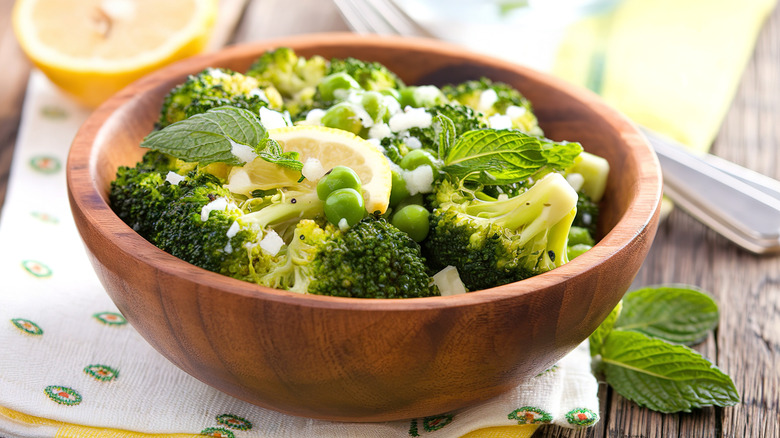
When it comes to microwaves, the one thing everyone seems to know is that metal is a no-go. Does that mean everything else is fine for rehearing and cooking? Despite being about as different from metal as you can imagine, wooden bowls are also unsuitable for use in the microwave. Unlike putting metal or aluminum foil in the microwave, this advice is not so much about causing damage to the appliance as to the bowl itself.
The heat and radiation emitted from a microwave can cause wood to crack or warp, leaving the bowl permanently damaged. Even in low temperatures, wood can absorb the smells and flavors of the food being heated. Perhaps more problematic is that any varnish or adhesive used to coat the wood may release fumes and possibly melt into your food. It's not likely that a microwaved wooden bowl will catch fire, but you can't rule it out if you're cooking at high temperatures for extended periods.
If your bowl is made from bamboo fibers, which have a different composition than other wooden dinnerware, it won't necessarily handle the microwave better. Bamboo isn't recommended for microwave use for all the same reasons. Also, bamboo bowls commonly contain adhesives that could degrade in the heat. Some bowls and plates made of bamboo fiber may be labeled microwave-safe, but they should still not be subjected to high temperatures.
Microwave-safe alternatives to wooden bowls
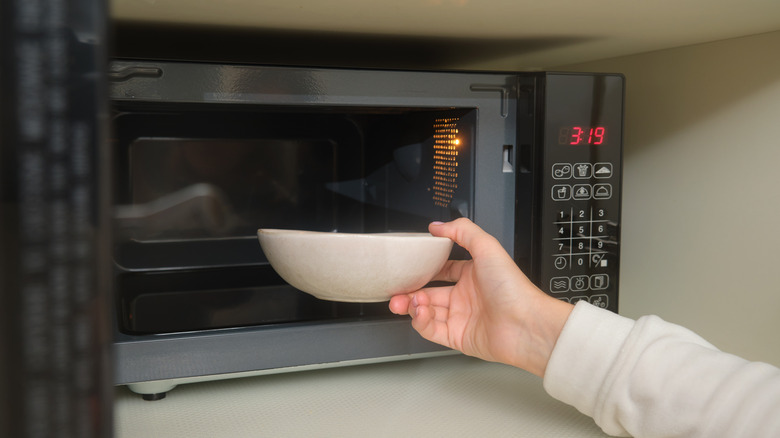
Even if you think you're well-versed in microwave cooking, it never hurts to review the basics. If metal and wood are out, what are the best materials to use in the microwave? Glass or ceramic dinnerware is generally safe for microwave use, as they're designed to be heated to high temperatures without cracking. Make sure that the bowl is labeled microwave safe, and check for any metallic paint that can cause sparks (such as some vintage Pyrex dishes). Other kinds of glass, like bone china or crystalware, may crack if overheated.
Plastic containers are a popular choice for the microwave, especially if you're taking leftovers directly from the refrigerator for reheating. It's easy to assume that all plastics are fine to use, seeing as they're neither metal nor prone to breaking in the microwave, but checking the label will prevent your container from melting around your food. Single-use plastics, such as yogurt containers or water bottles, are not designed to hold up in the microwave.
Food-grade silicone is a unique kitchen material that can be used in the freezer, oven, dishwasher, and microwave without cracking, melting, or reacting with food. That said, you'll still need to check the label for microwave safety. Some silicone kitchenware isn't 100% food-grade or contains elements made from other materials that might make it less appropriate for microwave use.