

Roasting Beets? Martha Stewart's Way Is Simple (And So Easy To Peel)

Martha Stewart's method for roasting beets should be the default among home cooks. Instead of peeling raw beets with a peeler, which is a messy, knuckle-scraping ordeal, she wraps them whole in aluminum foil and roasts until tender. Once cooled slightly, the skins slide away. The foil traps steam against the surface, softening the cell walls beneath the beet's outer layer so the pigment-rich skin detaches cleanly.
In a video shared to her Instagram page, Stewart recommends wearing gloves like a professional kitchen worker, so the deeply pigmented root vegetables don't dye your skin, but you can also use a paper or dish towel. Or just rock the red fingers, it's harmless and will fade. She also layers a piece of parchment between the beets and the foil, which can help things stay clean, and seasons them with a splash of olive oil and salt. She roasts at 450 degrees Fahrenheit, but the length of time it takes will depend on the size of your beets; the larger, the longer. Use a fork to poke through the whole packet to test for doneness; no need to unwrap till you're sure.
This gentle roasting method preserves the vegetable's color and nutrients better than boiling, which can leach flavor into the water. It also coaxes out a roasty sweetness that makes even beet-skeptics reconsider, or so says Stewart. Inside the foil packet, the heat converts starches to sugars, caramelizing them and concentrating moisture, giving the flesh that earthy-sweet perfume. Once roasted, the beets are tender enough to slice or cube, their natural sugars caramelized just to the edge. Wash, trim, wrap, roast, cool, and rub. No awkward peeling tools or stained countertop, just glistening, jewel-colored roots ready to be combined with goat cheese and arugula.
The science of the sweet beetness
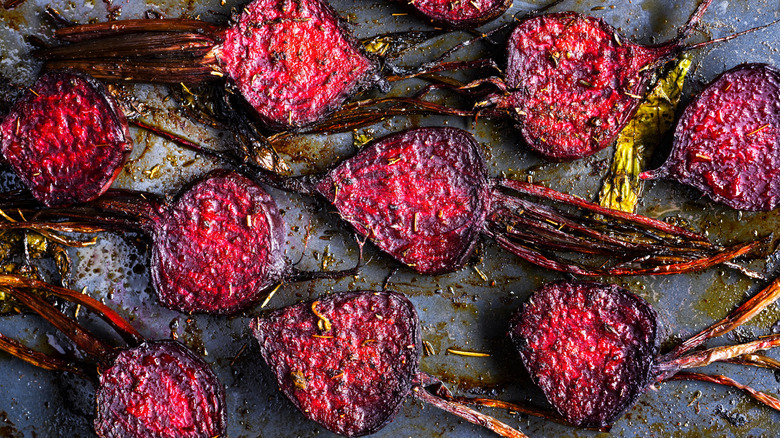
As the temperature rises in the aluminum sachet, the water content of the beets slowly evaporates, concentrating natural sugars like sucrose and glucose. At the same time, heat breaks down geosmin, the organic compound that gives beets their famously earthy aroma. What's left underneath is a rounder, more mature sweetness. The skin acts as a natural casing, helping lock in pigment and moisture while the foil seals in steam.
That sealed environment softens the texture of the beets and moderates the heat. Foil reflects some of the infrared energy, and the beets cook evenly, their centers heating gradually rather than drying at the edges. This slow, steady cooking method also limits oxidation, preserving the anthocyanins and betalains responsible for the vegetable's vivid color. The same compounds that stain your fingers are antioxidants, so keeping them inside the flesh means more nutrients in your body, and a deeper hue on the plate.
Once you have some peeled beets on your hands, try tossing the slices with olive oil, salt, orange zest, and maybe a little rosemary, for a simple side, or pair with lentils and goat cheese for a full meal. They can even go into a sandwich! Roasted beets can even be a component ingredient, as they blend beautifully (and brightly!) into hummus or soup. A drizzle of vinegar or citrus brightens their sugars, and flaky salt sharpens the finish. Martha Stewart's method may be minimalist, but it captures the essence of what roasting does best.