

The Case For Waiting To Eat Your Beef Stew Until The Second Day
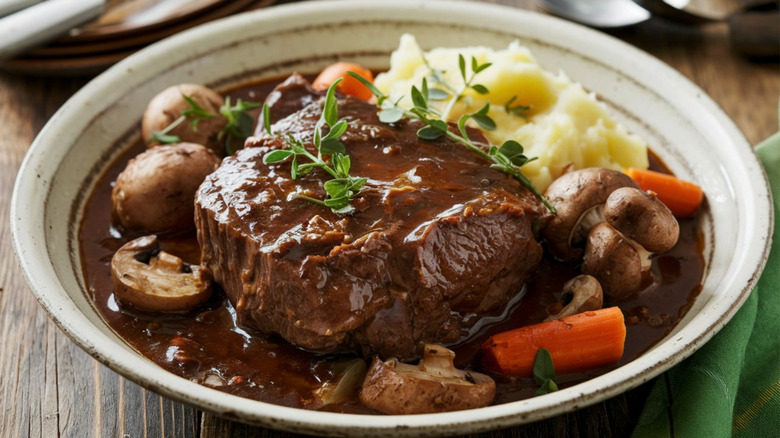
Beef stew is a warm and comforting favorite that encompasses many cultural varieties, from boeuf bourguignon to an old fashioned beef stew. One thing they all have in common is that they're slow-cooking recipes that require patience. If you're willing to wait for your stew to undergo a lengthy simmer, perhaps you'd be willing to wait an extra day to enjoy it. We spoke to Ayo Balogun, the chef and owner of Dept of Culture Brooklyn, during the New York City Wine & Food Fest, who shared that stews and soups taste better the next day.
As a Nigerian native, Balogun cites a famous dish, Jollof rice, to analogize the "next day" argument for beef stew. He told us, "I'll give you a tip: Yesterday's Jollof rice is the best Jollof rice." When the beef stew sits overnight, says Balogun, "All the ingredients together, they start to changefully release each other." The initial sauteeing and simmering may unlock flavor and cooks ingredients from raw, but it's more of a jumping off point for both flavor and texture.
Chef Balogun continues, "For the flavors ... you know, when you cook, sometimes it just takes time for things to start breaking down? ... It's like marination. Like when you're marinating, it takes time. And if you look at that sort of sensibility, it goes into stew too." Tough cuts of beef benefit from being marinated, as the process imparts more complex flavors and tenderize them. Evidently, a premade stew acts a mutual marinade for the beef, broth, and veggies.
The science behind letting stew sit
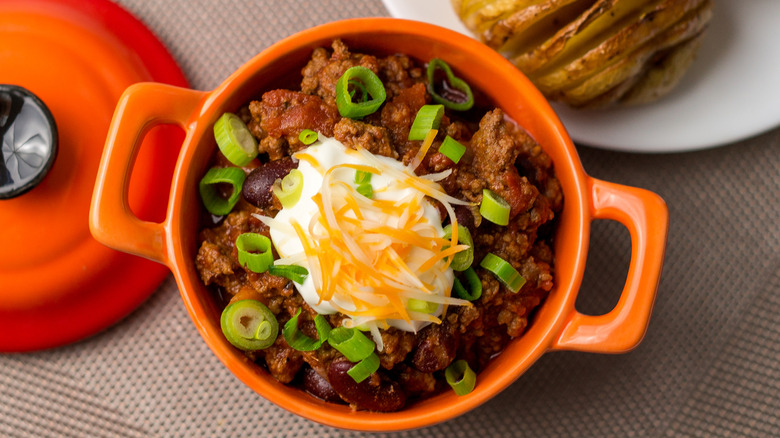
Chef Balogun makes an astute comparison by likening a 24-hour resting period for stew to a lengthy marinade. But, there are even more scientific reasons for letting stew sit that will convince you to make your recipe a day in advance. The flavor breakdown that Chef Balogun alludes to is the result of ingredients melding. While the initial cooking blooms the flavors of the ingredients, allowing the recipe to rest lets all these flavors combine into a more cohesive profile. Since veggies and starches you add into the stew continue to absorb liquid as they sit, this enhances their savoriness with all the seasonings from the broth.
As for the textural boon, tougher cuts of beef used in stews will continue to break down as they sit in the flavorful broth, becoming pull-apart tender. Not to mention that the gelatin produced by the beef's connective tissue also has time to coagulate while the stew cools overnight. Reheating causes this gelatin to then melt and thicken the broth for an ultra velvety consistency. Warming up the stew the next day also reinvigorates flavors, enhancing the effects of initial cooking reactions like caramelization and browning.
While eating stew the day after you make it is an essential tip for making beef stew the most flavorful and tender, you don't want to let it sit for too long. Leftover beef stew only lasts 4 days in the fridge before it starts to spoil.