

What A Restaurant Owner Really Thinks About Guests Who Linger At Tables After Eating
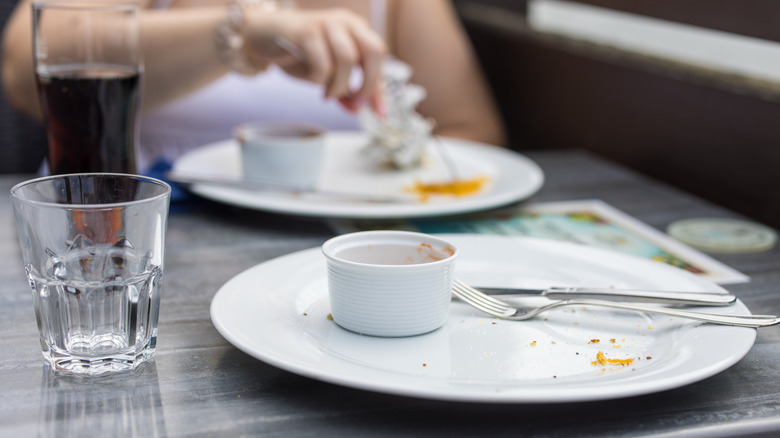
There's a rhythm to dining out. You arrive hungry, the room hums, and for a while, it feels like your table is the only one in the world. That illusion is part of what you're paying for, because good restaurants are designed to make you feel at home, but how long is too long to stick around? "There's always a balance," says Michael Cecchi-Azzolina, owner of Cecchi's in New York City, a great place just south of 14th Street to get a "New York Happy Meal", a.k.a. an ice-cold martini and a basket of hot, salty fries. "In a very busy restaurant, when you're the six o'clock reservation and you will be allotted two hours for four-tops, by eight o'clock, you should be done with the meal. And if you're done, you're done. Pay the check and go home, or pay the check and go to the bar."
That's the delicate, mostly unseen-by-guests choreography of the service industry. Turnover keeps the lights on, and every table has a life cycle. Lingering for a few extra minutes is fine, "But after you're finished and desserts are clear and you're sitting there talking or pulling out your phone to show pictures of your grandkids to your guests," says Cecchi-Azzolina, "that's egregious. You shouldn't do that."
Restaurants run on momentum. Servers pace courses while the kitchen fires the next round, and when you stay too long, the dance falls out of sync. That said, hospitality cuts both ways. Guests should never feel hustled out mid-meal. If the staff start stacking chairs, take the hint, but if someone drops the check or tries to clear your plate while you're still eating, that's not right. Good service creates a comfortable experience. Just remember you're sharing the space.
The social half-life of a restaurant meal
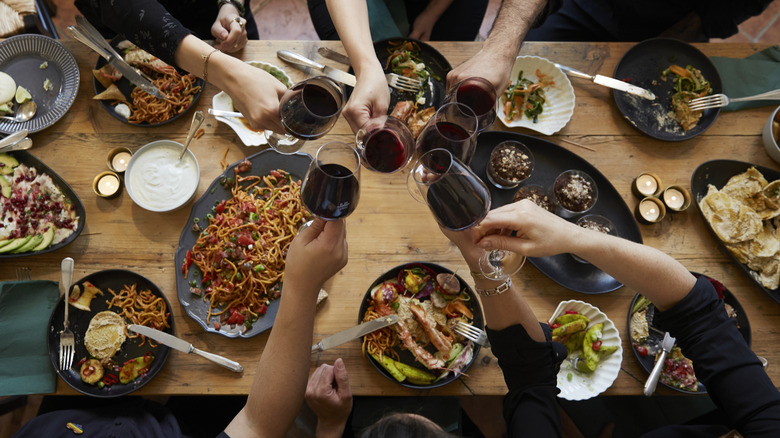
Servers want you to relax and have your needs met, but there are also things they wish you'd stop doing, one of which is lingering at the end of the night. It's your social responsibility as a diner to have the self-awareness and common sense to recognize signs that you're overstaying your welcome. "Sometimes [servers] have been there 8 to 10 hours, [and] 11 hours, the kitchen [workers have] been there," Cecchi-Azzolina says. "If everyone is out of the restaurant and you're still hanging out, just look around. We're not going to kick you out, but it's polite to say, 'Oh, we should probably go now.'"
Think of it like being a guest at someone's dinner party. You enjoy the meal, chew with your mouth closed, tell a few good stories, and at a certain point, you thank your host and let them clean up. You don't stick around past bedtime with your feet on the table (if you want an invitation back!). Restaurants work the same way. Staying a little past your table's natural lifespan can sometimes be fine, like in that sweet spot between rushes, when the pre-theater diners have cleared out and the post-show dessert crowd hasn't yet arrived. Order wine, have your conversation, stay low-maintenance, and the staff will probably have no issues with you being there during the lull. If you're the only table left and the music's gone quiet, don't confuse the space for a late-night lounge. Enjoy yourself, but be considerate.
The graceful restaurant goodbye
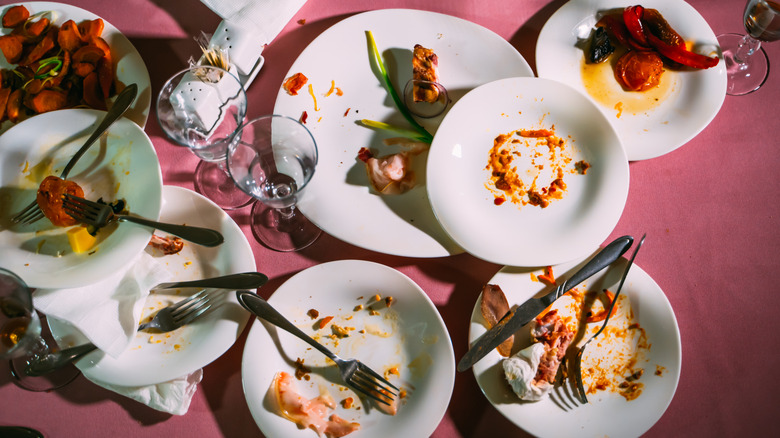
When it comes to lingering at a restaurant, context matters. A 24-hour diner probably won't mind if you're carrying on over coffee at midnight, whereas a viral spot with a line out the door has the pressure of running at a faster clip. If you paid $100+ per person, there's a cloth on the table, and fine-dining service, you can expect to be catered to, but you should still behave courteously, maybe even formally.
If the vibes are right and you can't bring yourself to move to a late-night location, free up the table by moving to the bar — as long as it's open. "If you bought a bottle of wine, we want you to finish it," Cecchi-Azzolina says. Tables are generally for eating, while the bar is designated for more unrestricted hanging out. Migrating to the bar allows the servers to close their sections or welcome a new party, and lets you keep your night intact, staying engrossed in conversation till the last drop.
What diners often forget is that restaurants are like living ecosystems, with operations that continue after business hours. After the last entrée leaves the pass, cooks break down their stations, dishwashers haul racks, and servers tackle side work. Staying glued to a table long after close might seem romantic, but there is such a thing as staying too long. Tip fairly, stay aware, and treat the people feeding you with respect and warmth. A table is a temporary stage for pleasure and connection. When the lights dim and the curtains close, finish your wine, stand up, and make room for tomorrow's performance.