

The Key To Degreasing Kitchen Cabinets While Avoiding Finish Damage
We may receive a commission on purchases made from links.
Your kitchen cabinets can get greasy over time due to exposure to cooking oils, smoke, and dust. They should be cleaned regularly, as neglecting to do so can result in funky odors, discoloration, and pests like cockroaches. However, you should take care when using certain degreasing products or methods, as they may remove paint from your cabinets or damage the finish.
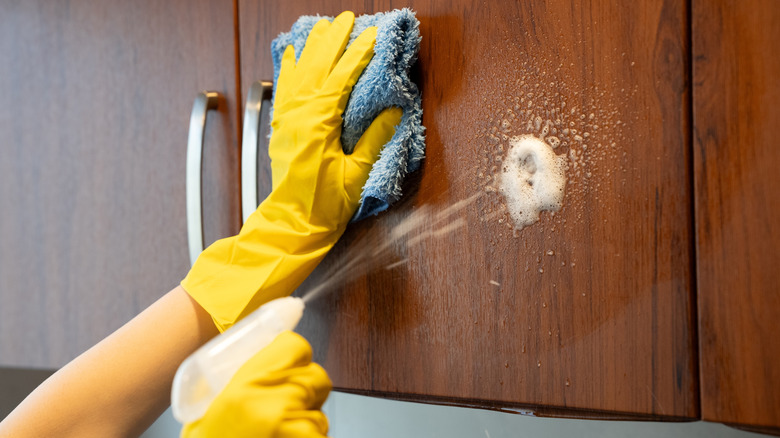
The key to degreasing your cabinets without damaging the finish is to use a mild cleaning solution rather than harsh, chemical degreasers. Make your own simple, all-purpose cleaning solution by mixing mild dish soap and warm water in a spray bottle. Start by dusting cabinets to remove debris, or you might end up scratching the finish while cleaning.
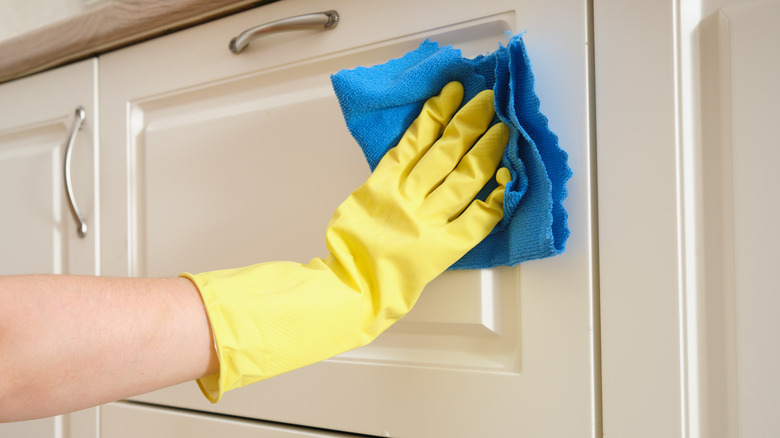
After dusting, spray the cleaning solution liberally on the cabinet surfaces and let it sit for a few minutes. Spray again, and then use a clean, soft cloth, like these Amazon Basics Microfiber Cleaning Cloths, to wipe away the solution. Repeat this as many times as needed to ensure all grease, dirt, dust, and debris is removed. Then immediately dry your cabinets with a clean cloth to prevent water damage and mold.
For the best results, you should clean and degrease your cabinets (and remove grease from your kitchen walls) every other week. This will prevent a build-up of grease and dirt, and make the overall cleaning process easier. Remember that the longer you let grease sit on finished or painted wood surfaces, the more damage it can do.
Removing stubborn grease stains without damaging cabinets
To remove tougher grease stains without taking off paint or damaging the finish of your cabinets, make sure you use the right cleaning tools. Avoid using abrasive cleaning products or sharp tools. Instead, use a soft-bristled toothbrush or cleaning brush, a plastic pot scraper, or a non-abrasive sponge.
You can also make a paste of baking soda and water and apply it to tough grease patches. Just don't mix baking soda and vinegar together as they will actually deactivate each other's cleaning powers, rendering each one useless. Cover the area with plastic wrap and let it sit overnight, then remove the plastic wrap and wipe away the paste with a clean, soft cloth. Then spray the area with a mild cleaning solution and wipe gently with a sponge, soft brush, or cloth.
To best maintain the quality of your cabinets while degreasing, you should avoid using excessive amounts of water, doing so could cause damage to natural wood cabinets, or remove the finish or laminate from other types of kitchen cabinets. You should also avoid cleaning with steel wool pads or other harsh tools that could scratch or mar the finish. Do not use strong chemical degreasers and don't clean kitchen cabinets with furniture polish or use waxes, as they can degrade the cabinet finish or paint, or cause stains or discoloration. And you should always avoid mixing different cleaning products, as you might create dangerous fumes or cause a chemical reaction that damages your cabinets.