

How To Tone Down A Strong Coconut Flavor In Your Dishes When Cooking
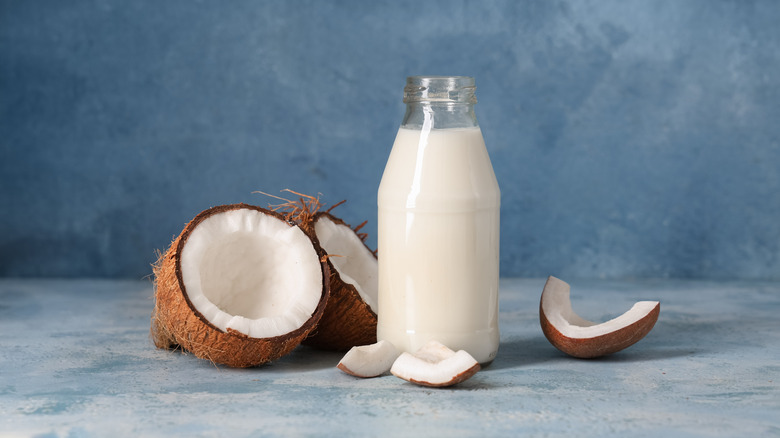
Coconut is one of those things that you either love or hate. Sure, it's not as divisive as something like cilantro or licorice, but there are many out there that just really don't care for the tropical flavor, especially when it pops up in unexpected dishes like a pasta sauce or stew. Fortunately, there are plenty of ways to tone down a strong coconut flavor in your cooking, and, according to culinary expert Antoni Porowski, all you really need to do is add one extra ingredient.
"Try doing a 50-50 with coconut milk and evaporated milk," Porowski tells Tasting Table. "This keeps that rich texture but balances out that coconut flavor a bit and lessens the intensity of the coconut profile." The television star, who has recently teamed up with Nestle to release a limited-edition line of dining accessories, the Carnation Red Carpet Recipe Collection, likes to use evaporated milk because of its creamy texture and neutral taste. But if you don't have any on hand, a combination of milk and heavy cream or half-and-half can work too. If you're lactose intolerant, Porowski adds, "Try mellowing the flavor with a broth — mushroom or vegetable is a good option. It adds loads of flavor without being too overwhelming."
Avoid adding coconut to these flavors
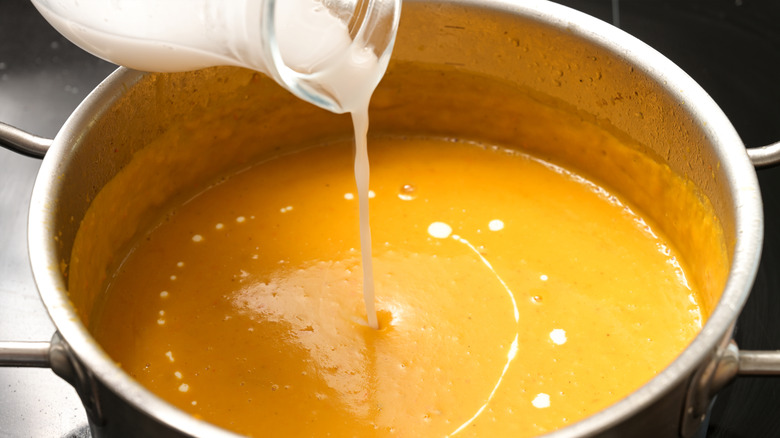
Some other good options for balancing the flavor of coconut are adding a squeeze of fresh lime juice or some fish sauce to a dish, especially if it's something like a vegetable coconut curry. Tamarind also works, as does a tiny pinch of baking soda. If you're making a dessert, like non-dairy ice cream, try mixing almond milk with the coconut milk, or opt for Greek yogurt or cashew cream for a thicker consistency.
Coconut milk usually works great in sweeter dishes or Asian foods, but there are some flavors that it just doesn't meld very well with. "Coconut milk has its merits, but it's definitely not a universal ingredient that can be used in any dish," Porowski adds. "I would avoid anything overly bitter or smoky. The strength of those flavor profiles and the power of the coconut often clash instead of complement."
Some examples might include a smoky brisket chili or certain Northern Indian curries. Delicate seafood dishes and Italian food can also be tricky. For example, you probably don't want a hint of coconut in your marinara sauce or roasted garlic risotto. But if you use coconut milk correctly, it can work in a plethora of dishes — just make sure to avoid these 13 mistakes with coconut when you crack that can open.