

Don't Be Fooled By These Serious Scams That Costco Warns Its Members To Avoid
In 2021, Costco sent out a notice to some of its customers informing them that their credit card information might've been stolen. As it turns out, during a routine check, staffers found a card skimmer in one of its stores. Grocery shoppers rely on Costco for everything from bulk pantry staples to fresh produce. Thus, Costco's size and popularity makes it a natural target for scammers, and fraud attempts are a constant headache for both the company and its customers. So much so that it's published an entire database of known scams for members to avoid.
One of the most common tricks is sending emails under Costco's name, with all the proper logos and formats of an official email. It could be an email telling you that your membership subscription couldn't be renewed, and you have to click on a link and fill in your payment details to "fix" the problem. Of course, this link doesn't lead to Costco's official portal and whatever information you type in will be recorded by the scammers.
There are many variations – some will tell you to click a link to confirm an order you haven't made, or you've been selected for a free reward (you typically won't find any free reward at Costco, other than knowing the best days to shop at Costco if you're after the free samples). Costco's statement is this: It won't ever send you an unsolicited email asking for information such as login and payment details, or Social Security number. Should you ever become suspicious of an email (because it does send offers and ads from time to time), take a look at the sender's email address. If it came from one of these official domains, it's likely legit — but still exercise caution.
Look out for text and social media scams, too
Scammers may also come to you through SMS text messages or phone calls. These scams are usually more sophisticated by "spoofing" (or faking) the sender's number to make it look like the messages were actually sent from Costco's official numbers. Costco has reported instances of its customers receiving texts from strange numbers telling them that there's a "loyalty reward" that comes with their order, or Costco's been trying to reach out to them for a reimbursement on a purchase. In one instance, they even faked an email from USPS saying they weren't able to make a delivery because your information's somehow wrong. All you have to do is click on a link, fill out some info, and you'd get the promised reward. Whatever information you send through this link would be harvested.
If you have a habit of browsing for deals on social media, you'll also occasionally come across posts from accounts claiming to be "deal-hunters" or even official Costco reps who can hook you up with some brilliant deals. A ping-pong table for $59, or a free $75 coupon for your next grocery haul — all of these are real scams that have been pulled. The twist is that if you want to get these offers, you'll either have to make a "deposit" by buying a gift card and sending it to them, or enter your information into a website controlled by the scammers.
Once again, you should never click on a link or complete any form or survey without making sure they're actually from the chain. A Costco cash card is your ticket to entry without a membership, making it a sought-after prize for scammers. Definitely don't buy and send these cards to anyone, no matter what they say you could get in return — you likely won't ever see it.
The most dangerous scam: a seemingly normal Costco website
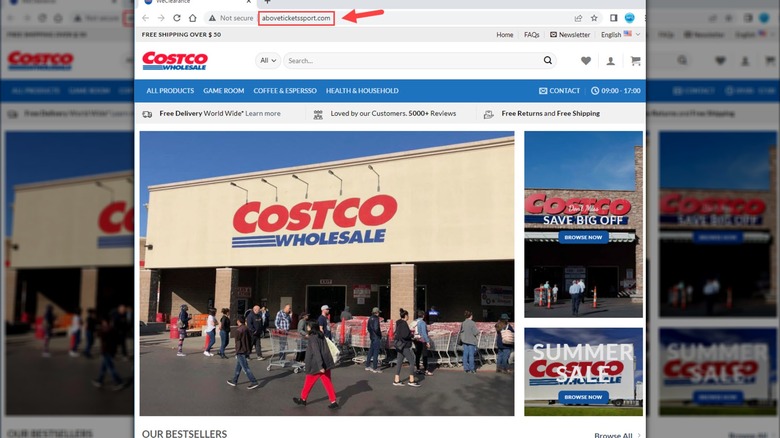
While it's not difficult to spot scammy emails, text messages, or social media posts so long as you remain vigilant, what if you absent-mindedly click on a link and you're shown what looks like the Costco website? Basically a carbon-copy of it?
That's what makes this next scam particularly insidious. The scammer would recreate the Costco website exactly as it appears, with working products, banners, and everything you'd expect. The only problem is that when you want to make an order for your weekly groceries, you'd realize that you're not logged in. You might think it's not a big deal and enter your username and password again — and that's how they'd get a hold of your login details.
The only visible sign of this scam is how the website link is either slightly or very wrong. For instance, instead of Costco.com, it'd be something like Costco.xyz, or something completely different. Worse, in a sample screenshot of a scam website straight from Costco, the scammers even put a "Contact" button with an email (Costco doesn't offer email support) that directs you to the scammer's email address. So if you run into any problem with the site (which you eventually will), they can reel you in even further. That's why, whenever you have to enter your login details again, give the address bar on your browser a peek and be doubly sure that it's "Costco.com" and not something odd. It only takes a second, but saves you from a ton of troubles!