

This Vintage Coffee Grinder Is The Ultimate Thrift Store Find
We may receive a commission on purchases made from links.
If you're a self-confessed coffee nerd always on the hunt for a new bit of kit, your obsession might just pay off. As part of the trend of collecting vintage kitchen tools, TikTok influencers are now going wild for the PeDe Dutch vintage wall-mounted coffee grinder. There are probably two questions that immediately spring to mind now. What is a wall-mounted coffee grinder? And, what makes this one special?
A wall-mounted coffee grinder is just what it sounds like — a grinder that attaches to the wall for stability and one-handed operating. These were originally patented before the age of electric coffee mills and designed for businesses or stores that needed a way to grind large quantities of coffee efficiently. The PeDe grinder was one of the many smaller wall-mounted grinders that became popular for household use in the late 1800s and early 1900s, and have now become sought-after vintage kitchen items.
The name PeDe (or PeDe Dienes) refers to Peter Dienes, who founded the coffee grinder company in 1869. Although these grinders are often thought of as Dutch, both the man and the company are from Germany, and it wasn't until 1919 that production started in the Netherlands. Both the German-made and Dutch-made PeDe grinders are highly sought after today; the German models for their antiquity, and the Dutch models for their designs depicting cultural scenes and landscapes from the Netherlands.
How much is a PeDe coffee grinder worth?
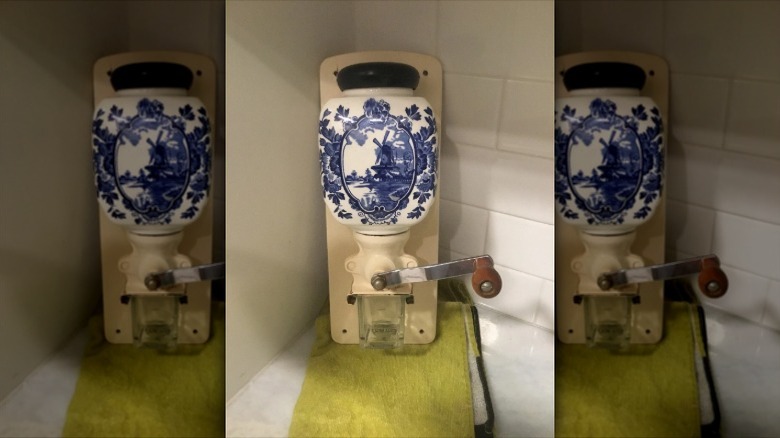
The PeDe factories produced coffee grinders right up to 1970, so the value of these grinders will vary depending on the era and the exact style they were made in. In fact, PeDe also made both wall-mounted and tabletop grinders, in materials including cast iron, wood, ceramic, and Bakelite.
For collectors, however, the quintessential PeDe grinder is a wall-mounted model with a wooden backing board, ceramic body, and cast-iron handle. These grinders with typical Dutch windmills rendered in the Delft style can fetch anywhere from $170 to $260 in good condition, and even those with missing pieces can be worth around $100.
Not all PeDe grinders feature pictures, but instead have simple font-based designs. While these might not fit the idea of an idyllic Dutch kitchen accessory, it's still worth looking out for them. PeDe grinders from the 1950s with just the word "koffie" on the front regularly sell for upwards of $100. And if you see a similar item marked "kaffee" that could well be a German-made PeDe grinder, and possibly worth upwards of $250. While you're thrifting, keep an eye out for valuable vintage coffee mugs, and you'll have a breakfast set worth waking up for.