

Why Some Cheeses Are Soaked In Brine, According To Science
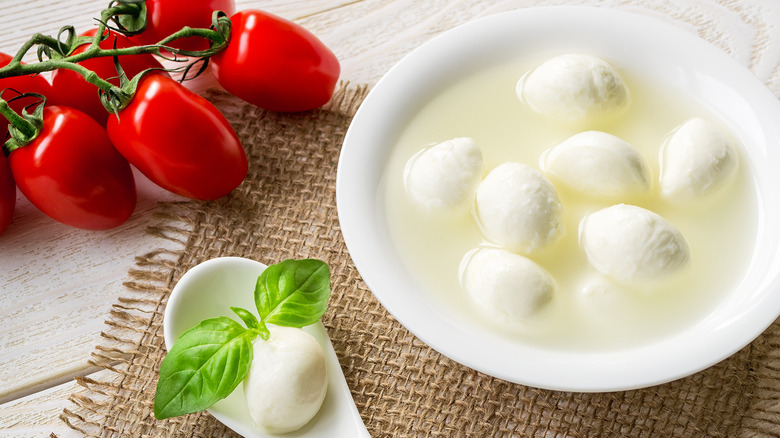
If you're just beginning your foray into artisanal cheese making, you might be wondering if you really need to brine your cheeses. Tasting Table spoke with an expert on the subject; Tyler Fenton, chef and owner of BATA and Reilly Craft Pizza & Drink in Tucson, Arizona. Fenton has implemented a robust fermentation program at BATA, and we asked him to explain the science behind why some cheeses are brined, and what the process does to the texture and flavor of the cheese.
Fenton told us, "a function of brining cheese is to extend its shelf life." He went on to say that some cheeses are even stored in brine, such as feta and mozzarella. However, cheese brining isn't just used for preservation. The process has been used for about 9,000 years. In addition to extending the shelf life of the cheese, it enhances natural flavors, accelerates the aging process, and prevents the growth of harmful microorganisms. Cheese varieties are actually defined by their salt content and texture, and brining can be used during or after the cheese making process.
Brining lowers the curd moisture content during the first stages of cheese making, which enhances the flavor and extends the lifespan of the cheese. It can also be used after certain varieties of cheese are made. For instance, because block cheese can't be salted before it is molded, it is often brined after molding to enhance its salty flavor. Brining also ensures rapid cooling of the cheese after it is molded, which can further halt the growth of dangerous bacteria. Brines can also be thermally treated in a process similar to pasteurization, which also works to inhibit bacteria and mold growth.
Brining also enhances the flavor and texture of cheese
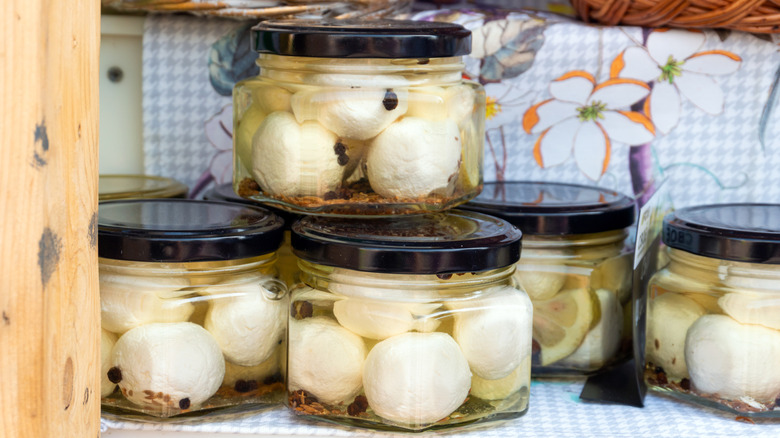
In addition to using a brine to preserve cheese and prevent bacteria growth, you can also experiment with creating brines that incorporate new flavors into the cheese, similar to what marinades do for meat. Tyler Fenton gave us some tips for this type of cheese brining process, saying that "simple is always better as you want to enhance the product, not overpower."
He went on to give us some ideas for an at-home cheese brining, suggesting that "a brine with some herbs, or citrus, or spices like coriander or black pepper are nice options to layer in flavors without overpowering." As you prepare to make your first batch of fresh cheese at home, it's a great idea to explore different brining methods and solutions that you can use to create new flavors.
Brining also helps you achieve the ideal texture for the variety of cheese you're making. The brining process slows the process of converting lactose to lactic acid, which helps the cheese form a rind. Fenton told us, "As cheese brines its texture will tighten up over time. Freshly pulled mozzarella that has never been in brine for example will have a very creamy and soft texture, after some time in brine its outer skin will tighten up a bit and have a bit more texture to it."