

How To Clean A Dutch Oven And Make It Look New
We may receive a commission on purchases made from links.
A Dutch oven is a tool that should be in every cook's arsenal. It allows you to roast an entire chicken, bake a loaf of bread, or cook the most delicious stews, among many other uses, but it can be extremely hard to clean. The delicate enamel coating does not take well to scrubbing, and it can retain some stubborn stains and discolorations. Luckily, you can master the art of cleaning it with a few tools and tricks.
Cleaning a Dutch oven is about much more than just preserving its looks. Incorrect cleaning or stuck-on grime can damage the enamel coating of your pot, leading to chips and cracks. At the very least, it will cause it to lose its natural nonstick abilities over time. The same can be caused by drastic temperature changes, like plunging your hot Dutch oven into cold water immediately. Using the correct materials, avoiding abrasive sponges and overly enthusiastic scrubbing, and generally treating your prized pot well will lengthen its lifespan and keep it useful for years to come.
Whether you have been collecting Dutch oven recipes, or were recently gifted a pot and are dying to start cooking with it, this guide is your first step to approaching its cleanup with confidence. So roll up your sleeves, fill your sink with hot water, and let's get cleaning.
What you need
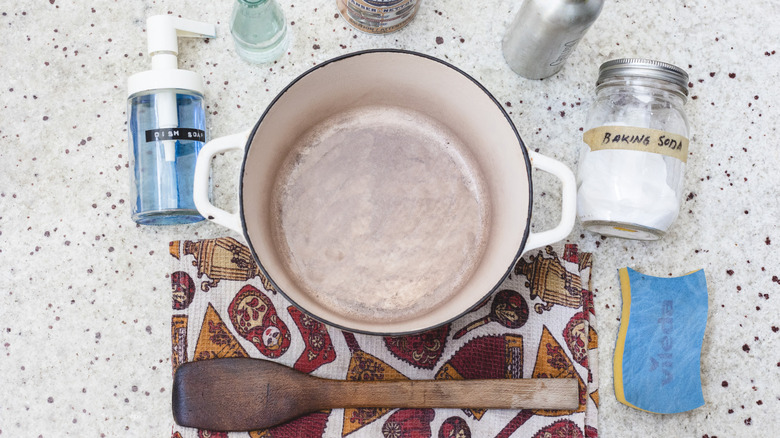
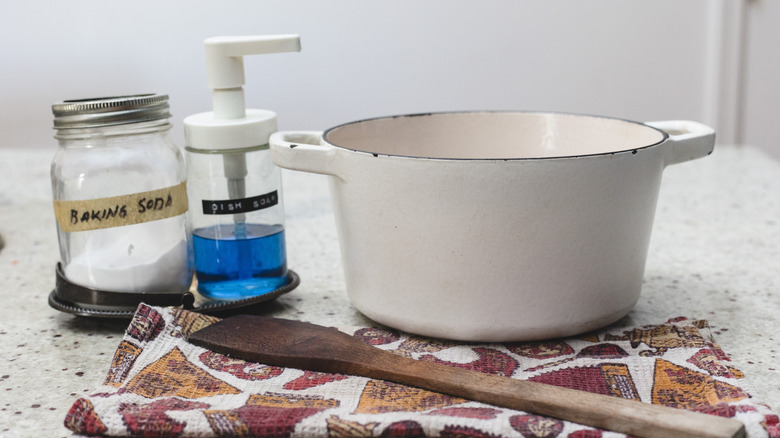
You likely already have most of the tools you need to clean a Dutch oven. If not, you can find them at your local home goods store. You'll need a good dish soap, like Dawn, and a soft sponge or cotton or microfiber cloth. To get rid of stains, you'll need baking soda, white vinegar, and Bar Keeper's Friend; both the powder or soft cleanser cream can be used. A wooden spatula will also help scrape off food without removing the coating. If you're using a cast iron Dutch oven, you'll also want to grab a small amount of cooking oil to season your pan with.
Clean while warm
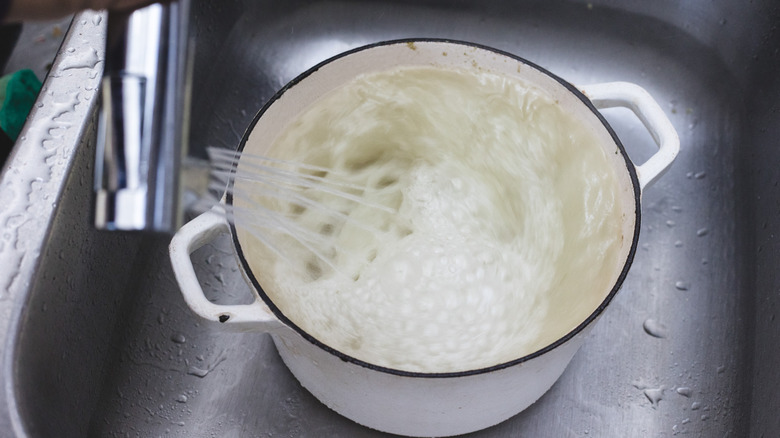
The first thing to remember is that you'll want to start cleaning your Dutch oven shortly after you're done cooking, while the pot is still warm enough to handle safely. You also need to use warm or hot water, rather than cold. Once your pan is in the sink, rinse off any leftover food or sauce.
Remove food debris
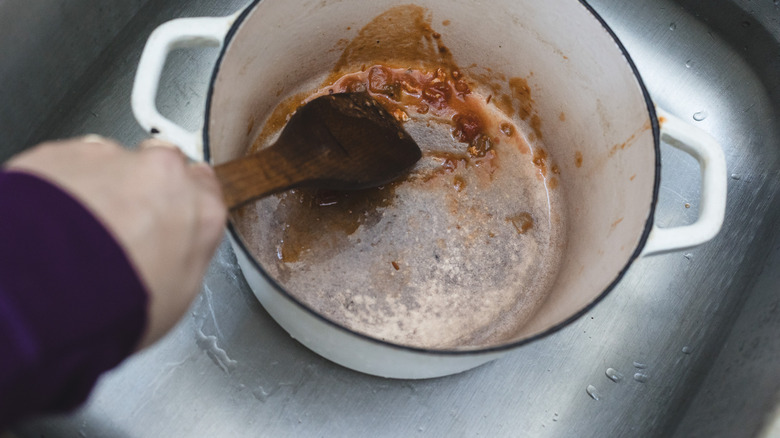
If there is any food stuck to the bottom of your pot, use a wooden spoon or spatula to scrape it off while the pot is still warm.
Soak with warm water
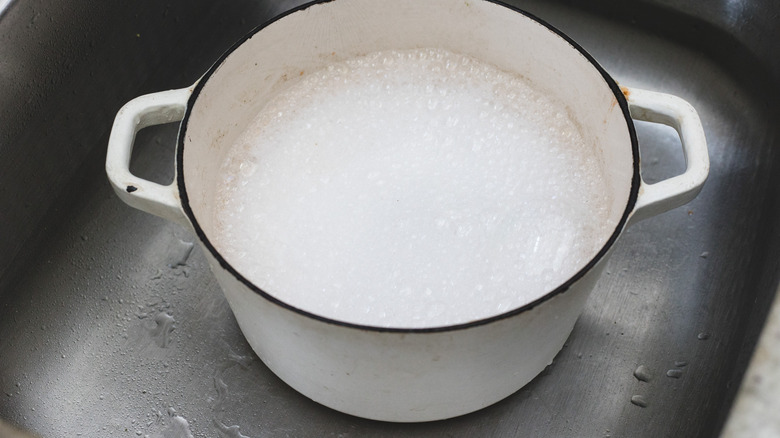
For stubborn, baked-on food, fill the Dutch oven with hot water and let it soak for 10 to 15 minutes. Add a drop of dish soap for extra cleaning power. For heavily caked-on food, sprinkle Bar Keeper's Friend or baking soda over the stuck areas before adding water and letting it sit for an additional 15 minutes.
Use a baking soda paste to remove stubborn stains
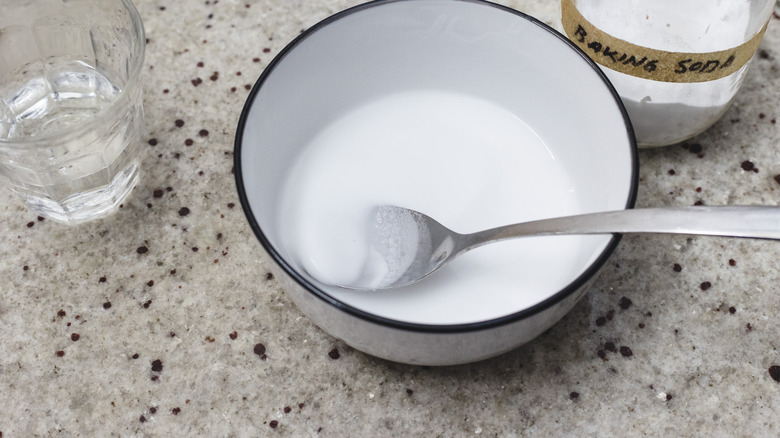
If your Dutch oven has some stubborn stains, baking soda is your friend. You want to make a paste with baking soda and water using a 5-to-1 ratio, apply it to problem areas, and let it sit for five minutes before scrubbing it gently with a sponge.
For extra-sticky, stuck-on food, fill the pot with water, add 2 tablespoons baking soda, bring it to a boil, and simmer it for 5 minutes. Cool and scrub as normal.
Scrub with a soft sponge
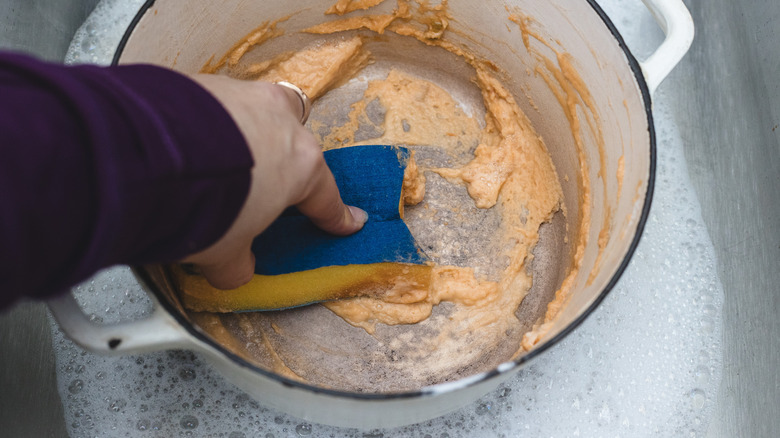
Use a soft sponge with warm soapy water to clean all surfaces. Work in circular motions to remove food residue and stains. It's also safe to use a soft sponge to remove the baking soda or Bar Keeper's Friend paste.
How to remove white spots and mineral deposits
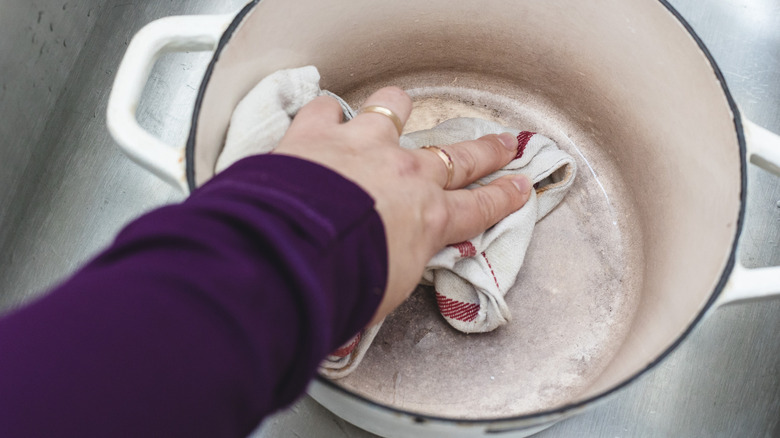
White vinegar can be used on stains or mineral deposits. Its acidity naturally helps to dissolve calcium and magnesium buildup. Grab a clean cotton cloth and soak it with a bit of white vinegar before wiping it on the affected areas. If a stain refuses to come out, apply the cloth and let it sit on the stain for 15 minutes, and then rinse thoroughly.
If your pot has especially sticky mineral deposits, there's a solution for that too. Fill the Dutch oven with equal parts vinegar and water, place ot on the stovetop and bring it to a simmer. Let it simmer for 10 to 15 minutes, then turn off the heat and let it cool before scrubbing it with a sponge. The heat helps the vinegar work more effectively, lifting the residue from most stubborn spots.
Rinse and dry your Dutch oven immediately
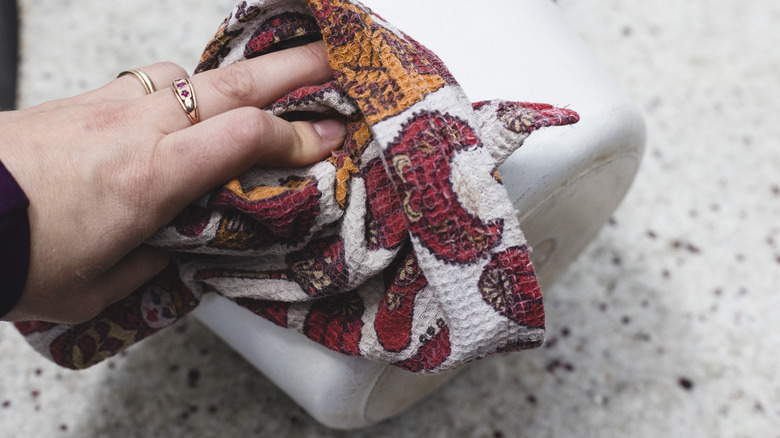
Once your pot is clean, rinse it immediately with hot water. Remove all soap, baking soda, and vinegar with hot water. Check that no residue remains. Once clean, towel dry the Dutch oven completely.
For cast iron, place on the stovetop over low heat for two to three minutes to ensure all moisture evaporates. Then, apply a thin layer of cooking oil while warm and wipe up any excess.
What not to do
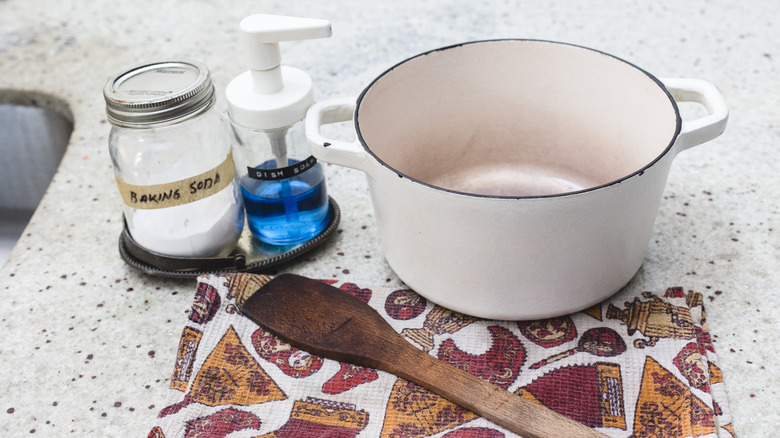
Now that you know how to clean your Dutch oven, you should also know what to avoid doing. The most important rule is to avoid steel wool or abrasive cleaners, as they can permanently damage the enamel coating and leave behind scratches. While cheaper pots may get damaged faster than others, it's never a good idea to use a harsh sponge or cleaner on your pot.
Stay away from harsh cleaners and bleach, as they can be unsafe for food and damage the coating. Instead, opt for baking soda, dish soap, vinegar, or Bar Keeper's Friend. Always wash the pot by hand, and never place your Dutch oven in the dishwasher. While this may not break the enamel, it changes the color of the pot and can discolor the enamel inside.
When you've finished properly cleaning your Dutch oven, never let it air-dry or store it while damp. This can cause rust or mineral deposits to develop. Instead, use a soft kitchen towel to dry it completely and ensure the success of your cleaning efforts for years to come.