

16 American Candies You Can Only Get In Certain Regions

We may receive a commission on purchases made from links.
Visit any nearby store, and you're bound to find M&M's, Snickers, Skittles, and other popular brands in the candy section. That's the perk of being nationally recognized and distributed. The downside, however, is that manufacturers must constantly innovate to keep the brand fresh. Small, regional candy makers, on the other hand, can focus on honing the single or handful of products they offer. There are lots of American candies you can only get in certain regions, some of which are over 100 years old, and could give popular ones a run for their money.
For example, have you ever heard of Mary Jane candies? It's a delectable old-fashioned taffy that blends peanut butter and molasses, and one of several classic New England candies. From the East Coast, across the Midwest, or swooping below the Mason-Dixon, all the way West, there are delicious confections, largely unavailable anywhere else. Here is a list of must-try regional candies.
Sponge candy (Northeastern U.S.)
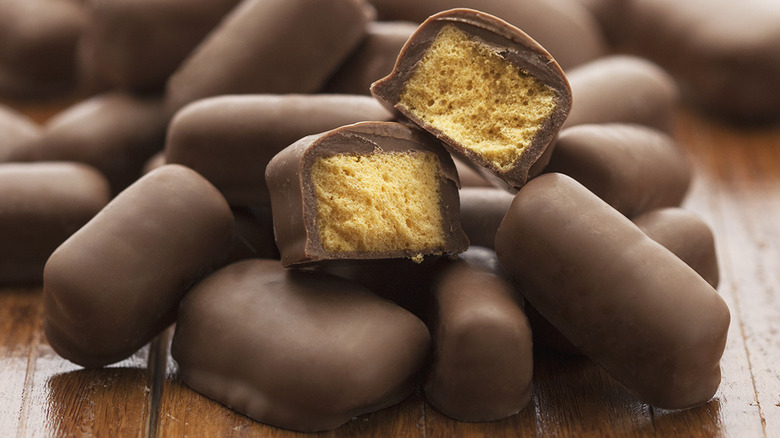
Buffalo wings are popular nationwide, but in the city they were named after, sponge candy (the sugar-spun treat adored since the 1900s) is just as iconic. It's a chocolate-covered toffee candy made from sugar, corn syrup, water, and baking soda. When the toffee ingredients are combined, the baking soda makes it rise into a light, airy, and crunchy chunk, which is then cut into small pieces and showered with chocolate. The resulting taste is similar to toasted molasses or slightly burnt sugar.
If we're to go with Buffalo's history, they were first introduced during the 1940s by Fowler's Chocolate Shoppe, one of the city's earliest chocolatiers that still operates today. However, not everyone agrees with Fowler's claim. Many say that sponge candy is just another name for cinder toffee, a similar sponge-style chocolate-covered candy from the United Kingdom.
There are variations in other places, too. It's known as honeycomb in Australia; seafoam in the Pacific Northwest; hokey pokey in New Zealand; fairy food in Milwaukee, and molasses puffs in St. Louis. Despite the similarities, Buffalo residents stand by their claim that sponge candy is a distinct invention with a crisp, melt-in-your-mouth consistency. On the other hand, cinder toffee has a more crumbly texture.
Buckeyes (Midwestern U.S.)
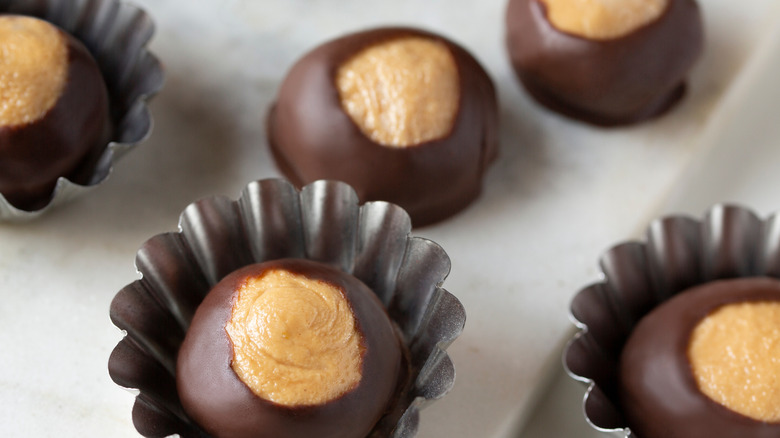
Ohio isn't the only thing nicknamed after its state tree — the American Buckeye, the official state candy, is as well. Buckeye candy is a dessert staple among locals and tourists alike. It is made from peanut butter balls partially dipped in dark chocolate so they resemble buckeye nuts, which come from the tree, but are inedible. That's also where the name comes from. Dark chocolate is the most common flavor, but there is also a softer white chocolate variety.
Buckeye candy was created by three unnamed women in 1919, who, apparently, were all married to the owner of The Buckeye Candy Company in Brooklyn, Ohio. The women initially sold them to local grocery stores and pharmacies, but where they really took off was at Ohio State football games. Today, confectioneries across Ohio sell millions of buckeye candies each year.
Cactus Candy (Southwestern U.S.)

Cactus candy has been around for a long time. One of the earliest examples is Mexico's acitrón candy, a crystallized version of the endangered barrel cactus species called "biznaga." The government banned the use of biznaga cactus in the early 2000s, largely because the candy's popularity contributed to overfarming. Though people still make it illegally, many candy makers now substitute biznaga with chilacayote, a type of squash, or dried apricots, pineapples, and other fruits.
The first cactus candy product was introduced in the early 1900s by Charles Donofrio, the owner of the first confectionery in Phoenix, Donofrio's Fine Confections. Texas accounts tell another story, however, claiming that a man named George D. Carameros was the first to sell cactus candy commercially. According to a 1947 issue of the Texas publication, Denton Record-Chronicle, Carameros launched the product in 1917 after paying someone to show him how to make it. He'd eventually make fruit-flavored and chocolate-covered varieties, as well as ice cream. He even invented a special method for making them mold-resistant.
Whoever deserves credit for creating this candy is of little importance, as both were hugely successful. Donofrio's company was pumping out 15,000 pounds as early as 1920. Similarly, Carameros was selling 250,000 boxes of cactus candy a year by 1928.
Pecan Log Rolls (Southern U.S.)
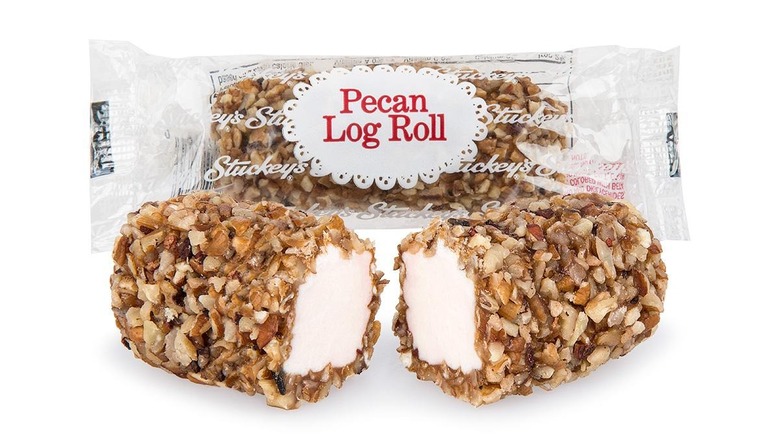
You'll find many homemade goods along Georgia's roadsides, but pecan log roll is one of the most sought-after. It was created by Ethel Stuckey, the wife of W.S. "Sylvester" Stuckey, Sr., a pecan farmer who opened a roadside pecan stand in Eastman, Georgia, in 1937. Although the pecans her husband sold were popular, Ethel's pecan log rolls were a surprise hit. They were made with a nougat center, bits of maraschino cherries, caramel, and encrusted with chopped Georgia pecans.
From the success of Stuckey's roadside stand grew a company of over 300 stores across 30-plus states, mostly located roadside. With pecans of various styles and flavors, the stores also sold breakfast, candy, souvenirs, and gas. Stuckey's iconic red logo was a fixture on billboards across America at the company's height. Ethel's original recipe is still used today. Sylvester's granddaughter, Ethel "Stephanie" Stuckey, now runs the company, and the flavor lineup now includes vanilla and chocolate.
Coconut Long Boys (Southern U.S.)
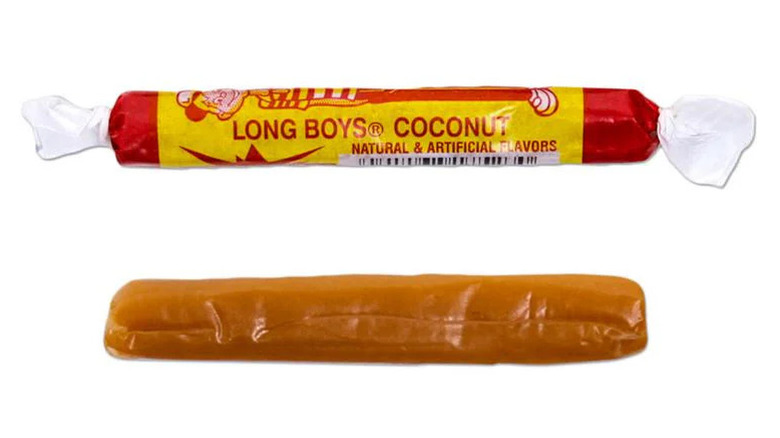
Think Tootsie Roll, but made with a blend of coconut and caramel. That's a good way to introduce you to Coconut Long Boys, a regional classic that's similarly small and tube-shaped. Made in New Orleans by an unknown candymaker, they have a creamy, chewy texture with a subtle salty kick, before sweet caramel rolls in and melts into a satisfying coconut aftertaste. You may have seen the iconic yellow-and-red wrapper they come in, which features one of the proverbial "long boys" along its length.
Speaking of Tootsie Roll, Long Boys used to make a chocolate variety, but appears to have discontinued it at some point. However, it still offers a shorter version of its original flavor. The Texas company, Atkinson's Candy Company, which now owns the brand, added Coconut Long Boys bars to the lineup. It also manufactures classic candies like Chick-O-Stick and Slo Poke bars. If you have no plans of visiting The Big Easy, this southern-style sweet is available to order online.
Saltwater taffy (Northeastern U.S.)

Before Laffy Taffy took the candy world by storm, salt water taffy was satisfying sweet tooths along the Atlantic City boardwalk. The old-style candy comes in a variety of flavors, each cut into pieces and wrapped in wax paper. Soft, stretchy, and chewy, the appeal of saltwater taffy isn't only in eating it; seeing it being pulled and molded as it's made is like watching live art. Three confectionery stand owners are credited with popularizing it: David Bradley, Joseph Fralinger, and Enoch James.
Bradley coined the name during the late 1800s, inspired by a heavy storm that flooded his stand with saltwater, subsequently soaking the candy. Fralinger's grandson, Arthur Henry Gager, the 3rd, confirmed that Bradley was the first to use the name in a historical account of that time. As far as who made it most popular? That's up for debate.
Fralinger launched his saltwater-taffy stand in the spring of 1886, three years after Bradley, and the James Candy Company, founded in 1880, is mostly credited with refining the recipe, making it smoother, creamier, and less sticky. Each was very successful, but to be clear, neither of these men invented taffy itself. The first known use of the word as a confection appeared in the 1817 edition of the Oxford English Dictionary. However, its origins remain unclear.
Mary Jane Candies (Northeastern U.S.)
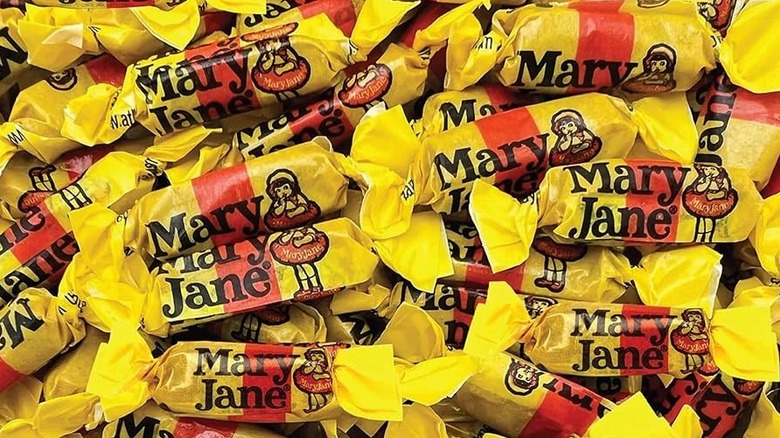
This is another Atkinson's Candy Co. product. Mary Jane is an old-school candy that has barely changed in over a century. The chewy taffy candy was invented in a Boston kitchen by Charles N. Miller in 1914. He blended two classic flavors — peanut butter and molasses — unknowingly giving birth to an iconic treat. At first, Miller sold them at penny candy stores, which started popping up in the late 1800s, and inspired the slogan: "Use your change for Mary Janes!" The brand switched owners a couple of times over the years until it was acquired by Atkinson's in 2021. It relaunched with an improved recipe and Tootsie Roll-style shape.
Besides those minor tweaks, Mary Jane candies are the same as they were 111 years ago. The titular character still graces the vintage-style yellow-and-red wrapper, wearing a matching dress and bonnet. For a taste of this regional candy, you can purchase it from Walmart's online store, Target, and other online candy retailers.
Idaho Spud Bar (Western U.S.)

Potatoes have inspired a lot of things in Idaho, even one of its most popular desserts, the Idaho Spud Bar. It is an oval-shaped confection with a cocoa-flavored marshmallow filling, dipped in dark chocolate, and crusted with coconut flakes. It was created by the Idaho Candy Company in the early 1900s, established just 11 years after Idaho became an official state. Based on its name, you might expect potato to be one of the ingredients; however, its moniker is derived from how it looks, like a crusted spud.
Apart from its unique combination of ingredients, the marshmallow is made with old-school agar-agar instead of gelatin. Agar-agar is a vegan version of gelatin that is made from algae. The two are very similar, except that agar-agar has a surprisingly moist consistency that breaks when you pull it rather than stretching. Idaho Spud bars have been made using agar-agar since they were introduced. They are not only the company's top-selling bar, but also one of the best-selling candy bars in the northwest.
Maple Candy (Eastern U.S.)

New England is the land of maple. Every March, which is maple season, cities across the region host maple-related festivals, where locals hawk maple wares and enjoy maple candy, a classic confection made from tree sap. The process is called maple sugaring and has been practiced by Native Americans since the early 1600s. After the maple is collected, it's heated until the water evaporates, reducing it to pure syrup, and then heated some more until it crystallizes. In that state, it can be whipped and molded into various shapes — the maple leaf being the most popular.
Other shapes include pilgrims, objects related to the season, as well as lobster and moose, two things New England is known for. Maple candy has a crumby consistency that melts into a creamy finish, delivering a rich, delectably nutty maple flavor. According to the Massachusetts Maple Producers Organization, over 60,000 tourists visit each season, spending more than $2 million across different areas of the maple sugaring industry.
Chippers (Midwestern U.S.)

Chippers arrived on earth in 1885, courtesy of William Widman of Dubuque, Iowa. Sweet, savory, and crunchy, the simple snack consists of ripple potato chips made from Red River Valley potatoes and covered in milk chocolate. Chippers remained a secret family recipe until its official introduction to Widman's Candy store in Grand Forks, North Dakota, in 1949.
Now called Carol Widman's Candy, there are three locations: two in North Dakota and one in Minnesota. Each shop is owned by a different Widman family member. Semi-sweet dark and white almond chocolate Chippers are available, too. Now that it has become a statewide sensation, companies throughout North Dakota and beyond mimic Chippers, making their own versions. However, if you want to experience the original, Widman's ships locally and internationally.
Abba-Zaba Bar (Western U.S.)
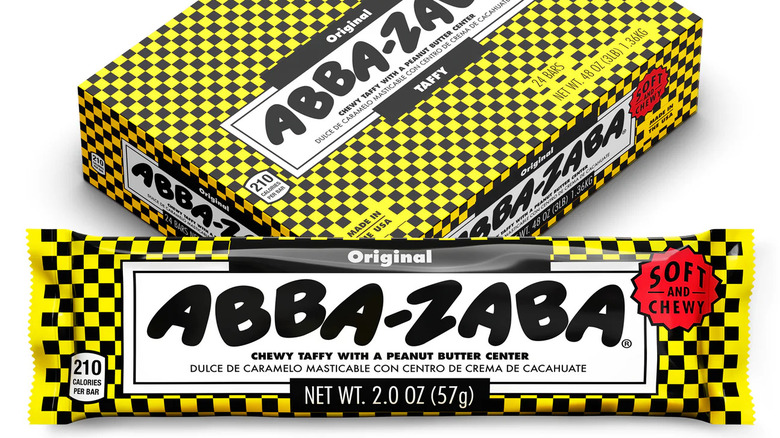
Launched in 1922 by the LA-based candy manufacturer Colby and McDermott, the Abba-Zaba bar is unlike any candy you've ever tasted; it's a sweet vanilla taffy filled with creamy peanut butter. Its unique sweet-and-salty flavor profile and stick-to-your-teeth consistency set it apart from most traditional candy bars. Abba-Zaba bars are also certified KSA Kosher Parve, which means that they do not contain milk.
Annabelle Candy Company added the bar to its lineup in 1978, which includes other regional favorites like the Rocky Road and Big Hunks bars. The company was the sole manufacturer of the bar until 2024, when it announced the closure of its main facility in Hayward, California. At present, the future of the Abba-Zaba bar is anyone's guess. The official company website still lists them as a product, and you can purchase them from Amazon, Walmart, and other online candy sellers.
You may have spotted the iconic black and yellow wrapper on television, appearing in shows like "Saved By The Bell," "Married... With Children," "Gilmore Girls," and "Boardwalk Empire," to name a few. It was also referenced in a Tom Waits song named "Chocolate Jesus."
Mountain Bars (Northwestern U.S.)
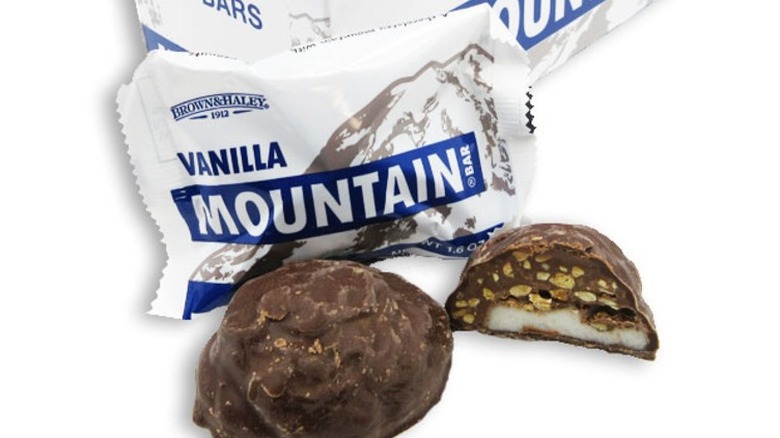
If you've ever spent time traversing the wooded roads of the Pacific Northwest, there's a good chance you've come across Mountain bars. Invented in 1915 in Tacoma, Washington, by the old-world candy maker Brown & Haley, Mountain Bars feature "hand-rolled vanilla fondant in the center, blanketed with a layer of tempered chocolate mixed with freshly ground peanuts," as described by the manufacturer. That gives it a crunchy consistency that becomes silky and smooth as you chew. The rustic, rugged look of the bar was inspired by Mount Rainier, an active volcano and one of the area's most notable landmarks.
The company released a cherry-flavored variety made with real fruit during World War II, and a peanut butter one in 1972. These flavors are available for purchase on the manufacturer's website. Amazon and other online shops also carry them.
Goo Goo Cluster (South U.S.)

If you're a fan of chocolate turtles, odds are that you'll love Goo Goo Clusters. Created in 1912 by the Standard Candy Company in Nashville, Tennessee, they consist of milk chocolate-coated clusters of fresh-roasted peanuts, caramel, and marshmallow nougat. Goo Goo Clusters were one of the first-ever mass-produced candies composed of more than two ingredients. Previously, candy bars were made of chocolate, caramel, or taffy, or a combination of two.
Goo Goo Clusters were a collaborative invention made by Howell Campbell, Sr., the company's founder, and Porter Moore, the original plant supervisor. According to its website, the name was inspired by a conversation Campbell had with a teacher who had asked about the welfare of his young son. Campbell shared that the boy's first words were, "goo goo," to which the teacher responded, "That's what you should call your candy — Goo Goo!" The rest is history. Today, Goo Goo Clusters are available in original, peanut butter, and pecan flavors.
Piñon Candy (Southwestern U.S.)
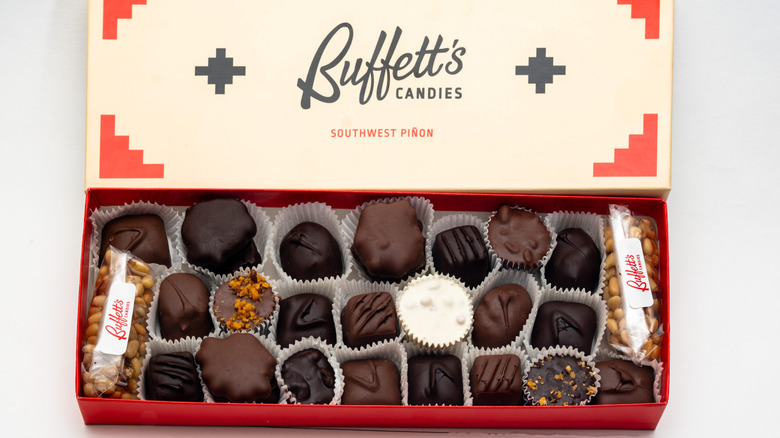
Like Ohio's American Buckeye tree, the Piñon Pine is New Mexico's state tree. It is a needle-leafed species that produces piñon nuts, which have a rich, buttery taste with noticeable sweetness — the butteriness is more robust than that of regular pine nuts. When George Buffett, founder of Buffet's Candies in New Mexico, first discovered the nut during the 1960s, he knew the flavor would perfectly complement his confections. The two candies he incorporated the nut into were piñon rolls and piñon brittle. The offerings expanded over the years to include piñon horny toads, piñon toffee, piñon creams, piñon caramels, and piñon clusters.
Unfortunately, due to climate change, multiple years of drought have impacted the production of piñon nuts. Since they aren't manufactured commercially, the company has been out of stock for some time. To maintain quality, Buffet's has chosen to temporarily cease production until piñon nuts are available again.
Goldenberg's Peanut Chews (Eastern U.S.)
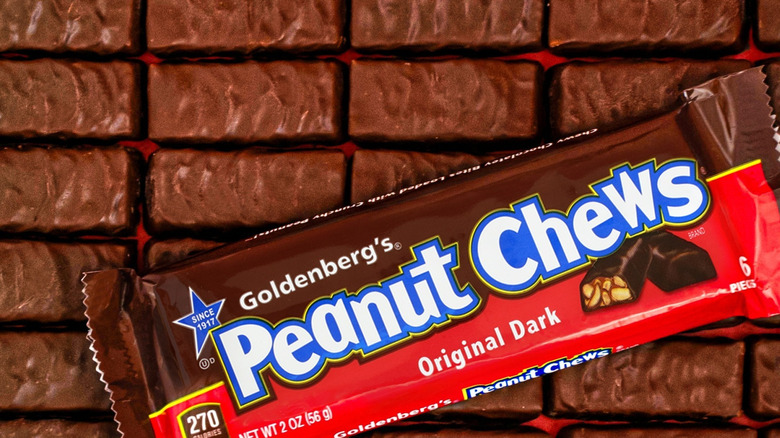
Made in 1917 with roasted peanuts, molasses, and milk chocolate, Goldenberg's Peanut Chews are regional classics worthy of a nationwide following. They were invented by David Goldenberg in Philadelphia and originally intended for U.S. soldiers during World War I as protein and energy-rich rations. Goldenberg chose dark chocolate over milk because it didn't melt as easily and could sustain distribution over long distances. Peanut Chews first hit store shelves in 1921 as a full-sized candy bar before it was switched to small individual pieces, six per pack, followed by the introduction of a milk chocolate variety.
Just Born, maker of iconic candies like Mike and Ike, Hot Tamales, and Peeps, now manufactures Goldenberg's Peanut Chews and still uses the original recipe. You can find it online or at retailers like Dollar Tree, Cracker Barrel, and a few others located on the East Coast. Those who live in other regions can grab them from Amazon.
Roman Chewing Candy (Southern U.S.)
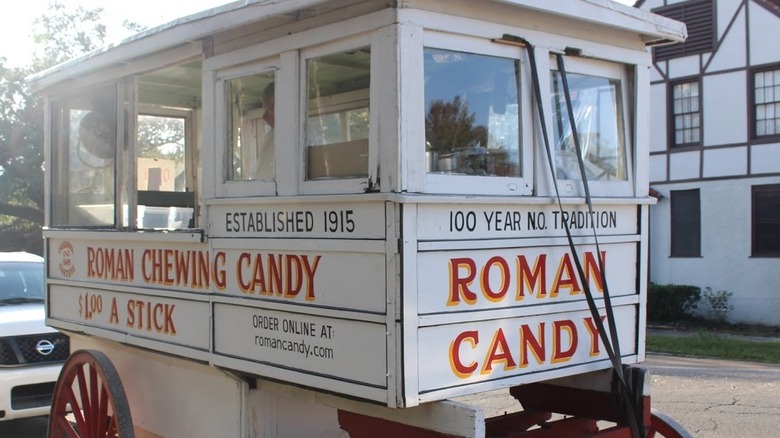
Before the sound of jingling bells and clip-clopping hooves signaled that the Roman Chewing Candy wagon was approaching, Roman Candy was a secret family recipe. Angelina Napoli Cortese, the mother of Sam Cortese, who founded the Roman Candy company, used to make them for family and friends in Sicily before immigrating to New Orleans with her family. After they settled, she and Sam started selling the candy for $0.05 a stick around the city. It didn't take long for the demand to exceed Angelina's ability to make enough while caring for Sam and his siblings.
Not to mention, Sam suffered a major streetcar accident at the age of 12, resulting in the loss of his legs. He could only get around using a goat cart designed by his father. So, to overcome those two major hurdles, he linked with a wheelwright named Tom Brinker in 1915, and the two created the famed Roman Candy wagon, particularly suited to Sam's disability. Six years later, Sam launched the Roman Candy Company, and to this day, you can catch the wagon trotting around The Big Easy. Roman candy is available online in vanilla, chocolate, and strawberry flavors.